

 Français
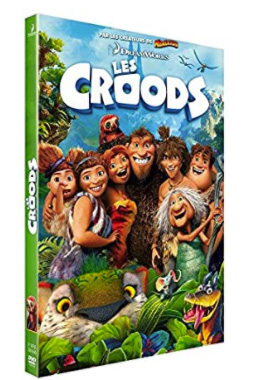
The Croods
Synopsis
Set in a fictional prehistoric era known as the "Croodaceous," a fiercely protective caveman patriarch named Grug insists that his family never leave their dark cave because "fear is good, change is bad." However, his adventurous teenage daughter Eep defies his rules and encounters a clever, fire-wielding modern nomadic boy named Guy who warns that an impending global continental apocalypse is coming. When their cave is destroyed by massive earthquakes, the eccentric Crood family is forced to embark on an epic, colorful road trip across strange prehistoric landscapes in search of a new home. This heartwarming animated adventure celebrates family growth and embracing change.
The Making of the Film
The genesis of The Croods came from a 2005 script written by Monty Python star John Cleese and director Chris Sanders titled "Crood Awakening," originally developed for Aardman Animations in stop-motion before moving to DreamWorks Animation. Co-directors Chris Sanders and Kirk DeMicco reworked the project into a vibrant computer-animated feature exploring prehistoric evolution and family dynamics. The production team spent years designing whimsical, hybrid prehistoric creatures—such as the Piranha Keets and Bear Owls—to populate the vibrant CGI landscape. The filmmakers aimed to blend slapstick physical comedy with emotional lessons about parenting.
Critical Reception
Professional critics gave generally positive reviews to The Croods, praising its dazzling prehistoric world-building, imaginative creature designs, heartfelt family core, and Emma Stone and Nicolas Cage's energetic voice performances. Reviewers commended the film for delivering a fresh, highly entertaining animated comedy that balanced goofy slapstick with genuine emotional growth. The public response was a massive worldwide box office blockbuster, driving DreamWorks Animation to greenlight a successful franchise including sequels and television series. Audiences fell in love with the lovable sloth Belt and the vibrant colors. The film received an Academy Award nomination for Best Animated Feature.
Filming Anecdotes
Directors Chris Sanders and Kirk DeMicco drew heavy inspiration from prehistoric paleontology, evolutionary history, and classic family road trip cinema to construct the adventure. Production utilized advanced digital animation tools to render luminous, bioluminescent flora and complex particle physics for fire and volcanic destruction. During the recording sessions, Nicolas Cage and Emma Stone improvised much of the quirky father-daughter banter to enhance their emotional chemistry. Before the final script was locked in, early story versions included different prehistoric creatures and narrative arcs.
Main Themes
The film explores deep themes of family protection, embracing change, innovation, overcoming fear, and the evolution of human intelligence and love. It highlights how parents must eventually learn to trust their children and let them step out into the light. Furthermore, it champions curiosity and cooperation.
Ending Explanation
The climax resolves the global tectonic crisis when Grug realizes he must let go of his stubborn fear and throw his family across a massive volcanic chasm to safety while he stays behind. Having discovered his own capacity for innovative thinking, Grug survives the fiery cataclysm and reunites with his family in a lush, sunlit paradise by the ocean. Embracing Guy's forward-thinking ideas and realizing that "following the sun" means staying together, Grug invents the concept of the family hug. The film ends on a joyful, triumphant note celebrating their new luminous home.
Title Significance
The title directly honors the central prehistoric family—the Croods—whose evolutionary struggle to survive forms the backbone of the narrative.
NULL
NULL
Ice Age, How to Train Your Dragon, Moana, The Good Dinosaur