

 Français
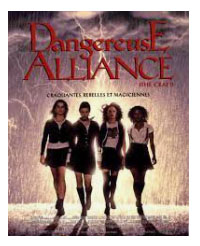
The Craft
Synopsis
When troubled teenager Sarah Bailey moves to Los Angeles and enrolls in a Catholic high school, she quickly befriends three outcast girls who practice witchcraft. Sarah discovers she possesses a powerful natural affinity for magic, completing their coven and making their spells terrifyingly potent. However, as they use their newfound powers for personal revenge and petty gains, dark forces begin to take control. The girls soon realize that dabbling in ancient witchcraft comes with a terrifying and deadly price.
The Making of the Film
Writer and director Andrew Fleming originally conceived the story as a teenage take on classic supernatural thrillers like Rosemary's Baby. He wanted to explore female adolescence through the metaphor of witchcraft, capturing the intense emotional volatility of high school. The production team collaborated closely with actual Wiccan advisers to ensure that the rituals and terminology used in the script had a ring of authenticity. The studio initially expected a minor teen movie, but the filmmakers crafted a dark, atmospheric cult classic.
Critical Reception
Résumé des critiques professionnelles : Critics offered mixed-to-positive reviews upon release, praising its stylish direction, atmospheric mood, and strong ensemble cast. Reviewers highlighted Fairuza Balk's mesmerizing and genuinely terrifying performance as the unhinged coven leader Nancy Downs. Many film critics appreciated that the movie treated teenage angst and female empowerment with a dark, serious edge. Some reviews, however, felt that the third act relied too heavily on conventional Hollywood horror tropes and special effects.
Réception du public : Audiences embraced the movie as a defining cult classic of the 1990s, particularly among teenage girls seeking empowering anti-heroines. Viewers loved the fashion, the iconic soundtrack, and the unapologetic depiction of rebellious female friendship and power. It became a surprise box-office success, resonating strongly with youth culture and establishing a lasting legacy in pop culture. Fans frequently quote iconic lines and celebrate its influence on modern portrayals of witchcraft in media.
Récompenses obtenues : While major mainstream awards eluded the supernatural teen thriller, it earned recognition at the MTV Movie Awards. Fairuza Balk was nominated for Best Villain for her unforgettable portrayal of the corrupted witch Nancy Downs. The film also received cult status recognition and retrospective honors from various horror film festivals years after its release. These accolades helped cement its enduring place in 1990s cinema history.
Behind-the-Scenes Stories
Inspirations du réalisateur : Andrew Fleming was inspired by classic stories about the corrupting nature of absolute power and teenage alienation. He wanted to capture the fierce, sometimes toxic intensity of teenage female friendships during high school. The visual style was influenced by gothic aesthetics and music videos of the mid-1990s, blending dark shadows with bright Catholic school uniforms. The director also drew from historical accounts of witch trials and modern Wiccan practices to ground the fantasy elements.
Difficultés de production : Shooting the complex visual effects sequences on a modest budget required immense creativity from the technical crew. The actors performed many of their own stunts, including the harrowing scenes involving real insects and snakes on set. Cast members reported that working with live animals during the climactic ritual scenes was both terrifying and chaotic. Despite these logistical hurdles, the production wrapped on time and delivered a visually striking final product.
Anecdote sur une scène particulière : During the filming of the famous scene where thousands of real snakes cover the floor, Fairuza Balk remained remarkably calm while other actors panicked. The crew had to take numerous precautions to ensure the safety of both the cast and the harmless reptiles used in the sequence. In another memorable moment, Rachel True had to overcome her severe fear of heights for the floating levitation scenes. Her genuine terror in those moments added an unexpected layer of realism to her character's reaction.
Casting initialement prévu : Before Robin Tunney, Fairuza Balk, Neve Campbell, and Rachel True locked down the main roles, hundreds of young Hollywood actresses auditioned for the coven. Angelina Jolie and Alicia Silverstone were among the high-profile names initially considered by casting directors for key parts. Producers sought an ensemble cast with palpable chemistry who could convince viewers they were lifelong outcasts. The final four actresses were chosen precisely because their distinct personalities clashed and blended in equal measure.
Themes Explored
The film heavily explores the dangerous allure of absolute power, corruption, and the consequences of unbridled revenge. It examines teenage marginalization, bullying, and the desperate human need to belong to a group. Another key theme is female empowerment contrasted with the destructive nature of jealousy and insecurity. It also touches upon spirituality, autonomy, and the psychological weight of taking responsibility for one's actions.
The movie concludes with Sarah successfully stripping Nancy of her powers after a brutal magical showdown in a stormy suburban house. Nancy is left institutionalized and raving in a psychiatric ward, believing she can still fly. Meanwhile, Bonnie and Rochelle find themselves stripped of their shared magic as Sarah retains her natural gift. The final scene shows Sarah floating effortlessly above her friends, signaling that she has learned humility and self-control.
The title refers directly to "the craft" of witchcraft, which the teenage girls practice and experiment with throughout the story. It also serves as a double entendre representing the acting craft or the secret machinations of the teenage characters. The minimalist phrasing adds an air of mystery and ancient tradition to the modern high school setting. It captures the esoteric nature of the secret society formed by the young outcasts.
Similar films include Practical Magic, Jawbreaker, The Craft: Legacy, and Ginger Snaps, which explore female bonding, empowerment, and dark fantasy elements.