

 Français
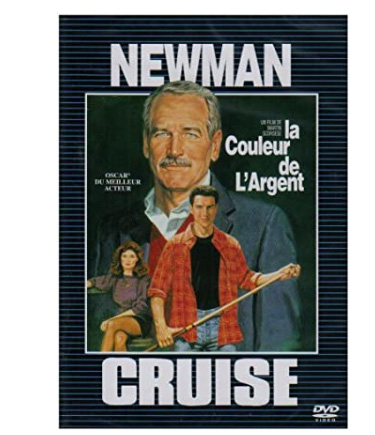
The Color of Money
Synopsis
Twenty-five years after his famous defeat, pool hustler Fast Eddie Felson is now a liquor salesman who sometimes stakes young players. One day he meets Vincent, a cocky and gifted young pool player, and sees in him the talent he once had. Eddie takes Vincent and his girlfriend Carmen on the road, teaching them the tricks of the hustler's trade. As they travel from hall to hall, Eddie's desire to return to the game grows, and the master and his student become rivals.
The Making of the Film
The Color of Money is a sequel to The Hustler, the 1961 classic directed by Robert Rossen, in which Paul Newman played the talented but self-destructive pool player Fast Eddie Felson. The film is based on the novel of the same name by Walter Tevis, the author of the original book, published in 1984. Paul Newman wanted to return to the role, and he was attracted to the idea of seeing the character twenty-five years later. Screenwriter Richard Price rewrote the story, creating a new plot that departs from the novel. Martin Scorsese, who had been struggling to get his project The Last Temptation of Christ off the ground, agreed to direct. He saw it as an opportunity to work with Newman and to make a more commercial film. Tom Cruise, a rising star after Top Gun, was cast as Vincent. The result was a sequel that explored ageing, ambition and the passing of a torch.
Reviews and reception
Professional critics' summary
Critics generally praised the film, especially Paul Newman's performance as the older and wiser Eddie. Many admired Scorsese's direction, in particular his dynamic camerawork in the pool scenes. Tom Cruise was noted for his energetic portrayal of the brash young hustler. Some reviewers felt that the film was less powerful than The Hustler, and that the story lost its focus in the final act.
Audience reception
The film was a commercial success, earning more than 50 million dollars at the American box office. Audiences enjoyed the chemistry between Newman and Cruise and the stylish pool sequences. It also sparked a new interest in pool halls and billiards. Over time, it has been appreciated as a stylish and entertaining drama.
Awards
Paul Newman won the Academy Award for Best Actor for his performance, after several previous nominations. Mary Elizabeth Mastrantonio was also nominated for an Oscar for Best Supporting Actress. The film received nominations in other categories, including Art Direction and Adapted Screenplay. Newman's win was seen as a belated recognition of a career of great performances.
Filming anecdotes
Director's inspirations
Scorsese wanted to make a film about the relationship between a mentor and a student, with echoes of the original film. He used a lively visual style, with moving cameras and quick cuts, to bring the pool games to life. He also drew inspiration from the pool halls of his youth in New York. The film is, in a sense, a study of how a legend deals with the passage of time.
Production difficulties
The actors had to learn to play pool convincingly, and Cruise and Newman trained with professional players. Many of the trick shots were performed by experts, but the actors did as much as possible themselves. The production built several pool halls in different cities, requiring detailed art direction. The pool sequences were carefully planned and shot to make the games exciting.
Anecdote about a particular scene
The scene in which Vincent twirls his cue and performs trick shots to the sound of rock music is one of the best-known moments in the film. It shows his energy and showmanship, in contrast to Eddie's calm precision. The final tournament match between Eddie and Vincent is another highlight. The film ends with a freeze-frame as Eddie declares that he is back.
Originally planned casting
Paul Newman was cast as Fast Eddie Felson, reprising the role from 1961. Tom Cruise took on the part of Vincent, bringing his youthful charm to the film. Mary Elizabeth Mastrantonio played Carmen, who is smarter than she first appears. Helen Shaver and John Turturro had supporting roles.
Themes explored
The film explores the relationship between mentor and student, and how it can turn into rivalry. It looks at ageing and the fear of losing one's talent. Another theme is ambition, shown through Eddie's desire to return to the game and Vincent's hunger for success. It explores the corruption of money and the ways in which talent can be wasted. The story also examines trust and manipulation, as the characters use each other for their own ends. It touches on the idea of redemption, as Eddie tries to correct the mistakes of his youth. The film shows that a life dedicated to a single goal can be both rewarding and lonely. Ultimately, it is a drama about pride and the desire to be remembered.
Ending explained
At the final tournament, Eddie and Vincent end up facing each other in the final round. Eddie realises that Vincent has sold out in an earlier match and is ready to cheat. He decides to compete honestly and plays with all of his skill. In a moment of pride, he challenges Vincent, and the film ends with the start of the game. As the first ball is struck, the image freezes on Eddie's face, with his words that he is back. The ending is deliberately open, leaving the outcome of the match undecided. It suggests that Eddie has regained his confidence and his love of the game.
Meaning of the title
The title The Color of Money refers to the green of dollar bills and to the importance of money in the lives of the characters. It also refers to the colour of the baize on a pool table, which links the game with the idea of profit. The phrase appears in the original novel and suggests that money has a colour and a glow that can seduce people. In the film, it reflects Eddie's relationship with money, which both attracts and corrupts him. The title also hints at the cynicism of the hustling world. It is a poetic and ironic name for a story about pride and greed. In French, it was translated as La Couleur de l'argent.
Original Soundtrack
Robbie Robertson composed the score, which mixes bluesy guitar and smoky atmosphere. The film also features rock songs by Eric Clapton, Warren Zevon, B.B. King and others, which give it a stylish and energetic feel. The music is closely integrated into the pool sequences, matching their rhythm. The soundtrack helped to define the film's cool and contemporary tone.
Similar Films
The Hustler is the original film and is essential viewing. Rounders and The Sting are other films about gamblers and hustlers. Raging Bull and Taxi Driver are other Martin Scorsese films with intense character studies. Top Gun and Rain Man also feature Tom Cruise in early roles.