

 Français
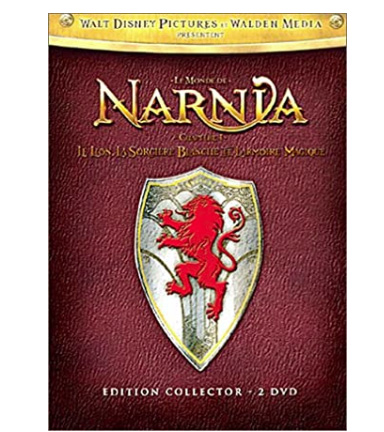
The Chronicles of Narnia: The Lion, the Witch and the Wardrobe
Synopsis
During the Second World War, four siblings are sent to live in the country house of an old professor. While exploring, young Lucy discovers a wardrobe that leads to the magical land of Narnia. The land is trapped in an endless winter by the cruel White Witch, and a prophecy says that four human children will free it. With the help of the great lion Aslan, the siblings must lead the rebellion against the Witch.
The Making of the Film
The film is based on the 1950 novel by C. S. Lewis, the first published book in The Chronicles of Narnia. Lewis, an Oxford professor and friend of J. R. R. Tolkien, wrote the story partly inspired by children who were evacuated to the English countryside during the war. Many earlier attempts to adapt the series had failed, but the success of the Lord of the Rings and Harry Potter films revived interest. Andrew Adamson, who had directed Shrek, was chosen to direct, with Disney and Walden Media producing. Lewis's stepson, Douglas Gresham, was closely involved as a co-producer. Tilda Swinton was cast as the White Witch, and Liam Neeson gave a voice to Aslan. The four young leads, William Moseley, Anna Popplewell, Skandar Keynes and Georgie Henley, were largely unknown. The film was released in December 2005 with high expectations.
Reviews and reception
Summary of professional reviews
Critics were largely positive, praising the film's visual richness, its faithfulness to the book and Tilda Swinton's chilling performance. Some found it a little too reverent and slow in places. Many said it was a worthy fantasy adventure for the whole family.
Audience reception
The film was a huge success, earning about 745 million dollars worldwide on a budget of around 180 million. Families embraced the story, and many viewers were moved by the sacrifice of Aslan. It became one of the biggest hits of 2005. The film started a franchise and revived interest in Lewis's books.
Awards and nominations
The film won the Academy Award for Best Makeup and was nominated for two other Oscars, for Best Sound and Best Visual Effects. It also won a BAFTA Award for Best Makeup and Hair. It received several other nominations, notably for its visual effects.
Filming anecdotes
Director's inspirations
Adamson wanted to keep the innocence of Lewis's book while giving the fantasy a grand scale. He drew on classic epic imagery, particularly for the battle scenes. The film's look was designed to feel both magical and tangible.
Production difficulties
The film was shot in New Zealand, the Czech Republic and Poland, which made for a demanding schedule. The young actors had to work with green screens and with digital creatures that were not present on set. The creation of Aslan and the many talking animals relied on extensive visual effects and animatronics.
Anecdote about a particular scene
The scene in which Lucy first meets the faun Mr. Tumnus under the lamppost in the snow is one of the most beloved. According to the production, Georgie Henley's genuine delight and curiosity were captured on camera. The scene of Aslan's sacrifice at the Stone Table is the film's emotional peak.
Themes explored
The film is about courage, sacrifice and redemption. It explores the transition from childhood to responsibility as the siblings grow into rulers. Betrayal and forgiveness are central, particularly in the story of Edmund. The film is rich in allegory, and many viewers see Aslan's sacrifice as an echo of Christian themes. It also looks at hope in the face of despair, represented by the end of the endless winter. Family loyalty is another important theme.
Ending explained
After Aslan sacrifices himself in Edmund's place and rises again, he leads the army of Narnia into the final battle. The White Witch is defeated, and the four children are crowned kings and queens at Cair Paravel. They rule Narnia for many years and grow into adults. While chasing a white stag, they stumble back through the wardrobe and become children again in the professor's house. The ending leaves the door open to further adventures.
Meaning of the title
The title names the three central elements of the story: the Lion, Aslan, the Witch, the villain, and the Wardrobe, the portal between worlds. It also hints at the contrast between good and evil. The wardrobe is a symbol of the passage from the ordinary world to a magical one. The title as a whole conveys the fairy-tale tone of the book.
Original Soundtrack
Harry Gregson-Williams composed the score, combining sweeping orchestral themes with choral elements. His music captured the wonder of Narnia and the tension of the battle scenes. The soundtrack was widely praised and remains a favorite among fans.
News
A new adaptation of The Magician's Nephew, directed by Greta Gerwig, is set to arrive in theaters on February 12, 2027, before streaming on Netflix on April 2, 2027. It marks the franchise's return to the screen.
Similar Films
- The Lord of the Rings: The Fellowship of the Ring (2001): an epic fantasy quest.
- Harry Potter and the Philosopher's Stone (2001): the start of another beloved fantasy series.
- The Golden Compass (2007): another fantasy adventure about children and a hidden world.
- Alice in Wonderland (2010): a journey into a fantastical land.
- The Wizard of Oz (1939): a classic story of a young girl in a magical world.