

 Français
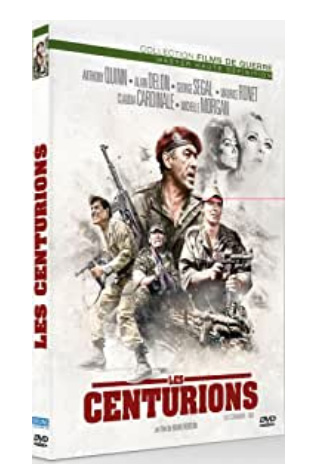
Lost Command
Synopsis
Set during the turbulent Algerian War of Independence in the late 1950s, Lieutenant Colonel Pierre Raspeguy is a fiercely proud, battle-hardened French paratrooper officer who leads his battered regiment following their humiliating defeat at Dien Bien Phu in Indochina. Granted command of a new unit in his native Algeria, Raspeguy is determined to restore military honor and glory, even if it means employing ruthless counter-insurgency interrogation tactics against nationalist rebels. Alongside loyal officers and former comrades who hold conflicting moral views on torture and colonial suppression, Raspeguy fights a brutal guerrilla war across the rugged desert mountains. The war drama explores the psychological decay of military obsession and colonial empire.
The Making of the Film
Director Mark Robson adapted the film from Jean Lartéguy bestselling 1960 French novel Les Centurions, which was drawn from real military experiences during the Indochina and Algerian wars. Columbia Pictures financed the high-budget international war drama, aiming to capture the geopolitical trauma of French decolonization. The production utilized authentic military equipment and desert locations in Spain.
Critical Reception
Critics gave the film mixed reviews upon its release, praising its tense battle sequences, gritty realism, and strong lead performances by Anthony Quinn, Alain Delon, and George Segal. Reviewers noted that while the screenplay touched upon controversial moral themes regarding torture and colonial warfare, it ultimately functioned as a standard Hollywood action drama rather than a deep political inquiry. Audiences appreciated the sweeping military action.
Public reception was modest, resulting in a decent box-office run that found an appreciative audience among war film enthusiasts. Viewers were captivated by the paratrooper training, desert combat, and complex officer dynamics. It remains a notable 1960s war film.
The film did not receive major mainstream Academy Awards, reflecting its action-drama standing. Anthony Quinn commanding performance was praised by critics. Its historical recreation of French paratrooper units remains well-regarded.
Behind-the-Scenes Stories
Director Mark Robson drew inspiration from Jean Lartéguy historical novel, military history, and French paratrooper memoirs. He chose authentic, rugged desert locations in Spain to replicate the harsh terrain of Algeria and Indochina. His direction pushed Anthony Quinn to portray a ruthless, ambitious officer with fierce intensity.
Production went smoothly, supported by technical military advisors who ensured accurate paratrooper jump protocols and tactical combat maneuvers. Anthony Quinn brought raw emotional power and pride to his colonel role. Alain Delon and George Segal added sharp contrast as idealistic and conflicted junior officers.
A memorable sequence involves the paratroopers executing a massive tactical dawn air-drop into a contested desert valley under heavy insurgent fire. The scene showcases authentic 1960s military action scale. Quinns commanding presence anchored the battle.
The casting process brought together an international star roster. Anthony Quinn was cast as Colonel Raspeguy, bringing commanding presence. Alain Delon, George Segal, and Maurice Ronet rounded out the multinational officer ensemble.
Themes Explored
The film explores military ambition, colonial warfare, the morality of torture, camaraderie, and national decline. It highlights how military obsession destroys personal ethics and human empathy. War corrupts absolute power.
NULL
Meaning of the Title
The title refers directly to the elite military units and commanding officers fighting colonial wars for a fading empire. It highlights the professional soldier ethos driving the narrative.
NULL
NULL
Similar Films
Other similar films include The Battle of Algiers, Lost Command, and Hamburger Hill.