

 Français
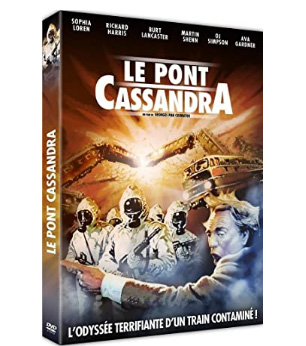
The Cassandra Crossing
Synopsis
The Cassandra Crossing is a tense, all-star international disaster thriller directed by George Pan Cosmatos. The story begins when a Swedish terrorist infected with a lethal, highly contagious pneumonic plague accidentally boards a Geneva-to-Stockholm trans-European express train after a botched attack. As US intelligence Colonel Stephen Mackenzie discovers the bio-threat aboard the speeding train, he orders it secretly sealed and rerouted toward a dilapidated, structurally unsound Nazi-era railway bridge in Poland known as the Cassandra Crossing, intending to quarantine the biological disaster forever. Trapped onboard with escalating fever and panic, passengers including a brain surgeon and his ex-wife must fight for survival. The film delivers breathless disaster suspense.
The Making of the Film
Producer Carlo Ponti conceived the high-concept international disaster film to capitalize on the 1970s craze for blockbuster ensemble disaster movies like 'The Poseidon Adventure' and 'Airport'. Director George Pan Cosmatos took charge of the multi-national production, assembling a legendary star-studded cast including Sophia Loren, Richard Harris, Burt Lancaster, Ava Gardner, Martin Sheen, and O.J. Simpson. The production secured real European railway locations and constructed elaborate train interior sets on studio soundstages. ITC Entertainment financed the global release.
Critical Reception
Professional critics offered mixed-to-favorable reviews, praising the film's breakneck pacing, breathtaking stunt work, and the sheer star power of its legendary ensemble cast. Reviewers noted that while the plot relied on familiar 1970s disaster movie formulas and scientific stretches, George Pan Cosmatos's energetic direction delivered solid pulse-pounding thrills. Some critics pointed out melodramatic dialogue, but agreed that the climactic train wreck sequence over the bridge was spectacular. It became a solid box office hit worldwide.
Audiences responded with great enthusiasm, enjoying the tense biological outbreak mystery, glamorous stars, and spectacular railway destruction. Viewers fond of 1970s disaster epics found it deeply entertaining and suspenseful. Word-of-mouth sustained its popularity on home video and television broadcasts.
The film earned regional international cinematic recognition for its spectacular miniature model destruction effects, stunt work, and star ensemble cast.
Behind-the-Scenes Stories
Director George Pan Cosmatos drew inspiration from classic disaster cinema, Cold War biological warfare paranoia, and European railway history. Coordinating the dangerous train stunt sequences and miniature bridge destruction required meticulous special effects planning across actual railway tracks in France and Switzerland. During the filming of the cramped train quarantine scenes, the all-star cast maintained professional camaraderie despite sweltering studio heat. Before final casting was locked in, various other international film legends were discussed during early pre-production meetings.
Themes Explored
Disease Outbreak, Train Disaster, Quarantine, Government Conspiracy, Survival, Ethics
Ending Explained
The explosive climax shows the speeding train splitting apart as it crosses the collapsing bridge, resulting in a catastrophic derailment that frees the surviving passengers.
Meaning of the Title
The title refers directly to the dangerous, structurally doomed bridge known as the Cassandra Crossing, symbolizing inescapable doom for the sealed train.
Original Soundtrack
Jerry Goldsmith composed a phenomenal, tense, and thrilling orchestral score featuring haunting choral themes that propelled the relentless momentum of the speeding train.
The Hindenburg, Earthquake, Airport 1977, The Towering Inferno