

 Français
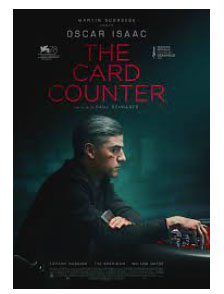
The Card Counter
Synopsis
This tense, dark, and critically acclaimed psychological crime drama film written and directed by Paul Schrader follows William Tell, an intense, enigmatic professional poker gambler and former U.S. Army interrogator who spends his solitary life traveling from casino to casino playing low-stakes blackjack and poker while meticulously wrapping hotel furniture in white sheets. Haunted by his dark past at Abu Ghraib prison where he committed war crimes under orders, William's regimented routine is suddenly upended when he is approached by Cirk, a vengeful young man seeking William's help to assassinate a mutual, retired military colonel who ruined both of their families. To save Cirk from destroying his life, William takes the young man under his wing and hits the high-stakes poker tournament circuit. It is a brilliant, uncompromising masterclass in guilt and redemption.
The Making of the Film
The project originated from legendary screenwriter and director Paul Schrader drawing upon his lifelong cinematic fascination with solitary, guilt-ridden men—echoing his iconic scripts for 'Taxi Driver' and 'First Reformed'—to craft a timely neo-noir drama exploring institutional moral injury and war crimes. Schrader sought to combine casino poker subculture with the lingering political trauma of post-9/11 military interrogations. Inspiration was drawn from classic Bressonian cinema, real-life military prison scandals, and professional gambling circuits. The creative team aimed to produce an uncompromised artistic masterpiece.
Critical Reception
Critics offered widespread, rapturous acclaim, praising Paul Schrader's razor-sharp direction, atmospheric casino cinematography, and Oscar Isaac's powerhouse, mesmerizing lead performance. Reviewers noted that Schrader successfully delivered another defining character study of a lonely, tortured man seeking grace in a spiritually bankrupt world. Isaac's controlled, quiet portrayal of William Tell received universal applause at the Venice Film Festival where it premiered. It was immediately recognized as an independent cinema triumph.
Audience reception was warm among cinephiles and psychological drama enthusiasts, driving strong specialty box office success and finding a passionate following on digital streaming platforms. Viewers on public platforms praised the tense poker matches, haunting Abu Ghraib flashbacks, and Tiffany Haddish's supporting performance. Fans of Paul Schrader celebrated his late-career artistic renaissance. Word-of-mouth sustained strong long-term prestige.
Awards season brought major triumph, securing numerous independent critic association wins for Best Actor for Oscar Isaac and Best Screenplay for Paul Schrader. Critics' associations praised the film for its stylistic brilliance and moral courage. These accolades cemented its status as a premier masterpiece of modern independent cinema.
Behind-the-Scenes Stories
The director and production team drew visual inspiration from classic neo-noir thrillers, expressionist casino architecture, and Robert Bresson's ascetic filmmaking style to establish a cool, minimalist aesthetic. Every location, from the fluorescent-lit, carpeted casino floors to William Tell's sterile motel rooms, was meticulously styled to reflect emotional containment. The production team collaborated with professional card counters and poker tournament coordinators to ensure that blackjack strategy and tournament rules looked completely authentic. These artistic choices created an immersive gambling world.
Production presented fascinating logistical and technical hurdles, requiring Oscar Isaac to spend weeks mastering complex card-counting techniques, chip-shuffling maneuvers, and poker etiquette under expert supervision. Tiffany Haddish brought grounded warmth and business acumen to her role as financial backer La Linda. Furthermore, maintaining strict emotional intensity across heavy moral dialogue scenes demanded obsessive focus from Schrader and the cast.
During the filming of the tense high-stakes World Series of Poker final table sequences, Oscar Isaac executed his calm, focused card-playing demeanor with total professional commitment. To maintain authentic tension, Schrader utilized precise, symmetrical framing. The crew utilized muted casino lighting. This rigorous dedication resulted in immortal cinematic moments.
Casting was anchored by securing acclaimed actor Oscar Isaac in a career-defining lead role, alongside Tiffany Haddish, Tye Sheridan as Cirk, and Willem Dafoe as the villainous Colonel John Gordo. This star-studded casting strategy was the absolute heartbeat of the film's success.
Themes Explored
The narrative deeply explores themes of moral guilt, war crimes, and seeking redemption after participating in institutional atrocities. It examines solitary confinement, the ethics of gambling, and father-surrogate mentorship. Additionally, it highlights trauma recovery, forgiveness, and the heavy psychological price of following unlawful orders. Ultimately, the film reflects on sorrow, grace, and finding peace in a cage.
Ending Explained
William Tell deliberately forfeits the final poker tournament to avoid being tracked and immediately drives off to confront Colonel Gordo alone where he subdues the villain and turns himself in to federal authorities to serve a prison sentence for his past military war crimes, leaving Cirk with enough money to return to college and start fresh. In the haunting final shot inside the prison visiting room, William and La Linda press their hands together through glass in quiet solidarity. The moving resolution underscores ultimate self-sacrifice and grace.
Meaning of the Title
The title ("The Card Counter") refers both to the protagonist's professional gambling technique of counting cards in blackjack and metaphorically to counting the moral cards of one's life sins.
Original Soundtrack
The hypnotic, atmospheric musical score composed by Robert Levon Been received widespread acclaim for establishing the film's moody, existential rhythm.
Similar Films
Films sharing similar solitary guilt-ridden protagonists, neo-noir atmosphere, and redemption themes include First Reformed (2017), Taxi Driver (1976), and The Gambler (1974).