

 Français
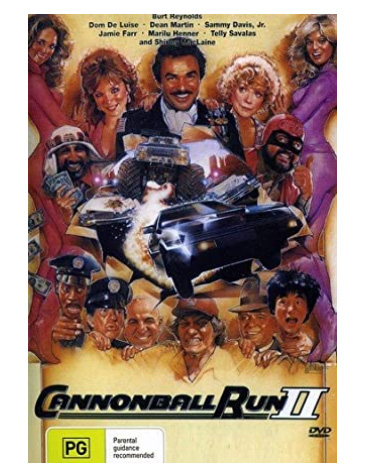
Cannonball Run II
Synopsis
A wealthy, eccentric Middle Eastern Sheikh organizes and finances a chaotic, illegal cross-country automobile race across America, offering a multi-million-dollar prize to the winner. Eager for glory, cash, and automotive madness, a colorful roster of returning and new eccentric racers dust off their high-speed vehicles. Among the competitors are J.J. McClure and his buddy Victor, disguised ambulance drivers, mafia mobsters looking for revenge, bumbling police officers, and beauty pageant contestants. As high-speed chases, ridiculous disguises, and vehicular stunts unfold from California to Connecticut, absolute chaos reigns on American highways.
The Making of the Film
Director Hal Needham and producer Albert S. Ruddy reunited to create the sequel to their massive 1981 box-office hit The Cannonball Run, capturing the same loose, star-studded improvisational comedy format. Golden Harvest and Warner Bros. financed the high-budget sequel, packing it with an unprecedented number of celebrity cameos and aging Hollywood legends. The production aimed to replicate the chaotic fun of the original road trip.
Critical Reception
Critics universally panned Cannonball Run II upon its release, criticizing its lazy script, lack of narrative structure, unfunny celebrity cameos, and tired slapstick gags that failed to match the charm of the original film. Reviewers noted that despite an incredible cast featuring Burt Reynolds, Frank Sinatra, and Dean Martin, the movie felt like a disjointed series of random sketches. General audiences also showed much weaker enthusiasm.
Public reception was modest, resulting in a disappointing box-office return compared to its massive predecessor, though home video rentals softened the blow. Viewers found the endless celebrity appearances distracting rather than entertaining. It remains a notorious comedy sequel misfire.
The film did not receive any mainstream award nominations, reflecting its poor critical standing. Its historical significance is anchored by featuring Frank Sinatra final cinematic film appearance alongside Dean Martin and Sammy Davis Jr. Its nostalgic retro legacy endures.
Behind-the-Scenes Stories
Director Hal Needham drew inspiration from real cross-country illegal street racing culture and classic slapstick comedy ensembles. He chose authentic interstate highway locations across the United States to capture the cross-country road trip. His direction encouraged the massive star cast to improvise comedic bits on the fly.
Production went smoothly on set, though coordinating dozens of major Hollywood superstars with conflicting scheduling demands required careful logistics. Burt Reynolds returned as the lead driver, joined by legendary rat pack members Frank Sinatra, Dean Martin, and Sammy Davis Jr. Shirley MacLaine and Telly Savalas rounded out the guest star roster.
A memorable sequence involves a massive police roadblock getting completely overwhelmed by a fleet of ridiculous customized vehicles driving straight through at high speeds. The scene highlights the slapstick vehicular chaos of the franchise. The stunt coordination executed the crashes safely.
The casting process brought together an astonishing roster of Hollywood legends and guest stars. Burt Reynolds was cast as the lead racer. Frank Sinatra famously made his final film appearance alongside his rat pack friends, adding historical weight to the comedy cast.
Themes Explored
The film explores illegal street racing, automotive obsession, celebrity cameos, slapstick comedy, and cross-country camaraderie. It celebrates highway rebellion through humorous vehicular chaos. Laughter conquers road rules.
NULL
Meaning of the Title
The title refers directly to the legendary illegal Cannonball Baker Sea-to-Shining-Sea Memorial Trophy Dash street race, adding II to signal a comedic sequel. It highlights the cross-country automotive contest.
NULL
NULL
Similar Films
Other similar films include The Cannonball Run, Smokey and the Bandit, and It a Mad, Mad, Mad, Mad World.