

 Français
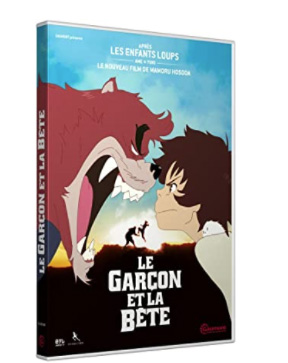
The Boy and the Beast
Synopsis
After losing his mother, a lonely nine-year-old boy named Ren runs away and finds himself in Jutengai, a hidden world inhabited by beasts. There, he becomes the disciple of Kumatetsu, a gruff and undisciplined warrior who dreams of becoming the next lord of the beasts. Master and apprentice constantly clash, yet slowly learn from one another and form a bond close to that of father and son. But when the boy grows older and a dark threat emerges, both worlds are put in danger.
The Making of the Film
The Boy and the Beast is a 2015 animated film written and directed by Mamoru Hosoda, produced by his own studio, Studio Chizu. It follows his earlier success "Wolf Children", and continues his exploration of family and parenthood. Hosoda has explained that the story was influenced by his experience of becoming a father, and by the idea that a child learns from many different people, not only from his parents. The film blends fantasy, martial arts and coming-of-age drama in a story about the relationship between master and student. It was released in Japan in the summer of 2015 and became one of the biggest box-office successes of the year in the country.
Reviews and Reception
Summary of Professional Reviews
Critics praised the film for its imaginative world, its energetic animation and its emotional depth. The relationship between the boy and Kumatetsu was widely considered the heart of the film, thanks to its humor and warmth. Some reviewers felt that the final act became overloaded with spectacle and that the villain was less compelling than the main characters. Nevertheless, the overall reception was strongly positive.
Audience Reception
The film was very popular with audiences in Japan, where it earned several billion yen at the box office. Viewers appreciated how it combines adventure with a touching story about growing up and finding a family. International audiences also embraced it, and it is often cited as one of Hosoda's most accessible films. It remains a favorite among fans of Japanese animation.
Filming Anecdotes
Director's Inspirations
Hosoda drew on the theme of mentorship, where a young person learns by imitating an adult he admires, even when that adult is far from perfect. The novel "Moby-Dick" plays an important symbolic role in the story, and the film includes a memorable whale-shaped image in its climax. The relationship between the boy and his master was also influenced by Hosoda's own reflections on fatherhood.
Themes Explored
The film is a story about found family and the many forms a parent-child relationship can take. It explores the importance of mentors and the way learning goes both ways: the master teaches the student, but the student also changes the master. The story deals with identity, since the boy has to choose between the human world and the world of beasts. It also looks at loneliness, grief and the darkness that can grow inside a person who feels unloved. Strength is redefined throughout the film, not as physical power alone but as the ability to open your heart to others.
Ending Explained
In the final confrontation, the boy faces the darkness consuming another young man who grew up in the beast world, a mirror of what he might have become. Kumatetsu makes a great sacrifice and transforms into a sword that lives within the boy's heart, a symbol of the bond they share. After the battle, the boy is able to reconcile with his human father and to live in the human world without losing his connection to the beast world. The ending suggests that love and mentorship continue to exist even when the people who gave them are no longer physically present.
Meaning of the Title
The original Japanese title, "Bakemono no Ko", can be translated as "the child of the monsters" or "the monster's child". It highlights the boy's unusual upbringing in the world of beasts. The English title, "The Boy and the Beast", emphasizes the central duo and the contrast between the young human and his gruff teacher.
Soundtrack
The score was composed by Masakatsu Takagi, who collaborated with Hosoda on several films. His music accompanies the story with a mix of grand orchestral sections and gentle, intimate themes. It helps establish the feeling of wonder in the beast world, while also supporting the emotional moments between the two main characters.
Similar Films
- Wolf Children (2012): Hosoda's earlier film about a mother and her unusual children.
- Spirited Away (2001): a young person enters a magical world full of strange creatures.
- The Girl Who Leapt Through Time (2006): another coming-of-age story by Hosoda.
- Kung Fu Panda (2008): an unlikely student and his demanding master.