

 Français
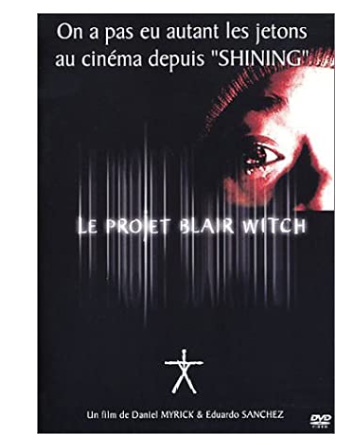
The Blair Witch Project
Synopsis
In October 1994, three enthusiastic student filmmakers—Heather Donahue, Michael Williams, and Joshua Leonard—travel into the dense, ominous Black Hills forest near Burkittsville, Maryland. Their goal is to shoot a documentary exploring the local legend of the infamous Blair Witch, a mythical entity said to haunt the woods. As they venture deeper into the sprawling wilderness, they quickly lose their bearings and realize their map has vanished. Trapped by unnatural forces, they endure strange nocturnal noises, threatening wooden totems left outside their tents, and mounting psychological terror. Presented entirely as recovered footage found after the students disappeared, the film chronicles their terrifying final days.
The Making of the Film
The project was conceived by independent filmmakers Daniel Myrick and Eduardo Sánchez, who wanted to create a horror film that relied purely on psychological dread rather than expensive gore and special effects. Inspired by true-crime television specials and classic ghost stories, they devised a loose 35-page outline where actors would improvise their dialogue while navigating the actual woods alone. The filmmakers deliberately marketed the movie online as a genuine, true documentary about missing students, creating one of the earliest and most successful viral marketing campaigns in film history.
Critical reception and review
Professional critics lauded the film for its revolutionary approach to horror, praising its terrifying realism, atmospheric tension, and brilliant psychological terror. Reviewers highlighted how the absence of visible monsters or cheap jump scares made the dread far more potent and effective. The innovative use of the found-footage medium was praised as a game-changing milestone for independent filmmaking and the horror genre as a whole. Audiences experienced unprecedented levels of fear and immersion, with many believing the events depicted were genuinely real upon its initial release. Viewers spread word-of-mouth enthusiasm rapidly, turning a micro-budget indie film into an astronomical global box office phenomenon. It achieved legendary status for redefining modern horror marketing and distribution paradigms. The film received numerous independent film awards and critical accolades for its sheer originality, direction, and cultural impact.
Filming anecdotes
Directors Daniel Myrick and Eduardo Sánchez drew inspiration from classic ghost folklore, traditional survival horror, and authentic documentary filmmaking styles. The production was notoriously grueling for the cast, who were sent into the Maryland woods with GPS-less equipment, minimal food supplies, and only hidden radio instructions from the directors. The actors were deliberately sleep-deprived and psychologically rattled by the crew during night shoots to capture genuine, authentic fear and exhaustion on camera. Before the final three lead actors were chosen, hundreds of hopefuls auditioned for the improvisational weekend wilderness shoot.
Themes explored
The film brilliantly explores the vulnerability of human beings when stripped of modern technology, civilization, and navigation tools in the deep wilderness. It examines the breakdown of group psychology and trust under extreme stress, paranoia, and isolation. Themes of folklore versus scientific reality drive the fear, as ancient local legends manifest into terrifying psychological torture. Furthermore, it touches upon the human obsession with documenting reality, even when that very documentation leads directly into danger.
Explanation of the ending
Meaning of the title
Paranormal Activity, Cloverfield, Rec, The Visit