

 Français
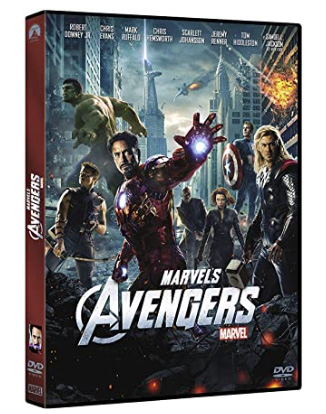
The Avengers
Synopsis
When the powerful Loki arrives on Earth with an army and plans to conquer humanity, the world faces an unprecedented threat. Nick Fury, director of the secret organisation S.H.I.E.L.D., decides to assemble a team of extraordinary individuals to stop him. Iron Man, Captain America, Thor, the Hulk, Black Widow and Hawkeye must learn to work together despite their conflicting personalities and personal ambitions. Their disagreements initially threaten the mission, but the growing danger forces them to recognise the importance of cooperation. As Loki prepares to open a portal above New York City, the newly formed Avengers face their greatest challenge.
The The Making of the Film
The development of The Avengers began with Marvel Studios' long-term plan to create a shared cinematic universe connecting several independent superhero films. The strategy was introduced through productions such as Iron Man, The Incredible Hulk, Thor and Captain America: The First Avenger. Nick Fury's appearances and references to the Avengers Initiative gradually prepared audiences for a crossover event. Joss Whedon was eventually selected to direct and rewrite the screenplay, bringing considerable experience in ensemble storytelling and character-driven action. He was attracted by the challenge of placing several powerful personalities in the same narrative without allowing one character to dominate the entire story. The screenplay was developed with a particular focus on conflict, humour and the gradual construction of trust between the heroes. Loki was chosen as the central antagonist because of his connection to Thor and his ability to manipulate the other characters. The production also needed to create a credible threat large enough to justify assembling such an extraordinary team. The result became the culmination of several years of interconnected storytelling and a landmark moment in the development of the Marvel Cinematic Universe.
Critical Reception and Audience Response
Professional Critical Reviews: The film received overwhelmingly positive reviews from professional critics. Many praised Joss Whedon's ability to balance several major characters within a single coherent narrative. The dialogue, humour and interactions between the superheroes were frequently highlighted as major strengths. Robert Downey Jr.'s performance as Iron Man and Mark Ruffalo's portrayal of the Hulk received particularly favourable attention. Critics also appreciated the action sequences, visual effects and successful integration of the earlier Marvel films. Some reviewers considered the plot relatively conventional, but most regarded the film as an exceptionally effective superhero ensemble adventure.
Audience Reception: The film became a global box-office phenomenon and attracted an enormous international audience. Fans appreciated finally seeing the previously introduced superheroes fighting together in a single production. The interactions between Iron Man, Captain America, Thor and the Hulk generated considerable enthusiasm. The New York battle became one of the most memorable superhero action sequences of its period. Its success helped establish the crossover format as a major commercial model for subsequent blockbuster productions. The film also strengthened the popularity of the Marvel Cinematic Universe among audiences who had not necessarily followed every earlier instalment.
Awards and Recognition: The film received numerous nominations and awards, including recognition for its visual effects and technical achievements. It was nominated for an Academy Award for Best Visual Effects. It also received recognition from several popular film and entertainment organisations. Its commercial success and cultural influence were recognised throughout the international film industry. The production was particularly celebrated for demonstrating that a large-scale superhero crossover could succeed both critically and commercially.
Behind-the-Scenes Anecdotes
Director's Inspirations: Joss Whedon drew inspiration from classic ensemble storytelling, particularly narratives in which characters with conflicting personalities must cooperate against a common threat. His experience writing dialogue for television and cinema influenced the film's rapid exchanges and character-based humour. He wanted the superheroes to feel like individuals with distinct motivations rather than interchangeable members of a team. The structure also reflects the tradition of large-scale adventure films in which the formation of a group becomes as important as the final confrontation.
Production Challenges: One of the greatest challenges involved coordinating a large ensemble cast while maintaining a coherent visual and narrative structure. The production relied heavily on visual effects to create the alien invasion and the destruction of New York. The filmmakers also needed to integrate several established characters whose personalities and storylines had already been introduced in earlier films. Mark Ruffalo's Hulk required a combination of motion capture, visual effects and performance work. The final battle demanded extensive planning to ensure that each hero had a recognisable role within the action. Balancing the screen time of the principal characters was another major challenge.
A Memorable Scene: The famous sequence in which the Hulk attacks Loki became one of the film's most memorable comic moments. After a confrontation involving Loki's apparent confidence and the Hulk's overwhelming strength, the giant green hero repeatedly smashes the villain against the floor. The unexpected humour of the scene provides a brief release from the surrounding tension. Another iconic moment is the continuous camera movement during the Battle of New York, which connects the different Avengers as they fight across the city. This sequence visually demonstrates that the team has finally learned to work together.
Originally Considered Casting: Edward Norton originally portrayed Bruce Banner in The Incredible Hulk, but Mark Ruffalo replaced him for The Avengers. Marvel and the filmmakers selected Ruffalo to establish a new interpretation of the character. The other principal actors returned from their earlier Marvel productions, including Robert Downey Jr., Chris Evans, Chris Hemsworth, Scarlett Johansson and Jeremy Renner. Tom Hiddleston also returned as Loki, the central antagonist. The casting of Ruffalo became one of the most significant changes in the film's development, and his interpretation was subsequently retained throughout several Marvel productions.
Themes Explored
The film explores teamwork and the difficulty of bringing together individuals with different personalities and values. Each Avenger initially believes that personal strength is sufficient to solve the crisis. Their disagreements reveal the limits of individual heroism and the importance of cooperation. Responsibility is another major theme, particularly through the decisions made by Tony Stark, Steve Rogers and Nick Fury. The story also examines sacrifice and the willingness to protect others despite personal risk. Loki's ambition provides a contrast between the desire for power and the responsibility that accompanies extraordinary abilities. Trust develops gradually as the characters learn to respect one another. The film also raises questions about authority, surveillance and the consequences of possessing powerful technology. Ultimately, it presents unity and shared responsibility as essential qualities in confronting threats that exceed individual capabilities.
Explanation of the Ending
During the final battle in New York, the Avengers manage to work together against Loki's alien army. Iron Man redirects a nuclear missile through the portal towards the invading forces, putting his own life at considerable risk. The intervention helps destroy the enemy fleet and prevents the invasion from succeeding. The Hulk saves Iron Man from the resulting fall, while the other heroes continue fighting across the city. Thor eventually returns to Asgard with Loki and the powerful Tesseract, bringing the immediate crisis to an end. The Avengers are now recognised as a genuine team rather than a collection of individuals brought together by necessity. The final scenes also reveal that the events have attracted the attention of powerful forces beyond Earth. A brief appearance by Thanos introduces a much larger threat for the future of the Marvel Cinematic Universe. The ending therefore resolves the immediate conflict while establishing the foundations for subsequent films.
Meaning of the Title
The title The Avengers refers to the group of superheroes assembled to defend Earth against extraordinary threats. The word avenger traditionally describes someone who seeks justice or retribution for a wrong, but in this story it takes on a broader meaning. The heroes are brought together to protect humanity rather than pursue personal revenge. The plural form is particularly important because the film is about the creation of a team rather than the adventures of a single protagonist. It also reflects the Marvel comic-book group from which the cinematic story originates. The title communicates unity, collective responsibility and the idea that extraordinary challenges require more than one hero.
Original Soundtrack
Alan Silvestri composed the original score, creating one of the most recognisable musical themes in the Marvel Cinematic Universe. His orchestral approach gives the film a powerful sense of scale while allowing individual characters to retain their own musical identities. The main Avengers theme gradually becomes associated with teamwork, courage and the emergence of a unified group. Its use during the final battle reinforces the emotional importance of the heroes finally working together. The soundtrack combines dramatic orchestral passages with energetic action music and moments of lighter humour. Silvestri's main theme became an enduring musical symbol of the Avengers franchise and was reused in subsequent Marvel productions.
Similar Films
Avengers: Age of Ultron (2015): The direct sequel, bringing the team together to confront a new technological threat.
Captain America: The First Avenger (2011): Introduces Steve Rogers and provides important background to the formation of the Avengers.
Iron Man (2008): The film that launched the modern Marvel Cinematic Universe and introduced Tony Stark.
Guardians of the Galaxy (2014): Another ensemble superhero adventure involving a group of initially incompatible characters.
Justice League (2017): A major superhero crossover featuring several iconic DC Comics characters joining forces against a common enemy.