

 Français
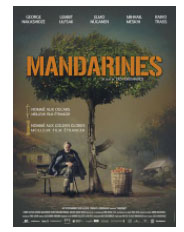
Tangerines
Synopsis
Set in 1992 during the bloody Georgian-Abkhazian conflict, an elderly Estonian immigrant named Ivo chooses to stay behind in his abandoned Caucasus village to harvest his seasonal mandarin orange crop rather than flee back to his homeland. When a fierce skirmish breaks out near his property leaving two wounded soldiers from opposing sides—a Chechen mercenary fighting for the separatists and a Georgian volunteer—Ivo takes them both into his home to nurse them back to health. Bound under the same roof, the two bitter enemies are forced to coexist under Ivo's strict moral code, slowly shedding their blind hatred as they discover their shared humanity. Ultimately, this poignant anti-war masterpiece explores forgiveness, empathy, and the futility of ethnic violence across a divided border.
The Making of the Film
Writer and director Zaza Urushadze conceived the film to address the senseless tragedy and personal trauma caused by post-Soviet ethnic conflicts in the Caucasus region. The project was conceived as a modest, deeply human independent drama focusing on pacifism, coexistence, and human dignity amidst war. Urushadze drew inspiration from real historical accounts of villagers caught in the crossfire of the Georgian-Abkhazian war. The production prioritized authentic rural Georgian locations, natural lighting, and powerhouse lead performances by veteran European actors.
Critical Reception
Critics offered overwhelming critical acclaim upon release, praising its profound humanitarian message, understated direction, and Lembit Ulfsak's unforgettable lead performance. Reviewers noted that Zaza Urushadze successfully crafted a universally resonant anti-war parable without ever relying on heavy-handed political preaching or graphic battle sequences. Some film critics highlighted how the intimate chamber-drama setting heightened the emotional tension between the opposing soldiers. Despite its modest indie origins, international film critics championed its quiet brilliance.
Audiences were completely moved by the emotional power of the anti-war drama, turning it into a beloved critical darling and an international crowd-pleaser. Viewers at global film festivals commended the gentle humor, moral clarity, and the touching chemistry between the wounded enemies under one roof. It found a deeply appreciative audience among fans of humanist cinema and international drama. Many praised its ability to deliver a message of peace without sounding overly sentimental.
Tangerines achieved historic international recognition by earning an Academy Award nomination for Best Foreign Language Film, representing Estonia. It also received a Golden Globe Award nomination in the same category, cementing its status as a global masterpiece. The film swept numerous awards at international film festivals including the Warsaw International Film Festival. These prestigious accolades cemented its legacy as an immortal anti-war classic.
Behind-the-Scenes Stories
Zaza Urushadze was heavily inspired by the desire to show how ordinary human beings can transcend deep-seated ethnic hatred when forced to look each other in the eye as individuals. He wanted to use the repetitive daily routine of harvesting tangerine oranges as a metaphor for nurturing life amidst the destruction of war. The visual style utilized lush green Caucasus mountain landscapes contrasted with the warm orange hues of ripe fruit. The director also worked closely with the cast to ensure the cultural and linguistic nuances of the region felt completely genuine.
Shooting on location across rural mountain villages in Guria, Georgia, presented authentic natural weather and logistical challenges for the independent crew. Veteran Estonian actor Lembit Ulfsak brought profound quiet dignity to his role as Ivo, anchoring the emotional core of the film. The actors playing the opposing soldiers spent time bonding off-camera to build believable tension and eventual camaraderie. Despite the modest independent budget, the technical crew successfully delivered a polished, visually poetic cinematic atmosphere.
During the filming of the tense kitchen table debate sequences, the lead actors brought fierce emotional authenticity to their verbal clashes over ethnicity and loyalty. Lembit Ulfsak's weary, authoritative delivery kept the younger actors completely focused between takes. Crew members reported feeling profoundly moved by the quiet, emotional weight of the dialogue on set. The profound dedication of the cast gave the anti-war drama its unforgettable soul.
Casting directors searched for a respected, weathered Eastern European actor who could project quiet moral authority without speaking many lines. Legendary Estonian actor Lembit Ulfsak was secured for the lead role of Ivo, delivering a career-defining performance. The supporting cast featuring Misha Meskhi and Giorgi Nakashidze added stellar dramatic friction as the rival soldiers.
Themes Explored
The film heavily explores pacifism, forgiveness, and the absurdity of ethnic hatred and civil war. It examines the healing power of empathy and shared domestic life among mortal enemies. Another core motif is nature, harvest, and life continuing amidst human destruction. It also touches upon aging, loneliness, and moral integrity.
Ending Explained
The film concludes with Ivo tragically dying from wounds sustained while protecting the two soldiers from a sudden rebel raid, successfully teaching them the value of human life before his passing. Standing together at Ivo's fresh grave, the Chechen mercenary and the Georgian volunteer finally embrace as brothers, honoring the old man's ultimate sacrifice for peace. The final breathtaking shots show the untouched tangerine orchard glowing under the quiet Caucasus sky, symbolizing enduring hope and renewal. This poignant, heartbreaking finish delivers an unforgettable message of reconciliation.
Meaning of the Title
The title refers directly to the seasonal mandarin orange crop cultivated by the elderly protagonist, which serves as his sole reason for staying in the war zone and a central symbol of life. It highlights the thematic contrast between the organic cycle of harvesting fruit and the artificial destruction of war. The simple phrasing sets a grounded, poetic tone for the humanist drama. It encapsulates the quiet sanctuary of the orchard amidst chaos.
Similar films include No Man's Land, The Good Soldier Schweik, Land of Mine, and Waltz with Bashir, which feature anti-war themes, military conflict, and human reconciliation.