

 Français
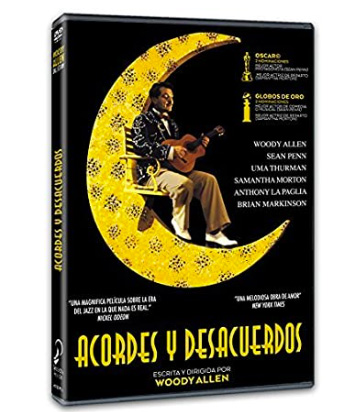
Sweet and Lowdown
Synopsis
Emmet Ray is a talented jazz guitarist living in the 1930s who considers himself one of the greatest musicians in the world, second only to Django Reinhardt. Despite his musical brilliance, he is arrogant, irresponsible and incapable of maintaining stable relationships. His life changes when he meets Hattie, a shy and affectionate woman who falls deeply in love with him. As Emmet struggles between his artistic ambitions and his emotional immaturity, the film explores the contradictions of genius, love and human weakness.
The Making of the Film
Woody Allen developed Sweet and Lowdown as a fictional portrait of a jazz musician inspired by the atmosphere of American jazz during the 1930s. The central character, Emmet Ray, is entirely fictional, although his admiration for Django Reinhardt is based on the historical influence the Belgian-born guitarist had on American musicians. Allen wanted to explore the personality of an artist who possesses extraordinary talent but lacks emotional maturity. The mockumentary format allowed him to present the character as if he were a forgotten historical figure whose life was being rediscovered by music historians. Sean Penn was selected to play Emmet Ray because the role required both musical credibility and a convincing portrayal of arrogance and vulnerability. Samantha Morton was cast as Hattie, whose quiet personality provides a striking contrast to Emmet's behavior. The film combines romantic comedy, musical drama and fictional historical commentary. Its visual style and atmosphere deliberately evoke the world of jazz clubs, recording sessions and traveling musicians during the interwar period.
Reviews and Reception
Professional reviews: Critics generally praised Sean Penn's performance, which was widely regarded as one of the strongest elements of the film. Samantha Morton also received considerable acclaim for conveying deep emotion through a largely silent performance. Woody Allen's combination of mockumentary, romance and musical comedy was appreciated for its originality. Some critics considered the film less emotionally consistent than Allen's most celebrated dramatic works.
Audience reception: The film attracted audiences interested in Woody Allen's cinema and the history of jazz. Its unusual central character and period atmosphere appealed particularly to viewers who appreciate character-driven storytelling. The relationship between Emmet and Hattie gave the film an emotional dimension that distinguished it from a conventional musical comedy. Although it was not among Allen's biggest commercial successes, it has retained a favorable reputation among admirers of his work.
Awards: Sean Penn received an Academy Award nomination for Best Actor for his portrayal of Emmet Ray. Samantha Morton was nominated for Best Supporting Actress. These nominations represented major recognition for the film's central performances. The production also received attention from several critics' associations during the awards season.
Behind-the-Scenes Stories
Director's inspirations: Woody Allen drew inspiration from the legendary guitarist Django Reinhardt, whose virtuosity and influence became central to the fictional mythology surrounding Emmet Ray. Allen was fascinated by the idea of a musician who possesses extraordinary artistic gifts but remains deeply flawed as a human being. The character also reflects the romanticized image of the self-destructive artist. The director used fictional interviews and documentary conventions to create the illusion that Emmet was a real musician from the past.
Production challenges: Sean Penn had to develop sufficient guitar-playing ability to make the musical performances convincing. The production also required careful attention to the visual details of the 1930s, including clothing, instruments and performance venues. Samantha Morton faced the unusual challenge of communicating much of her character's emotional life without dialogue. Recreating the atmosphere of early jazz performances demanded considerable work from the musicians and production team.
Notable scene: The scenes in which Emmet attempts to demonstrate his musical superiority are particularly revealing. His admiration for Django Reinhardt becomes almost an obsession, exposing the insecurity behind his arrogance. These moments establish the contradiction between his genuine musical brilliance and his inability to appreciate other people. The film repeatedly uses music to express feelings that Emmet himself cannot articulate.
Original casting: Sean Penn was ultimately chosen to embody Emmet Ray, bringing a combination of intensity and comic self-importance to the character. Samantha Morton was selected for the role of Hattie, while Uma Thurman played Blanche. The casting brought together performers with very different screen personalities, helping to establish the contrasts that drive the story.
Themes Explored
Sweet and Lowdown explores the complicated relationship between artistic genius and personal character. Emmet Ray demonstrates that extraordinary talent does not necessarily produce wisdom, kindness or emotional maturity. His admiration for Django Reinhardt reveals both genuine artistic appreciation and a deep sense of professional insecurity. Love is presented as a generous and patient force through Hattie's devotion to a man who frequently fails to recognize her value. The film also examines selfishness, vanity and the consequences of treating other people as accessories to personal ambition. Artistic identity becomes another important theme, as Emmet constructs an image of himself that is more impressive than the reality of his life. The story questions the romantic idea that great artists must also be tortured or irresponsible individuals. Ultimately, it suggests that musical brilliance cannot compensate for an inability to love and respect others.
Ending Explained
The ending emphasizes the emotional distance between Emmet Ray and the people who genuinely care about him. His relationship with Hattie represents an opportunity for affection and stability, but his selfishness prevents him from recognizing what he has. Blanche offers him a different kind of relationship, one based more on attraction and social ambition than genuine emotional understanding. Emmet's inability to commit to a meaningful relationship reflects his broader inability to take responsibility for his actions. His musical talent remains impressive, but it cannot protect him from loneliness or regret. The mockumentary structure also reminds viewers that the story is a fictional reconstruction rather than a conventional historical biography. Emmet becomes a figure whose artistic reputation survives more convincingly than his personal achievements. The conclusion therefore leaves a bittersweet impression about the difference between being remembered for talent and being valued as a human being.
Meaning of the Title
Sweet and Lowdown combines two contrasting expressions that reflect the film's musical and emotional identity. Sweet evokes the warmth, tenderness and melodic beauty associated with jazz music and romantic affection. Lowdown suggests the earthy, imperfect and sometimes morally questionable aspects of the protagonist's personality. The expression also recalls the blues and the traditional vocabulary of American jazz culture. Together, the words describe a world in which beautiful music can emerge from complicated and imperfect human experiences. The title captures the contrast between Emmet's artistic gifts and his difficult personality. It also suggests that the story is both affectionate toward its musical subject and critical of his behavior. The title therefore reflects the film's mixture of humor, melancholy and musical nostalgia.
The music is a major artistic feature of the film, with jazz arrangements and performances designed to recreate the atmosphere of the 1930s. Guitarist Howard Alden performed the principal guitar work associated with Emmet Ray, while Dick Hyman contributed to the musical arrangements. The soundtrack pays homage to the swing era and the influence of Django Reinhardt. Its authentic jazz vocabulary helps establish the film's period atmosphere and gives musical substance to its fictional portrait of a forgotten virtuoso.
Similar Films
Bird offers another portrait of a gifted jazz musician whose artistic achievements coexist with personal difficulties. Round Midnight explores the emotional and professional world of jazz musicians through a fictionalized dramatic story. La La Land examines artistic ambition and the sacrifices involved in pursuing a musical career. The Legend of 1900 presents an extraordinary musician whose talent is inseparable from his unusual personality. Inside Llewyn Davis explores the frustrations and disappointments of a talented but difficult artist. Ray portrays the life of a real musician whose genius is accompanied by personal struggles. The Glenn Miller Story offers a more traditional historical portrait of a celebrated musical figure. These films share Sweet and Lowdown's fascination with musical identity, artistic ambition and the human beings behind great performances.