

 Français
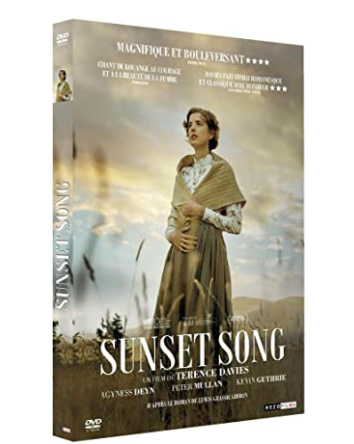
Sunset Song
Synopsis
Set in rural Scotland during the early 20th century, Chris Guthrie is a bright, intelligent young farming woman who dreams of education and literature despite enduring a brutal, abusive upbringing under her tyrannical father. As World War I breaks out, her community is shattered by conscription, loss, and the mechanized destruction of traditional agrarian life. Following her father's death and marriage to a passionate local soldier, Chris finds brief marital bliss before her husband is sent to the Western Front. When he returns deeply traumatized and violent, Chris must summon extraordinary inner strength to endure heartbreak and forge her own destiny on the land.
The Making of the Film
Adapted from Lewis Grassic Gibbon's classic 1932 Scottish modernist novel, the historical drama was directed by acclaimed British auteur Terence Davies. Davies spent decades trying to bring the beloved Scottish literary classic to the screen, seeking to honor its lyrical prose and rich pastoral themes. The production utilized authentic rural locations in New Zealand and Scotland to capture breathtaking sweeping landscapes. Agyness Deyn was cast as the lead protagonist, transitioning successfully from high fashion to prestige cinema.
Critical Reception
Critical reception for the film was generally positive, with reviewers praising its stunning cinematography, poetic pastoral beauty, and Agyness Deyn's transcendent lead performance. Critics lauded Davies's uncompromising directorial vision in capturing the emotional weight of Scottish rural life and wartime tragedy. Audiences in art-house circuits responded warmly to its lyrical pacing and visual splendor. It is celebrated as a magnificent, poetic cinematic adaptation of Scottish literature.
Behind-the-Scenes Stories
Agyness Deyn spent months working with vocal coaches to master an authentic early 20th-century Scottish rural dialect prior to filming. The production was filmed on location in Aberdeenshire, Scotland, and New Zealand, capturing breathtaking golden-hour wheat fields. Director Terence Davies maintained a meticulous, painterly visual style inspired by classical landscape paintings. The harvest and wedding scenes involved intricate historical recreation.
Themes Explored
The film explores rural Scottish life, World War I trauma, domestic abuse, female resilience, and agrarian modernization. It highlights pastoral beauty, generational change, and spiritual endurance. Scottish countryside drives the lyrical narrative. It also touches upon grief.
Ending Explained
Following her husband's execution for military desertion and the quiet passing of her past life, Chris stands alone atop the Scottish hills overlooking her ancestral farmland, spiritually healed and self-reliant. She embraces her identity as both a mother and a keeper of the land, finding inner peace amidst the sweeping landscape. The timeless beauty of the sunset over the fields symbolizes endurance and hope. The conclusion provides a profound, poetic wrap-up to the historical drama.
Meaning of the Title
The title refers directly to the literary metaphor of a "sunset song"—the fading twilight of an entire traditional rural way of life in Scotland before the modern industrialized era. It symbolizes transition. The phrase sets a lyrical historical drama tone.
Gast Waltzing composed a soaring, pastoral orchestral score featuring Celtic folk melodies that elevated the sweeping Scottish landscapes.
Far from the Madding Crowd, The English Patient, Testament of Youth, The Tree of Life