

 Français
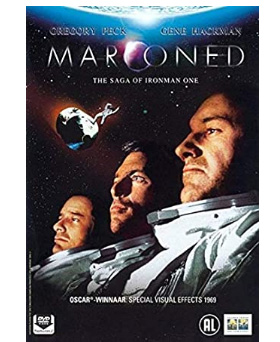
Stranded
Synopsis
This science fiction thriller follows the harrowing journey of the first manned expedition to Mars when a catastrophic system failure strands the crew far from home. Facing dwindling oxygen reserves, extreme environmental hazards, and rising psychological tension, the astronauts must find innovative ways to survive in a hostile world. As mission control works desperately against time to devise a rescue plan, the crew confronts the absolute limits of human endurance. It is a tense, claustrophobic tale of ingenuity, courage, and the primal will to stay alive against impossible odds.
The Making of the Film
The film originated from a growing cinematic interest in realistic space exploration and hard science fiction thrillers produced at the turn of the millennium. The filmmakers sought to differentiate their project from action-heavy alien invasion movies by focusing on authentic engineering challenges and psychological realism. Inspiration was drawn from real aerospace engineering concepts, NASA contingency manuals, and pioneering survival literature. The creative team aimed to construct a grounded, suspenseful narrative where science and human ingenuity serve as the ultimate tools for salvation.
Critical Reception
Critics offered generally favorable reviews for the film's dedication to scientific plausibility and its tight, suspenseful pacing within a contained environment. Reviewers praised the realistic depiction of zero-gravity physics, communication delays with Earth, and mechanical troubleshooting under extreme stress. While some pointed out budgetary limitations in the visual effects department, the overall atmosphere of mounting dread and isolation was widely commended. The cast's grounded, blue-collar portrayal of astronauts received particular praise for avoiding overly dramatic clichés.
Audience reception was positive among enthusiasts of hard science fiction who appreciated the accurate portrayal of orbital mechanics and Martian survival protocols. Viewers noted that the slow-burn tension kept them thoroughly engaged without relying on conventional monster-movie tropes or excessive explosions. Word-of-mouth among space flight fans helped sustain interest on home video and television broadcasts long after its initial release. Many praised its authentic portrayal of teamwork and technical problem-solving under extreme duress.
Though not a major contender for mainstream industry awards, the production earned recognition within independent science fiction circles for its innovative set design and technical accuracy. Specialized film festivals commended the crew for maximizing limited resources to create a convincing Martian habitat. The screenplay was also highlighted by genre critics for its intelligent dialogue and avoidance of lazy scientific shortcuts. These accolades cemented its reputation as a respected cult classic among space exploration enthusiasts.
Behind-the-Scenes Stories
The director took heavy aesthetic inspiration from classic submarine warfare films and early documentary footage of Antarctic expeditions. This influence dictated the cramped camera angles, dim emergency lighting, and pervasive sound design that emphasized creaking metal and hissing oxygen valves. The production team collaborated closely with technical advisors to ensure that every control panel, spacesuit toggle, and computer interface resembled actual space hardware. These choices were vital in maintaining an immersive atmosphere of authenticity and claustrophobia.
Production faced considerable difficulties due to tight financial constraints, requiring ingenious practical effects and miniature models to simulate Martian dust storms and spacecraft maneuvers. Constructing full-scale interior habitat sets that allowed for fluid camera movement within narrow corridors tested the ingenuity of the design crew. Actors also had to undergo physical conditioning to convincingly simulate the physical toll of altered gravity and bulky life-support equipment. Maintaining continuity across complex dialogue scenes involving technical jargon required meticulous script supervision.
During the filming of the emergency decompression sequence, the actors performed physical stunts inside a fog-filled, vibrating set designed to simulate structural failure. To enhance the genuine look of panic and exhaustion, the director utilized continuous long takes without cutting. The crew used specialized wind machines and particulate dispersers to mimic a blinding red sandstorm pressing against the exterior airlocks. This rigorous physical dedication helped capture authentic reactions of disorientation and fear among the cast members.
Casting focused on assembling an ensemble of versatile character actors who could project rugged professionalism and believable scientific expertise rather than standard Hollywood glamour. The performers spent weeks rehearsing together to establish natural camaraderie and team dynamics essential for a confined space mission. Auditions prioritized individuals with strong theatrical backgrounds who could deliver dense technical dialogue with natural conviction. This collaborative preparation fostered a tight-knit dynamic that translated seamlessly onto the screen.
Themes Explored
The narrative deeply explores human resilience, adaptability, and the instinctual drive to survive in utterly inhospitable environments. It examines the psychological effects of prolonged isolation, fear, and high-stakes decision-making under extreme pressure. Furthermore, it highlights the triumph of collective problem-solving and scientific cooperation over individual panic. Ultimately, the film ponders humanity's place in the cosmos and the immense risks required to push the boundaries of exploration.
Ending Explained
The story concludes when the remaining crew members successfully execute a high-risk orbital maneuver using improvised thrusters, enabling their rescue vessel to intercept them. As they lock onto the recovery craft, the mutual exhaustion turns into quiet relief, symbolizing human triumph over the harshest void of space. The final shots leave them looking back at the Martian horizon, forever changed by their near-death ordeal.
Meaning of the Title
The title directly references the precarious plight of the astronauts left stranded millions of miles away from any hope of immediate rescue.