

 Français
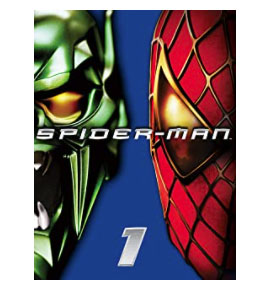
Spider-Man
Synopsis
Peter Parker is a shy, awkward high-school student in Queens who is in love with his neighbor Mary Jane Watson. When he is bitten by a genetically modified spider, he gains extraordinary powers and begins to see a new way to be noticed. After a personal tragedy teaches him that great power comes with great responsibility, he takes up a masked life as Spider-Man. His path soon collides with the Green Goblin, a menacing figure whose identity is closer to home than he imagines.
The Making of the Film
Spider-Man is based on the Marvel Comics character created by Stan Lee and Steve Ditko. The project spent years in development limbo, and after the financial troubles of 21st Century Fox the rights reverted to Marvel Enterprises. Sam Raimi, a lifelong fan of the character, was hired to direct in 2000. David Koepp wrote the working screenplay, which was later reworked by Scott Rosenberg and refined by Alvin Sargent, although Koepp received sole screen credit. Laura Ziskin and Ian Bryce produced the film for Columbia Pictures, with a budget of about $139 million. Tobey Maguire was chosen to play Peter Parker, and Danny Elfman composed the score. The film opened in the United States on May 3, 2002.
Critical Reception
Critics received the film warmly, praising Raimi's direction, the story, the performances, the visual effects, the action sequences and the musical score. Many noted that the film treated its hero with unusual seriousness for the time, and that approach extended to the casting of Tobey Maguire as Peter Parker. Reviewers also appreciated the heart beneath the action, with the romance and the coming-of-age story carrying as much weight as the fights. Looking back, it is often credited with proving that comic-book films could be both crowd-pleasers and genuinely emotional.
Audiences turned out in record numbers. The film earned $114.8 million in its opening weekend, becoming the first movie ever to top $100 million in its first three days. It went on to gross around $403.7 million in North America and roughly $821 million worldwide, making it the biggest domestic hit of 2002 and the third-highest-grossing film of the year worldwide. The opening day alone brought in $39.4 million. That success launched a lucrative franchise and helped make stars of Maguire and James Franco.
Spider-Man received Academy Award nominations for Best Visual Effects and Best Sound at the 75th Academy Awards. It also won an MTV Movie Award for Best Kiss for the famous upside-down moment between Maguire and Kirsten Dunst. The film collected many other accolades from visual-effects and sound guilds. Its biggest prize, however, was its enduring influence on the superhero genre.
Behind-the-Scenes Stories
Raimi was a lifelong fan of Spider-Man, and that passion shaped the film's tone. His approach was to take the superhero seriously and to treat Peter's struggles with real emotional weight. That attitude even shaped the casting of Tobey Maguire, whom Raimi found capable of conveying vulnerability and wonder.
The script went through several hands. David Koepp wrote the working screenplay, Scott Rosenberg rewrote it, and Alvin Sargent refined it, though Koepp ended up with sole credit. The project also had to weather years of rights disputes before it could finally begin production.
Willem Dafoe landed the role of the Green Goblin only after several other actors, reportedly including Nicolas Cage, John Malkovich, Liam Neeson and John Travolta, passed on it. Dafoe won over the filmmakers with an intense audition in which he acted out both Norman Osborn and the Goblin. Tobey Maguire reportedly beat out a long list of young Hollywood actors for the title role. Kirsten Dunst and James Franco rounded out the central quartet.
Themes Explored
Spider-Man is built on the idea that great power brings great responsibility, a lesson Peter learns through loss. The film also works as a coming-of-age story about a teenager trying to understand his changing body and place in the world. Identity runs through the plot, since Peter lives between his ordinary life and his masked alter ego. Love and sacrifice shape his choices, especially in his relationship with Mary Jane. The story also explores the pull of power and how it can corrupt, as seen in Norman Osborn's transformation.
Ending Explained
In the final battle, the Green Goblin tries to kill Spider-Man, but Peter turns the tables and the Goblin dies when his own glider impales him. Before he dies, Norman Osborn is revealed as the man behind the mask, and Peter keeps that secret. Harry Osborn, however, sees Spider-Man with his father's body and blames him, setting up future conflict. At Norman's funeral, Mary Jane tells Peter she loves him, but Peter, mindful of the danger his life brings to those he loves, chooses to keep his distance. The film closes with Peter embracing his role as Spider-Man, understanding both its cost and its purpose.
Meaning of the Title
The title is the name of the hero, taken straight from the Marvel Comics character created by Stan Lee and Steve Ditko. It highlights the dual identity at the heart of the story, with Peter Parker and Spider-Man sharing the same body. The simple name also reflects the character's roots as a teenager who becomes something bigger than himself. By using only the hero's name, the film signals that this is first and foremost an origin story.
Original Soundtrack
Danny Elfman composed the score, and critics praised it as one of the film's strengths. His music mixes heroic themes with a more playful, almost comic-book energy. The main theme gives Spider-Man a bold musical identity that matched the film's scale. It also supports the film's emotional beats, especially in the quieter moments between Peter and Mary Jane.
Similar Films
Spider-Man 2 (2004) is the direct sequel, often considered one of the best superhero films ever made. X-Men (2000) helped launch the modern superhero era shortly before this film. Batman (1989) is an earlier landmark in comic-book cinema. Iron Man (2008) later built a new kind of superhero universe. Darkman (1990), also directed by Sam Raimi, shows an earlier take on a tormented masked hero.