

 Français
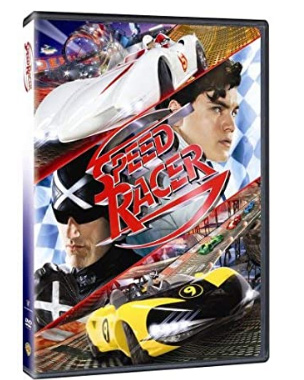
Speed Racer
Synopsis
Speed Racer is a hyper-vibrant, dazzling, and visually revolutionary sci-fi action racing film written and directed by Lana and Lilly Wachowski, adapted from Tatsuo Yoshida's classic anime series. The story follows Speed Racer, a fearless and naturally gifted young auto racer whose life is defined by his family's independent racing legacy and the tragic loss of his older brother Rex in a fatal race. When a corrupt corporate tycoon named E.P. Royalton offers Speed a lucrative contract, Speed discovers the dark underworld of race-fixing and corporate corruption governing the international Grand Prix. Teaming up with his family and a mysterious masked racer called Racer X, Speed enters the grueling, cross-country Death Race known as the Crucible to save the sport. The film delivers unmatched visual pop-art energy.
The Making of the Film
Writer-directors Lana and Lilly Wachowski sought to create a revolutionary visual aesthetic that merged live-action filmmaking with anime framing, multi-plane staging, and hyper-saturated CGI colors. The production utilized groundbreaking virtual background technology and digital compositing to ensure every frame looked like a living comic book or cartoon painting. Warner Bros. backed the ambitious family-friendly blockbuster. Emile Hirsch was cast as Speed Racer, joined by an ensemble cast including Christina Ricci, John Goodman, Susan Sarandon, and Matthew Fox.
Critical Reception
Professional critics offered mixed reviews upon release, with many dismissing it as an overwhelming, hyper-stimulating cartoon assault on the senses. However, a passionate counter-movement of critics and cinephiles immediately championed it as a visionary, ahead-of-its-time pop-art masterpiece. Reviewers praised its unmatched visual inventiveness, emotional family core, and exhilarating final racing climax. Over subsequent years, its critical reputation has undergone a massive cult reassessment, now widely celebrated as a stunning cinematic triumph.
Audiences experienced mixed box office returns during its theatrical window, but animation and sci-fi fans embraced its joyous, uninhibited pop aesthetic on home video and streaming. Viewers were mesmerized by the kaleidoscopic Grand Prix finale. Word-of-mouth solidified its status as an enduring cult classic.
The film earned Saturn Award nominations and technical guild recognition for its groundbreaking digital visual effects and vibrant art direction.
Behind-the-Scenes Stories
Director Lana and Lilly Wachowski drew inspiration from classic anime, pop-art culture, and retro 1960s graphic design. Coordinating the complex virtual racing sequences required actors to perform inside specialized green-screen rigs while camera simulators tracked high-speed motion. During the filming of the family garage scenes, John Goodman and Susan Sarandon brought heartwarming grounding to the stylized universe. Before Emile Hirsch was cast, various young Hollywood actors were considered for the lead racing role.
Themes Explored
Racing, Family, Corporate Corruption, Art, Freedom, Passion
Ending Explained
The triumphant climax shows Speed winning the grueling Crucible race and exposing Royalton's corruption, proving that racing is about pure passion, not corporate greed.
Meaning of the Title
The title uses the protagonist's iconic name and his family legacy in high-speed racing.
Original Soundtrack
Michael Giacchino composed a phenomenal, energetic orchestral score that blended retro 1960s spy-jazz motifs with soaring symphonic themes matching the breakneck racing speed.
Tron: Legacy, The Matrix, Alita: Battle Angel, Scott Pilgrim vs. the World