

 Français
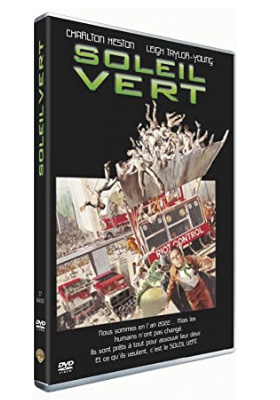
Soylent Green
Synopsis
In 2022, New York is overcrowded, polluted and starving, with millions of people crowded into the streets and living on processed food rations. Detective Frank Thorn is assigned to investigate the murder of a wealthy executive from the Soylent Corporation, the company that produces most of the city's food. With the help of his elderly roommate Sol, a researcher with memories of a better world, Thorn begins to uncover a terrible secret. The deeper he digs, the more dangerous his investigation becomes.
The Making of the Film
Soylent Green is based on the 1966 novel "Make Room! Make Room!" by Harry Harrison, which warned about the effects of overpopulation. Richard Fleischer directed the film, with Charlton Heston as Detective Thorn and Edward G. Robinson as Sol Roth. The screenplay by Stanley R. Greenberg moved the story's focus from social commentary to a detective thriller, while keeping its bleak vision of the future. The film adds themes of climate change and resource depletion that have grown more relevant with time. It was released in 1973 and was Edward G. Robinson's final film.
Critical Reception
Summary of Professional Reviews
Critics gave the film a mixed reception on release, with some praising its grim vision and others finding it heavy-handed. Many singled out Edward G. Robinson's moving performance as the highlight. Over time, the film has gained respect as an influential science-fiction work. Its warnings about overpopulation, pollution and food shortages have only gained resonance.
Audience Reception
The film attracted audiences interested in dystopian science fiction and became a cult favorite. Its final twist became one of the most famous in movie history and has been widely parodied. Viewers still remember the poignant scene in which Robinson's character says goodbye to the world. It remains a staple of television screenings and home video.
Awards Received
The film won the Nebula Award for Best Dramatic Presentation, given by the Science Fiction and Fantasy Writers of America. It also received recognition at other genre awards. These honors helped cement its reputation as a landmark of 1970s science fiction.
Behind-the-Scenes Stories
Anecdote About a Particular Scene
Robinson's farewell scene, in which Sol chooses to end his life in a government euthanasia facility, is considered the emotional peak of the film. Robinson was seriously ill during the shoot and died only a few days after finishing work. Charlton Heston later said that the tears shed by his co-star in that scene were genuine, adding a sad layer of reality to the moment.
Themes Explored
The film is a warning about overpopulation, environmental destruction and the loss of natural resources. It imagines a world in which the wealthy live in comfort while the majority struggle to survive. Corruption and the power of corporations are central, as a company controls the food supply. The story also reflects on nostalgia, as older characters remember fresh fruit and open spaces. Humanity and morality are questioned when survival becomes the only goal. Beneath its detective plot, it is a disturbing look at where society might be heading.
Ending Explained
Thorn discovers that Soylent Green, the popular new food, is made from human remains. Wounded in a confrontation, he is carried away on a stretcher, shouting the truth to the crowd. The ending leaves the future of the world uncertain, but suggests that the secret might finally come to light. It is one of the most shocking and best-known revelations in science-fiction cinema.
Meaning of the Title
Soylent is the name of the company that supplies the city's food, a word derived from "soy" and "lentil", the ingredients it claims to use. "Green" is the name of its newest product, which is said to be made from plankton. The title sounds innocent and futuristic, which makes the horror of the final reveal even stronger.
Original Soundtrack
The film's most famous musical moment comes in Sol's farewell scene, where he is given a beautiful sensory experience of images of nature while classical music plays. The pieces, including works by Beethoven, Grieg and Tchaikovsky, create a stark contrast with the grim reality of the world. Fred Myrow composed the rest of the score. The sequence is considered one of the most moving in the genre.
Similar Films
- Logan's Run (1976): another dystopia about a society that controls life and death.
- Planet of the Apes (1968): a classic science-fiction film with a famous twist.
- Children of Men (2006): a bleak vision of the near future.
- Silent Running (1972): a science-fiction story about the loss of nature.