

 Français
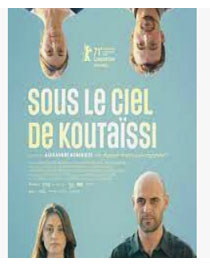
What Do We See When We Look at the Sky?
Synopsis
What Do We See When We Look at the Sky? follows Lisa and Giorgi, two young strangers who experience a magical, accidental chance encounter on a sunny street in the ancient Georgian city of Kutaisi and fall instantly in love, agreeing to meet for a date the next morning. However, a mysterious malediction curses them overnight: when they wake up the next day, they have completely transformed into entirely different physical appearances and lost their professional skills. Unable to recognize each other when they meet at the appointed cafe, they wander the charming city streets filled with stray dogs, World Cup football fever, and cinematic romance.
The Making of the Film
Written and directed by Georgian filmmaker Aleksandre Koberidze, the film was conceived as a poetic, magical realist romance celebrating urban life, cinema, and serendipity in Kutaisi. The inspiration stemmed from fairy tales, street football culture, and the quiet magic of ordinary city observations. The production utilized authentic street locations in Kutaisi, 16mm cinematography, and non-professional local actors.
Critical Reception
Critics universally lauded What Do We See When We Look at the Sky? as a masterwork of contemporary art-house cinema, praising its enchanting magical realism, gorgeous 16mm cinematography, and whimsical romantic tone. Reviewers highlighted Koberidze's patient, observant directorial style, comparing its gentle poetry to Jacques Tati and Apichatpong Weerasethakul. It achieved widespread festival acclaim.
Audiences appreciative of slow-burn art-house romance embraced the movie for its unique visual charm.
The film earned major international film festival recognition, including the FIPRESCI Prize at the Berlinale.
Behind-the-Scenes Stories
Aleksandre Koberidze drew heavy inspiration from Georgian folklore, childhood memories in Kutaisi, and love for street football and stray dogs.
Shooting across scenic Kutaisi streets required patient observation of local citizens, stray animals, and natural summer lighting.
During production, the directors cast multiple actors to play the same characters before and after the magical curse transformation.
Casting non-professional locals brought authentic warmth and unscripted charm to the magical romance.
Themes Explored
The film explores magical realism, romantic serendipity, Georgian city life, street football, animal companionship, and cinematic poetry.
Ending Explained
The magical open-ended conclusion suggests that love transcends physical appearance, with the star-crossed lovers finding subtle ways to reconnect across the enchanted city.
Meaning of the Title
Reference to the philosophical opening narration and the contemplative mood (What Do We See When We Look at the Sky?) of the urban fairy tale.
Original Soundtrack
The original musical score composed by Giorgi Koberidze features whimsical piano melodies and gentle acoustic tunes that capture the romantic Georgian atmosphere.
Similar films include Wings of Desire, Amélie, Uncle Boonmee Who Can Recall His Past Lives, and Before Sunrise.