

 Français
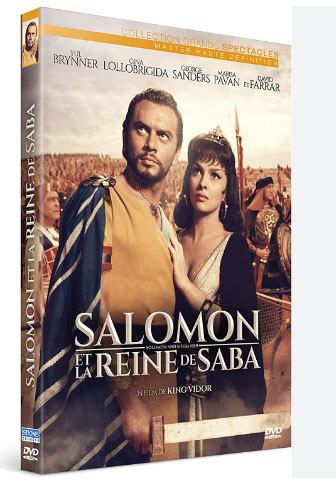
Solomon and Sheba
Synopsis
Following the death of King David, his wise son Solomon ascends to the throne of Israel, sparking jealousy and rebellion from his older brother Adonijah. Seeking to crush the new kingdom economically, the seductive and cunning Queen of Sheba allies with Egypt and visits Solomon's court to ruin him. However, as Solomon and the foreign queen engage in elaborate intellectual and political sparring, a passionate and forbidden romance unexpectedly blossoms between them. Their affair threatens to bring down the kingdom and invoke divine wrath.
The Making of the Film
Director King Vidor helmed this monumental biblical epic as his final major Hollywood feature film, bringing grand cinematic scale to ancient historical mythology. The production was marred by tragedy when original star Tyrone Power suffered a fatal heart attack on set during sword-fighting sequences, leading to Yul Brynner stepping in as Solomon. Filmmakers utilized expansive Spanish locations and massive studio sets to recreate ancient Jerusalem and Egyptian opulence. The project aimed to combine biblical spectacle with torrid romantic melodrama.
Critical Reception
Critics offered mixed reviews upon its 1959 release, praising the film's staggering visual opulence, massive battle sequences, and Gina Lollobrigida's mesmerizing screen presence. However, many reviewers felt that the narrative bogged down in sluggish pacing and melodramatic romantic clichés during the second half. Some critics noted that Yul Brynner's late emergency casting as Solomon resulted in a less natural physical pairing with Lollobrigida compared to Tyrone Power's planned footage. Overall, it was regarded as an entertaining and lavish Hollywood spectacle.
Audiences embraced the movie with immense enthusiasm, turning it into a major box office hit and a holiday season blockbuster for United Artists. Viewers were captivated by the lavish costumes, opulent palace sets, and the scandalous chemistry between the two leads. The climactic divine destruction of the temple provided memorable cinematic thrills for fans of historical epics. It remains a cherished classic of golden-age Hollywood biblical cinema.
While traditional Academy awards bypassed the production, it earned widespread recognition for its breathtaking costume design and cinematography. Gina Lollobrigida's glamorous performance earned international acclaim and popularity. The film cemented its legacy as a landmark achievement in classic Hollywood studio scale.
Behind-the-Scenes Stories
Director King Vidor was tasked with salvaging a troubled production after the sudden, tragic death of leading man Tyrone Power in Madrid. Yul Brynner rushed onto the set on short notice, learning his lines and blocking while shooting massive emotional and physical scenes. The production team had to meticulously match or reshoot scenes previously filmed with Power to maintain visual continuity.
Filming large-scale battle sequences and opulent court scenes in Spain required thousands of extras, complex stunt coordination, and massive lighting grids. Managing the immense wardrobe budget for Gina Lollobrigida's iconic gowns demanded expert studio craftsmanship. Maintaining high dramatic tension amidst tragic behind-the-scenes disruption tested the entire crew.
During the dramatic trial of the baby scene, Yul Brynner delivered his lines with commanding theatrical authority, showcasing his classical stage training. The crew observed a respectful moment of silence on set to honor Tyrone Power before completing the film. These emotional circumstances united the cast in professional dedication.
Yul Brynner and Gina Lollobrigida starred as King Solomon and the Queen of Sheba, supported by George Sanders and Marisa Pavan. The casting process famously shifted overnight following Power's tragic passing. The resulting ensemble delivered classic Hollywood melodrama.
Themes Explored
The film explores divine versus earthly power, forbidden passion, political betrayal, religious devotion, and redemption. It examines how absolute power and romantic desire can corrupt even the wisest of rulers. The narrative ultimately champions spiritual faith over vanity.
Ending Explained
Stricken by remorse over abandoning his faith for his foreign lover and facing the rebellion of Adonijah, Solomon prays for divine forgiveness. A miraculous bolt of divine lightning strikes the pagan temple, destroying the idols and scattering the invading enemy armies. The Queen of Sheba renounces her false gods, converts to monotheism, and returns to her kingdom with a changed heart, while Solomon is restored as righteous king. The ending offers a classic, thunderous Hollywood moral resolution.
Meaning of the Title
The title "Solomon and Sheba" directly highlights the two legendary historical and biblical monarchs whose fateful encounter drives the entire romantic and political plot. It signals a tale of clashing empires and epic romance. The classic title became an immortal hallmark of biblical cinema.
Original Soundtrack
Composed by Mario Nascimbene, the musical score is a majestic orchestral triumph featuring sweeping Middle Eastern motifs, grand brass fanfares, and romantic string arrangements. The soaring melodies elevate the epic scale of the biblical court and the passion of the forbidden romance, delighting music fans.
Latest News
The film continues to be celebrated by film historians as a fascinating monument to the golden age of Hollywood biblical filmmaking.
Similar Films
Fans of classic Hollywood biblical epics will enjoy Ben-Hur (1959), The Ten Commandments (1956), Samson and Delilah (1949), and Cleopatra (1963), all exploring ancient history.