

 Français
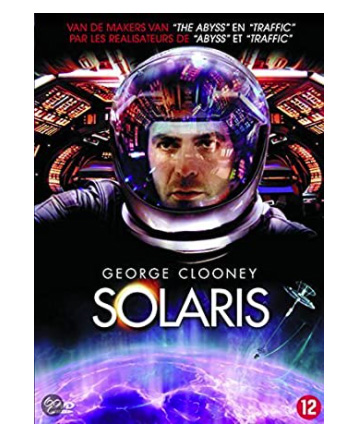
Solaris
Synopsis
Dr. Chris Kelvin, a grieving psychologist tormented by the tragic suicide of his wife, accepts a lonely mission to investigate a troubled scientific research station floating in orbit above the mysterious, sentient ocean planet Solaris. Upon arriving at the station, he discovers the crew acting erratic and paranoid after encountering physical manifestations of their deeply repressed memories and deceased loved ones. Soon, Kelvin wakes up to find his dead wife sitting alive in his cabin, forcing him to confront his overwhelming guilt and unresolved grief. The cerebral sci-fi drama delivers atmospheric philosophical mystery.
The Making of the Film
Director Steven Soderbergh adapted the film from Stanisław Lem's legendary 1961 philosophical sci-fi novel, choosing to focus primarily on the human emotional and psychological elements rather than hard sci-fi tech. The inspiration stemmed from wanting to create an American adaptation distinct from Andrei Tarkovsky's 1972 Russian cinematic masterpiece. The production team invested in sleek, minimalist space station sets and haunting color palettes. The script was structured as a slow-burn psychological exploration of memory and love.
Critical Reception and Reviews
Professional critics gave mixed reviews, praising the film's gorgeous atmospheric cinematography, philosophical depth, and strong lead performances by George Clooney and Natascha McElhone, while criticizing its deliberate, slow pacing. Reviewers noted that Soderbergh turned a cerebral sci-fi puzzle into an intimate, haunting romance about grief. Public reception was moderate, as mainstream audiences expected a traditional Hollywood sci-fi thriller rather than an arthouse meditation. The film earned appreciation among sci-fi purists.
Filming Anecdotes
Director Steven Soderbergh drew visual inspiration from 1970s European art-house cinema, minimalist architecture, and abstract expressionist painting. Production took place on soundstages in Los Angeles, constructing sleek, fluid space station corridors. During the filming of intimate cabin encounters, George Clooney and Natascha McElhone maintained intense emotional vulnerability. Soderbergh served as his own cinematographer under a pseudonym, utilizing low-light camera techniques.
Themes Explored
The film explores grief, memory, guilt, romantic obsession, consciousness, and the limits of human understanding.
The ambiguous conclusion shows Kelvin remaining on Earth, seemingly reunited with a manifestation of his wife in a surreal blending of life, death, and memory.
Meaning of the Title
The title refers directly to the mysterious sentient planet "Solaris" whose ocean resurrects human memories and emotional ghosts.
Original Soundtrack
Cliff Martinez composed an extraordinary, hypnotic electronic ambient score featuring ethereal synthesizer soundscapes that evoked the infinite loneliness of deep space.
The film remains a fascinating arthouse sci-fi experiment cherished for its haunting visual style and deep emotional resonance.
2001: A Space Odyssey, Interstellar, Arrival