

 Français
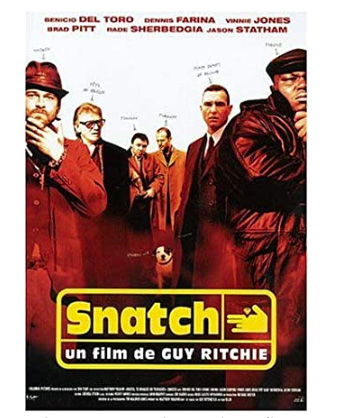
Snatch
Synopsis
In London's criminal underworld, a stolen diamond sets off a chain of chaotic events involving gangsters, boxing promoters and small-time criminals. Turkish, an ambitious boxing promoter, becomes entangled with the violent gangster Brick Top after a fight goes disastrously wrong. Meanwhile, a group of amateur thieves led by Franky Four Fingers attempts to sell the valuable diamond. Their separate schemes gradually collide, creating a dangerous mixture of misunderstandings, betrayals and unexpected alliances. As everyone pursues money and power, the situation becomes increasingly unpredictable.
The Making of the Film
Snatch was written and directed by Guy Ritchie, following the success of his earlier crime comedy Lock, Stock and Two Smoking Barrels. The director wanted to develop a similarly energetic story built around overlapping criminal schemes and eccentric characters. The screenplay combines two central plots: the search for a stolen diamond and the chaotic world of illegal boxing. Ritchie drew inspiration from British crime fiction, gangster films and the fast-paced rhythm of popular music videos. The production brought together a large ensemble cast, including Jason Statham, Brad Pitt, Benicio del Toro and Dennis Farina. Brad Pitt was given the unusual role of Mickey, an Irish Traveller boxer whose speech is difficult for outsiders to understand. This casting choice allowed the actor to move away from his familiar leading-man image and embrace physical comedy. The film was shot primarily in London and its surroundings, using locations that reflect the rough and colourful atmosphere of the criminal underworld. Rapid editing, visual jokes and intersecting storylines became central elements of its identity. Snatch helped establish Guy Ritchie as a prominent director of stylish British crime comedies.
Critical Reception
Professional critical response: Snatch received generally positive reviews from critics. Many praised Guy Ritchie's energetic direction, inventive editing and colourful collection of characters. Brad Pitt's performance as Mickey attracted particular attention, with reviewers appreciating his comic transformation. Some critics felt that the film repeated elements of Lock, Stock and Two Smoking Barrels without developing them sufficiently. Nevertheless, its visual style and fast-moving narrative were widely recognised as entertaining and distinctive.
Audience reception: The film became a commercial success and developed a strong international following. Audiences enjoyed its memorable dialogue, unpredictable plot and eccentric criminal characters. Brad Pitt's performance helped attract viewers who might not otherwise have been interested in a British gangster comedy. The film also became popular through home video and repeated television broadcasts. Its distinctive style and quotable lines have made it a lasting favourite among crime-comedy fans.
Awards and recognition: Snatch received several nominations and recognitions from film organisations, particularly in connection with its editing and performances. Although it did not achieve the same major awards success as some other crime films, it became an important commercial and cultural success. Its ensemble cast and distinctive visual style were frequently highlighted in reviews. The film helped consolidate Guy Ritchie's reputation as a director with a recognisable approach to crime storytelling. Its influence can be seen in later British crime comedies and ensemble thrillers.
Behind-the-Scenes Stories
Director's inspirations: Guy Ritchie wanted to create a crime story in which numerous characters and apparently unrelated schemes gradually collided. He was inspired by the rhythms of British gangster fiction and by the comic possibilities of criminals who are far less competent than they believe themselves to be. The film also reflects his interest in rapid editing and visual storytelling. Its unusual characters and overlapping plots were designed to keep the audience constantly adjusting its understanding of events.
Production challenges: The large ensemble and intersecting storylines required careful organisation during filming and editing. The filmmakers had to maintain narrative clarity while frequently changing perspectives and locations. Brad Pitt's role presented a particular challenge because his character speaks with a distinctive accent that many other characters struggle to understand. The fight sequences also required careful choreography to make the boxing appear convincing and dramatically effective. Balancing violence with comedy was another important part of the production.
A memorable scene: Mickey's boxing matches are among the film's most memorable sequences. His opponents underestimate him because of his unconventional appearance and speech, only to discover that he possesses extraordinary fighting ability. The contrast between his apparently chaotic behaviour and his effectiveness in the ring creates much of the humour. These scenes also reveal how Brick Top's carefully controlled criminal world can be disrupted by someone he cannot easily predict.
Originally considered casting: Guy Ritchie assembled a diverse cast that combined British character actors with international stars. Jason Statham returned to work with the director, while Brad Pitt joined the production in a role that deliberately challenged his usual screen image. Benicio del Toro played Franky Four Fingers, and Dennis Farina portrayed Cousin Avi. The casting of Pitt was particularly important because his celebrity status added an unexpected dimension to the film's comic approach.
Themes Explored
Snatch explores greed, deception, ambition and the unpredictability of criminal life. Almost every character believes that intelligence and manipulation will allow them to control events, yet their plans repeatedly collapse because of mistakes and unforeseen circumstances. The film also examines the fragile nature of loyalty in a world where money often takes priority over personal relationships. Its characters are frequently driven by vanity and the desire to appear more powerful than they really are. Beneath its fast-paced humour, the story suggests that violence and greed create chaos that nobody can fully control.
Explaining the Ending
The ending brings together the different strands of the diamond and boxing plots. Mickey's actions prove that he has been far more capable and intelligent than the criminal figures who attempted to control him. Brick Top's plan collapses, and the people who underestimated the boxer face the consequences of their arrogance. The stolen diamond also passes through a series of unexpected hands before its final destination becomes clear. Turkish and Tommy manage to survive the chaos, although their future remains tied to the unpredictable criminal world. The final revelations explain several earlier misunderstandings and show how seemingly insignificant details influenced the entire story. The ending is deliberately playful, rewarding viewers who have followed the film's rapid sequence of twists. It reinforces the idea that nobody truly controls the criminal game for long.
The Meaning of the Title
The title Snatch refers to the act of stealing or taking something quickly, which reflects the central diamond theft at the heart of the story. The word also suggests the sudden, chaotic nature of the characters' schemes and the way events are constantly taken out of their control. Its short, sharp sound suits the film's fast editing and aggressive comic energy. The title therefore captures both the criminal subject matter and the unpredictable rhythm of the narrative.
The soundtrack is notable for its energetic mixture of electronic music, rock and contemporary alternative tracks. Guy Ritchie uses music to reinforce the film's rapid rhythm and distinctive British atmosphere. Songs by artists such as Oasis, Massive Attack and The Stranglers contribute to its recognisable musical identity. John Murphy's score also supports the tension and comic timing of the story. The soundtrack became closely associated with the film's stylish crime-comedy approach.
Similar films include Lock, Stock and Two Smoking Barrels, also directed by Guy Ritchie, which shares its overlapping criminal plots; Layer Cake, directed by Matthew Vaughn, which explores British organised crime; The Gentlemen, directed by Guy Ritchie, which features another ensemble of eccentric criminals; and Pulp Fiction, directed by Quentin Tarantino, which combines fragmented storytelling, violence and dark humour.