

 Français
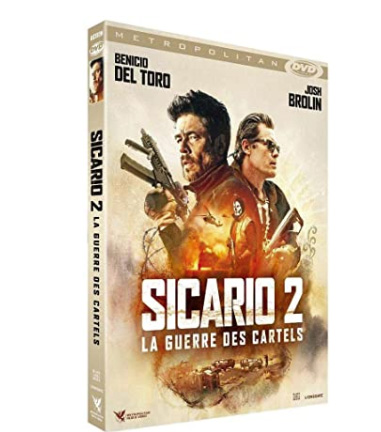
Sicario: Day of the Soldado
Synopsis
When Mexican drug cartels begin smuggling terrorists across the United States border, the federal government authorizes covert operative Matt Graver to wage an illegal war. Graver recruits enigmatic, ruthless assassin Alejandro Gillick to spark a full-scale war between rival cartels by kidnapping Isabela Reyes, the teenage daughter of a high-ranking cartel kingpin. However, when the mission goes sideways and the government decides to erase all evidence of their involvement, Alejandro is ordered to eliminate the girl. Instead, Alejandro chooses to protect Isabela, going rogue and risking everything to smuggle her safely across a hostile war zone.
The Making of the Film
Following the critical success of Denis Villeneuve's 2015 film Sicario, screenwriter Taylor Sheridan returned to script a gritty geopolitical sequel focusing on Alejandro and Matt Graver. Director Stefano Sollima took over the helm, bringing an authentic Italian crime-thriller grit and European stylistic minimalism to the border conflict. Producers wanted to expand the moral ambiguity of the drug war into themes of state-sanctioned terrorism and human trafficking. Benicio Del Toro and Josh Brolin eagerly reprised their iconic roles.
Critical Reception
Critical reception for the film was generally positive, with reviewers praising its relentless tension, superb cinematography, and powerful performances by Benicio Del Toro and Josh Brolin. Critics noted that while it leaned more into pure action thriller territory than its atmospheric predecessor, it maintained a dark, uncompromising edge. Audiences embraced its gritty realism, resulting in a solid box office performance worldwide. It is celebrated as a worthy, muscular successor to the original masterpiece.
Behind-the-Scenes Stories
Benicio Del Toro requested very few lines of dialogue for Alejandro in the script, preferring to convey his character's lethal intensity through physical posture and expressions. The production was filmed on location in New Mexico, doubling for the harsh, arid border regions of Mexico and Texas. Stunt coordinators designed tactical gun-battle sequences that adhered closely to real military and cartel combat tactics. Isabela Merced underwent grueling physical endurance training for her harrowing desert kidnapping scenes.
Themes Explored
The film explores state-sponsored violence, border security politics, and the brutal reality of human trafficking. It highlights redemption and unexpected paternal protection in the face of ruthless violence. Moral corruption and the absence of rules in modern warfare are central pillars. It also touches upon vengeance versus duty.
Ending Explained
Alejandro survives a gunshot wound to the face inflicted by a young cartel recruit during a border crossing, later tracking the boy down a year later in a Texas mall. Rather than killing the young recruit, Alejandro offers him a chance at a legitimate future, asking if he wants to grow up to be a sicario. Isabela is safely placed under federal protection, returning to a normal life far away from the cartel wars. The conclusion leaves Alejandro's lethal path open while offering a glimmer of moral redemption.
Meaning of the Title
The subtitle "Day of the Soldado" translates from Spanish as "Day of the Soldier," referring to the brutal foot-soldiers and mercenaries fighting in the shadowy border drug wars. It highlights the militarization of the cartel conflict. The name sets an aggressive, tactical tone for the sequel.
Hildur Guðnadóttir composed a brooding, menacing ambient and cello-driven score that paid homage to Jóhann Jóhannsson's original iconic themes.
Sicario, Hell or High Water, Wind River, No Country for Old Men