

 Français
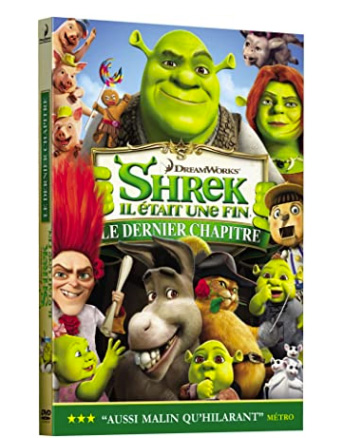
Shrek Forever After
Synopsis
Wearied by domestic life, diaper changes, and endless crowds of adoring fans invading his privacy, Shrek longs for the days when he was feared as a real ogre. Seeking a way out, he signs a deceptive contract with the smooth-talking Rumpelstiltskin, trading a day from his childhood in exchange for one day of absolute ogre freedom. Suddenly, Shrek finds himself in a twisted alternate reality where Rumpelstiltskin rules Far Far Away, ogres are hunted outcasts, Fiona does not know him, and his friends have no memory of their past adventures. He must race against time to break the contract before he fades away forever.
The Making of the Film
Conceived as the final chapter in the core Shrek tetralogy, DreamWorks Animation wanted to bring emotional closure to the ogre's epic character arc by exploring a classic 'It's a Wonderful Life' alternate reality scenario. Director Mike Mitchell took charge of the project to deliver a darker, more introspective tone that reminded audiences of what made the original film special. The creative team drew inspiration from classic existential storytelling tropes, examining the danger of taking one's family and happiness for granted.
Critical Reception
Professional critics welcomed Shrek Forever After as a significant rebound in quality for the franchise, praising its emotional resonance, darker thematic stakes, and inventive alternate timeline narrative. Audience reception was enthusiastic, appreciating the nostalgic return to form and satisfying conclusion to the central character journey. The film performed very strongly at the international box office, successfully revitalizing goodwill toward the animated series.
Behind-the-Scenes Trivia
Director Mike Mitchell drew visual inspiration from classic dystopian cinema and dark fairy tale aesthetics to craft Rumpelstiltskin's bleak corporate-style kingdom. Production required advanced visual effects to redesign all familiar characters in gritty, hardened alternate-universe clothing and physical states. A notable behind-the-scenes detail involves the extensive re-recording of dialogue to ensure the dramatic stakes felt genuinely impactful for a family audience. The initial casting introduced new antagonist dimensions voiced brilliantly by Walt Dohrn as Rumpelstiltskin.
Themes Explored
Appreciating what you have, the value of family and love, regret and second chances, identity, and the importance of shared history.
Ending Explained
The emotional climax shows Shrek realizing his true happiness lies within his chaotic family life just as time runs out, allowing him to embrace Fiona and his friends and dissolving the alternate reality back into joyful existence.
Title Significance
The subtitle 'Forever After' cleverly plays on traditional fairy tale closing lines while double-meaning the permanent resolution of Shrek's cinematic journey.
The film is celebrated as a fitting send-off for the main series and has seen renewed attention amid recent discussions surrounding subsequent franchise revivals and sequels.
Shrek 2, How to Train Your Dragon, Megamind, The Croods