

 Français
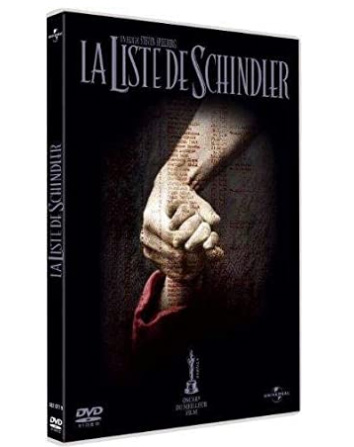
Schindler's List
Synopsis
Set during World War II, the film tells the harrowing true story of Oskar Schindler, an ambitious German businessman, war profiteer, and member of the Nazi party who arrives in occupied Poland. Seeking to make a fortune, he establishes an enamelware factory and employs hundreds of Jewish workers as cheap labor, shielded by corrupt military contracts. However, as Schindler witnesses the unspeakable atrocities and systematic liquidation of the Krakow ghetto by Nazi SS officers, a profound moral transformation occurs within him. Risking his entire fortune and his own life, Schindler compiles a meticulous list of over a thousand Jewish workers to save them from extermination in Auschwitz concentration camp.
The Making of the Film
Director Steven Spielberg spent over a decade grappling with the heavy historical material before finally committing to direct the Holocaust masterpiece, initially purchasing the rights to Thomas Keneally's novel 'Schindler's Ark'. Spielberg viewed the project as a profound personal and professional responsibility to honor historical memory and combat rising antisemitism. The production was filmed entirely in black-and-white (with one iconic symbolic exception) to mirror historical documentary footage. Spielberg famously refused any director salary for his work, declaring the funds 'blood money'.
Critical Reception and Reviews
Professional Critic Reviews
Critics offered universal, overwhelming acclaim, hailing the film as one of the greatest cinematic achievements in movie history. Reviewers praised Steven Spielberg's harrowing, masterclass direction, Janusz Kaminski's stark black-and-white cinematography, and towering lead performances by Liam Neeson, Ben Kingsley, and Ralph Fiennes. The film was lauded for its unflinching, emotionally devastating depiction of the Holocaust without resorting to cheap sentimentality. It achieved near-unanimous praise across global film critic associations.
Public Reception
Audiences responded with profound emotional shock, reverence, and solemn awe, turning the historical epic into a massive global box office and cultural milestone. Viewers noted that the film left an indelible moral mark on generations regarding human cruelty and righteousness. Screenings around the world prompted deep public dialogue on historical remembrance.
Awards and Honors
'Schindler's List' dominated the Academy Awards, winning seven Oscars including Best Picture, Best Director for Steven Spielberg, Best Adapted Screenplay, Best Original Score for John Williams, and Best Cinematography. It swept major international film awards, cementing its immortal legacy in cinematic history.
Filming Anecdotes
Director's Inspirations
Steven Spielberg was deeply inspired by historical survivor testimonies and documentary footage from the Holocaust era, aiming to avoid Hollywood gloss in favor of stark realism. He chose to shoot on location in Krakow, Poland, utilizing authentic historical sites including the Plaszow concentration camp replica built nearby. The iconic use of a little girl wearing a red coat served as a poignant visual metaphor for the blinding of global indifference.
Production Difficulties
Shooting such emotionally harrowing historical atrocities took a severe psychological toll on Steven Spielberg and the entire cast, requiring the director to call frequent emotional breaks. Polish authorities and local communities cooperated closely to ensure respectful historical recreation. Recreating authentic Nazi uniforms, period trains, and camp architecture demanded rigorous archival oversight.
Particular Scene Anecdote
The devastating liquidation of the Krakow ghetto sequence required weeks of grueling preparation and hundreds of background extras to capture authentic historical terror. Liam Neeson and Ben Kingsley maintained deep professional and emotional focus on set during the most morally crushing dramatic sequences. Spielberg reportedly called his mentor Robin Williams regularly during production just to hear a joke and lift his heavy spirits.
Initial Casting Choices
Liam Neeson was cast after Spielberg was impressed by his stage presence, bringing understated charisma and moral complexity to Oskar Schindler. Ben Kingsley was selected to portray Itzhak Stern, bringing quiet dignity and intellectual grounding. Ralph Fiennes was cast as the sadistic Nazi commandant Amon Goeth, delivering a chilling breakout performance.
Themes Explored
The film explores the chilling banality of evil and the horrific machinery of state-sponsored genocide during World War II. It examines the profound moral transformation of an ordinary, flawed profiteer into an unlikely savior. Another core theme is human resilience, witness, and the moral imperative of saving a single life. Ultimately, it serves as an eternal reminder that 'whoever saves one life, saves the world entire'.
The narrative concludes with the unconditional surrender of Germany, forcing Oskar Schindler to flee as a Nazi war criminal while his Jewish workers present him with a ring forged from a gold dental filling inscribed with a Hebrew Talmudic proverb. A weeping Schindler breaks down in deep remorse, agonizing over whether he could have saved even more lives. The final powerful sequence shifts to modern-day Jerusalem, showing surviving Schindlerjuden and the actors walking hand in hand to place stones on Schindler's actual grave. It signifies an immortal tribute to righteousness and survival.
Meaning of the Title
The title 'Schindler's List' refers directly to the literal typewritten pages compiled by Oskar Schindler containing the names of over one thousand Jewish workers protected from extermination. It symbolizes a fragile document of life and salvation amidst the vast machinery of death. The iconic title encapsulates the entire historical testament of rescue and human mercy.
Original Soundtrack
John Williams composed an extraordinary, haunting musical score anchored by Itzhak Perlman's soulful violin solo, which won the Academy Award for Best Original Score. The music serves as an aching emotional lament that honors the victims of the Holocaust while echoing the solemn dignity of survival.
["The Pianist", "Life Is Beautiful", "Son of Saul"]