

 Français
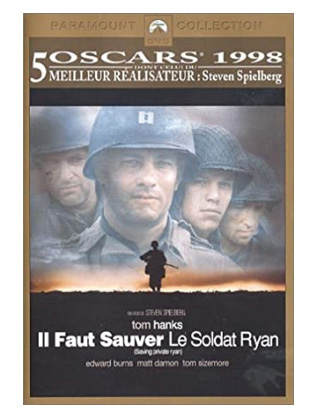
Saving Private Ryan
Synopsis
Following the harrowing D-Day landing on Omaha Beach during World War II, Captain John Miller receives a dangerous mission. He and his squad of rangers are ordered to venture deep behind enemy lines to locate Private James Ryan, whose three brothers have all been killed in combat. As the men navigate war-torn France, they begin to question the fairness of risking multiple lives to save just one soldier. Through brutal combat and quiet moments of reflection, they discover the true cost of duty and brotherhood.
The Making of the Film
Screenwriter Robert Rodat conceived the story after learning about the historical Niland brothers, who served during World War II. Producer Steven Spielberg was deeply moved by the premise and directed the film as a tribute to veterans, including his own father who served in the war. DreamWorks and Paramount Pictures collaborated to bring the epic war drama to the screen.
Critical Reception
Critics universally acclaimed the film as a masterwork of war cinema, praising its unflinching realism, emotional weight, and technical brilliance. Reviewers famously lauded the terrifying, twenty-minute Omaha Beach opening sequence for revolutionizing how war is depicted on screen. Tom Hanks and the supporting ensemble received widespread praise for their authentic portrayals of ordinary soldiers.
Public reception was phenomenal, making it one of the highest-grossing and most culturally impactful films of the decade. Audiences were profoundly moved by the emotional sacrifice, realistic battle grit, and themes of duty. It remains a defining cinematic masterpiece of modern history.
The film won five Academy Awards, including Best Director for Steven Spielberg, though it famously lost Best Picture to Shakespeare in Love. It earned numerous international accolades and honors from veterans associations. Its cultural legacy endures as a definitive depiction of World War II.
Filming Anecdotes
Director Steven Spielberg drew inspiration from actual historical combat footage and personal veteran accounts to achieve unprecedented authenticity. He chose to desaturate the color palette and use shaky hand-held cameras to replicate the chaotic perspective of front-line soldiers. His uncompromising vision ensured that the violence was depicted without Hollywood glamorization.
Production faced intense logistical demands, requiring hundreds of extras, explosive pyrotechnics, and military boot camps for the main cast. Tom Hanks and his actors underwent grueling physical training led by retired marine Dale Dye to build genuine squad camaraderie. The recreation of Omaha Beach in Ireland required meticulous planning and massive coordination.
A legendary sequence is the opening D-Day landing, which plunged viewers directly into the bloody chaos of the amphibious assault. The visceral sound design, featuring realistic bullet whizzes and explosions, created an overwhelming sensory experience. Cast members experienced genuine emotional exhaustion while filming these intense battle sequences.
The casting process prioritized finding actors who could portray genuine wartime brotherhood without typical action-hero clichés. Tom Hanks was chosen for his innate everyday decency and authority as Captain Miller. Matt Damon was specifically cast as Private Ryan because Spielberg wanted an actor with an authentic midwestern American wholesome charm.
Themes Explored
The film explores the heavy moral cost of war, the value of individual human life, and unbreakable military brotherhood. It questions whether sacrifice can ever be mathematically justified by institutional orders. Survival and redemption are earned through the selfless acts of fallen comrades.
NULL
Title Significance
The title directly outlines the primary military objective driving the entire narrative plot. It highlights the moral paradox of prioritizing a single human life amidst a massive global conflict.
NULL
NULL
Similar Films
Other similar films include Band of Brothers, Platoon, and Hacksaw Ridge.