

 Français
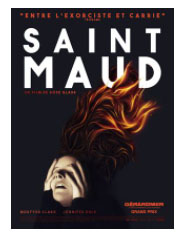
Saint Maud
Synopsis
Saint Maud follows Maud, a lonely, intensely pious young hospice nurse working in a gloomy coastal English town who becomes dangerously obsessed with saving the soul of her glamorous, terminally ill former dancer patient, Amanda. Having recently undergone a deeply traumatic mysterious event in her past, Maud experiences ecstatic religious hallucinations, believing she is directly communicating with God and chosen for a divine mission. As her zealotry spirals into frightening psychological delusion, she pushes past all professional boundaries to purge Amanda's sinful lifestyle, culminating in a terrifying, shocking climax.
The Making of the Film
Written and directed by Rose Glass in her feature-film debut, Saint Maud was conceived as an atmospheric psychological horror-thriller exploring religious ecstasy, isolation, and mental unravelling. The inspiration stemmed from classic British folk horror traditions, psychological character studies like Repulsion, and a fascination with religious mysticism. The production utilized dreary, moody seaside locations in Scarborough to establish an oppressive, isolated atmosphere.
Critical Reception
Critics universally hailed Saint Maud as a masterwork of modern elevated horror, praising Morfydd Clark's mesmerizing, haunting lead performance and Rose Glass's stylish direction. Reviewers highlighted the film's brilliant ambiguity regarding whether Maud is truly touched by divine grace or suffering a psychotic breakdown. The eerie sound design and shocking final frame received widespread critical acclaim.
Audiences embraced the movie as a deeply unsettling and brilliant psychological nightmare that lingered long after the credits rolled.
The film earned numerous British Independent Film Awards (BIFA) nominations and wins, cementing Rose Glass as a major visionary voice in horror cinema.
Behind-the-Scenes Stories
Rose Glass drew heavy inspiration from classic religious mysticism, gothic horror literature, and psychological portraits of lonely outsiders.
Shooting interior hospice scenes and dreary coastal vistas in damp weather required strict schedule management and intense psychological focus from lead actress Morfydd Clark.
During the filming of Maud's ecstatic prayer scenes, Clark utilized physical trembling and silent breathing exercises to convey religious rapture.
Casting Morfydd Clark was a masterstroke, as her delicate vulnerability and intense stare anchored the entire psychological descent.
Themes Explored
The film explores religious fanaticism, isolation, mental illness, salvation, trauma, and the blurred line between divine grace and delusion.
Ending Explained
The shocking final frame reveals Maud's ultimate delusion of angelic ascension is actually her burning alive on a public beach, ending in stark, terrifying silence.
Meaning of the Title
Reference to the protagonist Maud and her deluded, obsessive quest for saintly martyrdom and divine purification.
Original Soundtrack
The original musical score by Adam Janota Bzowski utilizes haunting, discordant orchestral strings and atmospheric drones that elevate the psychological dread.
Similar films include The Witch, Hereditary, Repulsion, and Black Swan.