

 Français
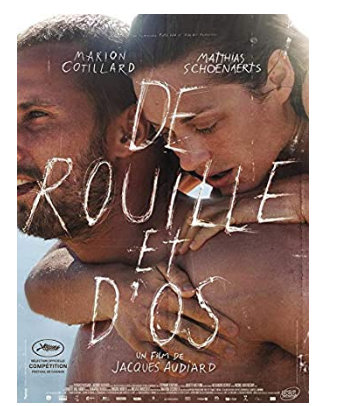
Rust and Bone
Synopsis
Following a violent street brawl, an unemployed and impoverished former bouncer named Ali packs up his young son and moves to the south of France to live with his sister. Struggling to make ends meet, Ali takes a job as a nightclub bouncer, where he crosses paths with Stephanie, a charismatic killer whale trainer at a local marine park. Shortly after their meeting, a horrific workplace accident results in Stephanie losing both her legs. As Stephanie spirals into deep depression, an unlikely bond forms between the hardened bouncer and the disabled trainer, helping each other heal through raw physical endurance and emotional resilience.
The Making of the Film
Director Jacques Audiard adapted Craig Davidson's short story collection, transforming gritty pulp fiction into an emotionally towering romantic drama. Producers sought to explore physical disability and emotional trauma without sentimentality or melodrama. The production utilized authentic coastal locations in Antibes and northern France to contrast stark industrial environments with majestic marine life. Marion Cotillard and Matthias Schoenaerts were cast as the leads, delivering staggering, physically demanding performances. The film aimed to examine human rehabilitation through unconventional connection.
Critical Reception
Critics showered the film with universal international acclaim, praising its fearless storytelling, breathtaking direction, and Marion Cotillard and Matthias Schoenaerts' powerhouse lead performances. Reviewers lauded Audiard for crafting a raw, visceral romance that found profound beauty amidst brutal physical suffering. Audiences embraced the film's emotional intensity and Cannes Film Festival premiere triumph. Cotillard earned numerous best actress nominations worldwide. It stands as a modern masterpiece of European romantic cinema.
Behind-the-Scenes Stories
Jacques Audiard drew visual inspiration from contemporary gritty romance dramas and marine documentary cinematography. Marion Cotillard utilized specialized green-screen leg socks and digital removal techniques to convincingly portray double amputee choreography during aquatic training sequences. Matthias Schoenaerts bulked up significantly through intense physical training to capture the intimidating, animalistic posture of the bouncer. The killer whale trainer sequences required strict animal safety protocols.
Themes Explored
The narrative explores physical trauma, disability adaptation, unlikely human connection, paternal responsibility, and emotional healing. It examines how broken individuals find mutual strength through tactile intimacy rather than polite conversation. Furthermore, it highlights the resilience of the human body.
Ending Explained
Ali rushes his injured son to the hospital and nurses him back to health, while Stephanie learns to walk on prosthetic legs and joyfully reunites with Ali on an ice-skating rink. The final moments show them sharing a quiet, tender embrace, having survived their respective physical and emotional trials. A profoundly moving sense of restoration closes the film.
Meaning of the Title
The title 'Rust and Bone' metaphorically contrasts the industrial decay of rusted urban environments with the raw biological fragility and strength of human bones.
Other powerful European emotional dramas such as Amour, The Diving Bell and the Butterfly, and Blue Is the Warmest Color.