

 Français
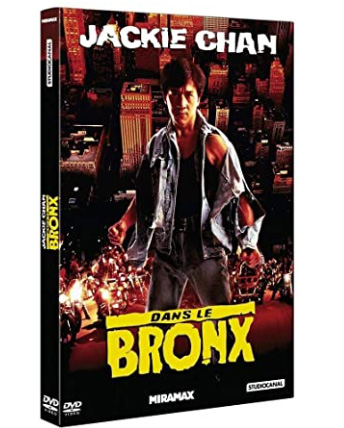
Rumble in the Bronx
Synopsis
Keung, a Hong Kong police officer visiting New York City to attend his uncle's wedding, finds himself caught in a turf war. When local street punks and a vicious motorcycle gang try to shake down his uncle's Bronx supermarket, Keung uses his exceptional martial arts skills to defend the property. After stumbling upon a stolen diamond syndicate's loot, Keung becomes the primary target of ruthless criminals across the city. Teaming up with local neighborhood kids, he must fight his way through wave after wave of dangerous thugs.
The Making of the Film
- The film was conceived as Jackie Chan's major crossover breakthrough into the mainstream American commercial film market, utilizing a New York setting despite being primarily filmed in Vancouver. Director Stanley Tong aimed to combine Chan's signature slapstick martial arts choreography with large-scale American action set pieces. Inspiration was drawn from classic urban crime films and Hong Kong action cinema traditions. Chan sought to prove that his unique brand of physical comedy and death-defying stunts could captivate Western audiences directly.
Critical Reception
Professional critics gave the film positive reviews, praising Jackie Chan's unmatched athletic prowess, charming screen presence, and groundbreaking stunt work. Many reviews highlighted the inventive use of everyday objects in fight choreography, such as refrigerators and snowboards. Reviewers noted that while the plot was simple, the sheer energy and physical comedy carried the entire production. Overall, it was received as a wildly entertaining martial arts classic that finally made Chan a mainstream American box office star.
Public reception was overwhelmingly enthusiastic, turning the movie into a massive box office hit in North America and cementing Jackie Chan's legendary status worldwide. Audiences cheered for the jaw-dropping stunts, particularly the famous building-to-building hovercraft and jump sequences. Word of mouth propelled the film to unexpected box office heights, opening at number one in the United States. Spectators frequently cited the comedic brawls and high-energy pacing as unforgettable entertainment.
The film earned numerous accolades at the Hong Kong Film Awards, including Best Action Choreography for Jackie Chan's stunt team. It also gained immense cult status internationally, paving the way for Chan to star in future Hollywood blockbusters like Rush Hour. The stunt work remains studied and celebrated by modern action filmmakers.
Filming Anecdotes
- The director drew heavy inspiration from classic Buster Keaton silent comedies, Hollywood gangster films, and traditional Hong Kong martial arts storytelling. He wanted the visual style to emphasize bright, energetic urban street action that showcased Chan's incredible physical agility. Cinematic influences ranged from classic slapstick routines to gritty New York crime dramas. These artistic choices created a unique cultural blend that appealed to international audiences.
Production was notoriously punishing, as Jackie Chan suffered severe physical injuries during filming, including breaking his right ankle while executing a daring rooftop jump. Despite wearing a plaster cast, Chan continued shooting action scenes by painting the cast to look like a sneaker so viewers wouldn't notice. The stunt team performed dangerous real-world feats without digital safety nets, pushing physical endurance to absolute limits. Crew members often recalled the sheer terror and awe of watching Chan execute life-threatening stunts on set.
One particularly memorable sequence involved a massive hovercraft tearing through the suburban streets of Vancouver, crushing cars and crashing into the supermarket storefront. This complex set piece required weeks of precision stunt driving and heavy structural rigging to ensure safety during chaotic collisions. Jackie Chan had to leap onto the moving hovercraft while dodging debris in front of live cameras. Crew members frequently noted that this specific stunt was one of the most dangerous and expensive sequences ever attempted in a Chan film.
The initial casting process sought charismatic international actors who could match the fast-paced comedic tone of Jackie Chan's martial arts style. Franco Columbu and local Vancouver actors were brought in to flesh out the colorful gang members and syndicate villains. Anita Mui and Françoise Yip provided strong supporting performances that anchored the emotional stakes of the neighborhood community. This ensemble created the vibrant, chaotic atmosphere necessary for the action-comedy narrative.
Themes Explored
- Community solidarity and protecting local neighborhoods against criminal syndicates.
- Cultural adaptation and finding friendship in unfamiliar foreign environments.
- Justice delivered through martial arts and physical resilience.
- Unintentional heroism driven by a strong moral code.
Ending Explained
The climax features Keung utilizing a massive hovercraft to corner and crush the criminal syndicate's headquarters and luxury sports cars along the riverfront. After a chaotic pursuit and a final brutal martial arts brawl, the corrupt gang leader and his henchmen are apprehended by police. The stolen diamonds are recovered, and peace is finally restored to the Bronx supermarket community. The film concludes on a joyful, celebratory note with the wedding of Keung's uncle.
Title Significance
The title directly highlights the film's primary setting in the New York borough of Bronx while using the word "Rumble" to signal an action-packed street brawl. It promised audiences a chaotic, entertaining martial arts spectacle.
Original Soundtrack
- The soundtrack features an upbeat blend of energetic pop tracks, hip-hop beats, and traditional orchestral themes composed to match Jackie Chan's fast-paced comedic action style. The music enhanced the playful tone of the fight choreography and added vibrant urban flavor to the New York setting. Fans fondly remember the catchy themes accompanying the classic supermarket brawls.
Similar Films
- Rush Hour (1998)
- Police Story (1985)
- First Strike (1996)
- Shanghai Noon (2000)
- Lethal Weapon (1987)