

 Français
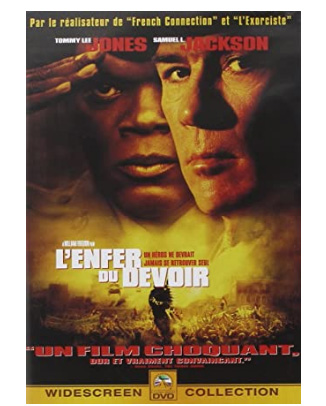
Rules of Engagement
Synopsis
Colonel Terry Childers is a decorated, veteran US Marine Corps officer who leads a rescue mission to evacuate the American embassy in Yemen under heavy sniper fire. During the chaotic extraction, civilian protesters turn violent, and Childers orders his Marines to return fire, resulting in heavy civilian casualties including women and children. Back in the United States, the government faces international outrage and scapegoats Childers, ordering a military court-martial that threatens to lock him away for life. Desperate, Childers asks his old Vietnam War combat buddy, a now-lawyer named Hayes Hodges, to defend him in the high-stakes military trial.
The Making of the Film
Director William Friedkin and screenwriter Stephen Geller developed the military courtroom drama based on a story concept by former US Marine Corps Secretary J. William Middendorf. Friedkin wanted to explore the brutal grey areas of military engagement, rules of engagement, and political scapegoating. Paramount Pictures financed the tense political thriller.
Critical Reception
Critics gave the film mixed reviews, with some praising its taut courtroom tension, gritty direction, and strong performances by Tommy Lee Jones and Samuel L. Jackson. Other reviewers criticized its heavy-handed nationalism, simplistic geopolitical framing, and melodramatic script turns. Over time, military thriller fans have appreciated its gripping courtroom sequences.
Public reception was solid, turning the political drama into a respectable box-office success worldwide during its theatrical run. Audiences enjoyed the intense military courtroom interrogation scenes and powerful chemistry between the lead actors. It remains a notable modern military thriller.
The film did not receive major mainstream Academy Awards, reflecting its mixed critical standing upon release. Samuel L. Jackson and Tommy Lee Jones earned praise for their commanding screen presence. Its intense courtroom debate remains a memorable genre highlight.
Filming Anecdotes
Director William Friedkin drew inspiration from classic courtroom dramas, military protocols, and real geopolitical conflicts. He chose authentic military bases and courtroom soundstages to maintain absolute procedural realism. His direction pushed Samuel L. Jackson to portray military pride under pressure.
Production went smoothly under Friedkins precise directorial vision, supported by technical military advisors who ensured accurate Marine Corps protocol. Tommy Lee Jones brought weary legal intelligence to his defense attorney role. Samuel L. Jackson conveyed absolute loyalty and psychological stress.
A memorable sequence involves the tense courtroom cross-examination where evidence regarding hidden rooftop snipers is revealed. The scene creates gripping dramatic tension procedural style. Jones methodical questioning anchored the climax.
The casting process brought together two powerhouse actors. Samuel L. Jackson was cast as Colonel Childers, bringing commanding authority and intensity. Tommy Lee Jones was chosen for Hayes Hodges, adding world-weary legal brilliance to the defense.
Themes Explored
The film explores military honor, rules of engagement, political scapegoating, wartime trauma, and justice. It highlights how soldiers caught in combat crossfire face betrayal by civilian politicians. Duty clashes with political expediency.
NULL
Title Significance
The title refers directly to the strict military rules of engagement governing when soldiers are legally permitted to use lethal force in combat. It highlights the legal controversy driving the court-martial.
NULL
NULL
Similar Films
Other similar films include A Few Good Men, The General's Daughter, and Courage Under Fire.