

 Français
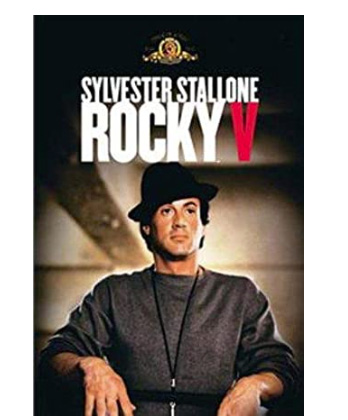
Rocky V
Synopsis
After his brutal fight against Ivan Drago, Rocky Balboa returns home physically exhausted and discovers that his financial affairs have been badly mismanaged. Forced to abandon professional boxing, he moves back to his old neighborhood in Philadelphia with his family. He begins training a talented young fighter named Tommy Gunn, hoping to pass on the knowledge he has accumulated throughout his career. However, Tommy becomes increasingly attracted to fame and money and gradually distances himself from his mentor. As their relationship deteriorates, Rocky must confront the consequences of his decision to place his trust in someone who does not understand the meaning of loyalty.
The Film's Origins
Rocky V was developed as an attempt to return the franchise to the more personal and socially grounded atmosphere of the original film. Sylvester Stallone wanted to explore the consequences of Rocky's long boxing career, particularly the physical and financial damage caused by years of competition. The screenplay returns the protagonist to the working-class neighborhood where his journey began. John G. Avildsen, who directed the first Rocky, was brought back to restore some of the original film's emotional atmosphere. The story introduces Tommy Gunn as a younger boxer who becomes both a protégé and a rival. Stallone was interested in exploring the relationship between a mentor and someone who gradually becomes consumed by ambition. The project also examines Rocky's relationship with his son Robert, who feels neglected by his father's growing involvement with Tommy. The screenplay was an original continuation of the fictional franchise. Its central idea is that physical strength and sporting success cannot replace family relationships or personal integrity. The film was intended to bring Rocky back to his roots while preparing a more intimate conclusion to his story.
Critical Reception
Rocky V received predominantly negative reviews from professional critics. Many felt that the film lacked the energy and emotional impact of the earlier installments. The storyline involving Tommy Gunn was frequently criticized for being predictable, while some reviewers disliked the decision to move away from spectacular championship boxing. Sylvester Stallone's performance received mixed reactions, although his attempt to explore Rocky's vulnerability was appreciated by some critics. The return of John G. Avildsen was also seen as an attempt to recapture the spirit of the original film.
The film performed reasonably well at the box office but was less successful than its predecessors. Many longtime fans were disappointed by the darker and more personal direction. Nevertheless, some viewers appreciated the emphasis on family relationships and the return to Philadelphia. The final street confrontation became one of the film's most discussed sequences. Over time, Rocky V has attracted a degree of reassessment among fans who appreciate its focus on the protagonist's emotional struggles.
The film received limited recognition from major awards organizations. It was nominated for several Razzie Awards, reflecting the negative critical reception at the time. It did not achieve the prestigious award recognition associated with the first Rocky. Nevertheless, it remains an important chapter in the franchise because it explores the consequences of Rocky's career and his relationship with his family.
Behind-the-Scenes Stories
Sylvester Stallone wanted to bring the character back to the atmosphere of the original film. He believed that Rocky had become increasingly distant from the ordinary working-class individual introduced in 1976. The decision to make him financially vulnerable and physically damaged was intended to restore the emotional stakes of the story. John G. Avildsen shared this interest in returning to the more intimate style of the first installment.
The production faced the challenge of presenting a boxing champion who could no longer compete professionally. Stallone had to portray a character suffering from the physical consequences of repeated fights while maintaining the recognizable appearance of Rocky. The filmmakers also needed to balance the sporting storyline with the more intimate family drama. Several Philadelphia locations were used to recreate the atmosphere of Rocky's original neighborhood.
The final street fight between Rocky and Tommy Gunn was designed as a deliberate departure from the traditional boxing-ring climax. Rather than resolving the conflict in a professional arena, the two men confront each other in the streets of Philadelphia. The sequence emphasizes the personal nature of their dispute and the contrast between Rocky's experience and Tommy's arrogance. Rocky eventually wins the confrontation, demonstrating that his abilities extend beyond the formal rules of boxing.
Tommy Morrison, a real professional heavyweight boxer, was cast as Tommy Gunn. His athletic background helped make the character's physical presence convincing. Stallone returned as Rocky, while Talia Shire, Burt Young and Tony Burton reprised their familiar roles. Sage Stallone, Sylvester Stallone's son, played Rocky's son Robert. This casting added a personal dimension to the family storyline.
Themes Explored
Rocky V explores the consequences of ambition, fame and the loss of personal identity. Rocky discovers that his achievements have not protected him from financial insecurity or physical deterioration. His relationship with Tommy Gunn illustrates the dangers of placing excessive trust in someone motivated primarily by recognition and money. The film also examines the importance of mentorship and the responsibilities that accompany passing knowledge to a younger generation. Family relationships become central as Rocky struggles to reconnect with his son. His absence and emotional distraction reveal the cost of professional ambition. The contrast between Rocky and Tommy highlights different definitions of success. Tommy seeks celebrity and financial reward, while Rocky gradually rediscovers the importance of loyalty and personal dignity. The film also explores the meaning of home and the value of remembering one's origins. Physical strength is presented as temporary, whereas character and relationships can endure. Ultimately, the story suggests that a person's greatest achievements are not necessarily professional victories but the relationships they preserve.
Ending Explained
The final confrontation between Rocky and Tommy Gunn takes place in the streets rather than in a boxing ring. Tommy has become increasingly arrogant and believes that his mentor has prevented him from achieving the recognition he deserves. Rocky eventually accepts the challenge and demonstrates that his experience remains valuable even outside professional competition. After defeating Tommy, he reconciles with his son Robert, who has begun to understand the importance of family loyalty. The final moments show Rocky returning to a more ordinary life in Philadelphia. His relationship with his son becomes more important than his former sporting ambitions. The film suggests that Rocky has finally understood what he should have protected throughout his career. His financial losses and physical injuries cannot be undone, but he can still rebuild his family relationships. The ending deliberately rejects the traditional championship victory that defined previous installments. Instead, it presents emotional reconciliation as the protagonist's most meaningful achievement. Rocky has returned to the values that made him special in the first place.
Meaning of the Title
The title Rocky V follows the established naming convention of the franchise. The Roman numeral identifies this film as the fifth major chapter in Rocky Balboa's life. It emphasizes continuity while marking another stage in his personal evolution. The title also reflects the return to the original character and the neighborhood that shaped him. Unlike the earlier films, this installment focuses less on championship competition and more on the consequences of a lifetime spent boxing. Rocky remains the central figure even when he can no longer compete professionally.
Films with similar themes include Rocky, Rocky Balboa, Creed, The Wrestler, The Fighter, Warrior, Cinderella Man and Southpaw. These films explore the consequences of sporting careers, mentorship, family relationships, lost glory and the search for personal redemption.