

 Français
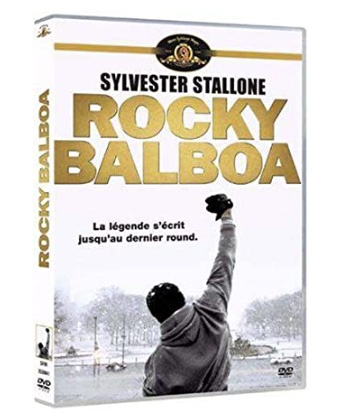
Rocky Balboa
Synopsis
Several years after retiring from professional boxing, Rocky Balboa lives a quiet life in Philadelphia, where he runs a small Italian restaurant and struggles with the loss of his wife Adrian. Although he has left the ring behind, he still feels connected to the sport that defined his existence. When a television simulation suggests that Rocky could defeat the current heavyweight champion, Mason Dixon, the idea of a comeback begins to attract attention. Rocky decides to return to professional boxing, despite his age and the doubts of those around him. His preparation becomes a personal journey through grief, memory and the need to prove that he still has something meaningful to offer.
The Film's Origins
Rocky Balboa was conceived by Sylvester Stallone as a return to the emotional foundations of the original film. After the mixed reception of Rocky V, Stallone wanted to give the character a more satisfying and mature continuation. The idea developed around an aging former champion who feels that an important part of his identity has disappeared. Stallone was interested in exploring what happens when a person refuses to accept that his greatest achievements belong entirely to the past. The screenplay also reflects themes of grief and personal renewal following the death of Rocky's wife Adrian. The fictional television simulation that compares Rocky with current champion Mason Dixon provides the opportunity for a final sporting challenge. The film was written and directed by Stallone, who wanted to emphasize character development rather than simply reproduce the spectacle of earlier installments. Its story is original and not based on a specific real-life comeback. The production was designed as a personal farewell to the character, although the franchise would continue through the Creed films. The result reconnects Rocky with his origins while presenting him as an older man confronting the limits of time and physical strength.
Critical Reception
Rocky Balboa received generally favorable reviews from professional critics. Many praised Sylvester Stallone for bringing emotional depth and maturity back to the character. The film was considered a significant improvement over Rocky V by several reviewers. Its treatment of grief, aging and personal identity was particularly appreciated. Some critics found the boxing storyline predictable, but the final fight was widely regarded as an effective conclusion to Rocky's personal journey.
The film performed better than many observers had expected and became a successful return for the franchise. Audiences appreciated seeing Rocky portrayed as an older man rather than simply as an invincible sporting hero. Its emotional relationship with Adrian's memory and the development of Rocky's connection with his son were particularly well received. The film also attracted viewers who had grown up with the earlier installments. Its popularity helped renew interest in the character.
Rocky Balboa received several nominations and distinctions, including recognition at the Critics' Choice Awards and the Saturn Awards. Sylvester Stallone received particular attention for his performance. The film also appeared on several critics' lists recognizing successful franchise revivals. Its positive reception demonstrated that Rocky remained relevant more than thirty years after the original film.
Behind-the-Scenes Stories
Sylvester Stallone was inspired by the idea of an aging athlete who refuses to surrender his identity simply because his physical abilities have declined. The director wanted to explore the emotional consequences of retirement and the difficulty of accepting the passage of time. Rocky's grief over Adrian's death also reflects the experience of losing someone who has been central to one's entire life. Stallone considered the project an opportunity to restore the dignity of the character after the disappointing reception of Rocky V.
The production required Stallone to return to an intense physical training program despite being considerably older than during the earlier films. The boxing sequences were carefully planned to reflect Rocky's age and experience rather than presenting him as an impossibly youthful athlete. Filming took place in Philadelphia, with several familiar locations helping reconnect the story to the original film. The production also used modern digital technology to create the fictional boxing simulation that inspires Rocky's comeback.
The final fight between Rocky and Mason Dixon was staged as a professional championship event. The filmmakers wanted it to feel more realistic than the exaggerated confrontations of some earlier installments. Antonio Tarver, a real professional boxer and former world champion, was cast as Dixon. His boxing experience helped create a convincing sporting opponent for Stallone. The sequence emphasizes Rocky's endurance and determination rather than presenting him as physically superior.
The cast includes several performers returning to the franchise, as well as new actors portraying characters in Rocky's later life. Burt Young returned as Paulie, while Milo Ventimiglia played Rocky's son Robert. Antonio Tarver brought authentic boxing experience to the role of Mason Dixon. Talia Shire does not appear in the film, but Adrian remains a central emotional presence through memories and the restaurant named in her honor.
Themes Explored
Rocky Balboa explores aging, grief and the desire to preserve a meaningful identity. Rocky has lost Adrian and struggles to find a purpose beyond the sporting career that once defined him. The film examines the difficulty of accepting physical limitations while maintaining emotional determination. His relationship with his son reveals the consequences of unresolved grief and the importance of communication between generations. The story also questions society's tendency to dismiss older individuals as irrelevant. Rocky's decision to return to boxing becomes a symbolic refusal to surrender his personal dignity. The film explores memory through his visits to places associated with Adrian and his earlier life. It also examines the difference between external success and internal fulfillment. Mason Dixon represents the pressure of modern professional sport and the expectations placed on a reigning champion. Rocky's motivation is ultimately personal rather than financial or competitive. The story suggests that the courage to continue pursuing meaningful goals can remain important at every stage of life.
Ending Explained
The final fight between Rocky and Mason Dixon does not end with the victory Rocky had hoped to achieve. Dixon wins by split decision, but Rocky demonstrates that he can still compete against a much younger champion. The audience inside the arena responds enthusiastically, recognizing the determination required to reach this point. For Rocky, the result is less important than proving that he has not lost his courage or identity. His return to the ring has allowed him to confront his grief and reconnect with the values that shaped his life. The final scenes show him returning to Adrian's grave, where he finds a sense of peace. The film closes with Rocky walking away from the cemetery and gradually disappearing into the distance. This image suggests that he has finally made peace with his past. His journey was never simply about becoming champion again. It was about rediscovering a reason to move forward. The ending provides a more emotionally satisfying conclusion to Rocky's story than the previous installment.
Meaning of the Title
The title Rocky Balboa uses the character's full name rather than a Roman numeral. This choice emphasizes the personal nature of the film and its return to the original identity of the protagonist. The name has become synonymous with determination, resilience and the American underdog spirit. By returning to the character's full name, Stallone presents the film as a personal portrait rather than simply another sequel. It also reflects Rocky's mature stage of life, when his identity is no longer defined exclusively by championship titles. The title celebrates the individual behind the sporting legend.
Original Soundtrack
The soundtrack of Rocky Balboa was composed by Bill Conti, who returned to the franchise to create music that connects the film with its earlier installments. His compositions revisit the recognizable orchestral themes associated with Rocky while introducing more reflective passages suited to the character's older age. Gonna Fly Now remains an important musical reference, reinforcing the continuity of the series. The score combines nostalgia, determination and emotional restraint. Its familiar melodies help connect Rocky's present life with the memories of his earlier sporting achievements. Bill Conti's return was particularly meaningful for longtime admirers of the franchise.
Films with similar themes include Rocky, Creed, The Wrestler, The Fighter, Cinderella Man, Million Dollar Baby, The Way Back and The Iron Claw. These films explore aging athletes, personal redemption, grief, family relationships and the search for meaning beyond sporting success.