

 Français
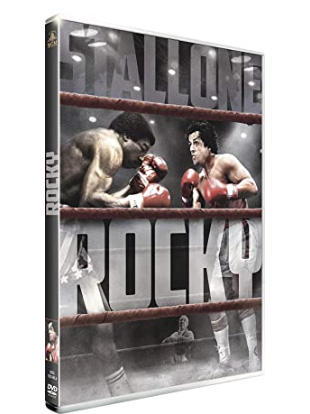
Rocky
Synopsis
Rocky Balboa is a small-time boxer from Philadelphia who earns a modest living fighting in local clubs and collecting debts for a loan shark. Although he dreams of becoming a successful professional fighter, he has gradually accepted his limited prospects. His life changes when heavyweight champion Apollo Creed chooses him as an opponent for a major championship fight. Determined to prove that he deserves the opportunity, Rocky begins an intense training program under the guidance of Mickey, an experienced boxing trainer. At the same time, he develops a relationship with Adrian, a shy young woman who gradually becomes his greatest source of emotional support. His challenge is not simply to defeat the champion, but to prove to himself that he can go the distance.
The Film's Origins
Rocky originated from an idea developed by Sylvester Stallone after watching the 1975 boxing match between Muhammad Ali and Chuck Wepner. Wepner, an underestimated challenger, managed to remain in the ring against the world heavyweight champion for fifteen rounds. Stallone was fascinated by the courage of a fighter who refused to give up despite the enormous difference in reputation and ability. He began writing a screenplay about an unknown boxer who receives an extraordinary opportunity to fight the heavyweight champion. The character of Rocky Balboa gradually developed into a portrait of working-class determination and personal dignity. Stallone completed the screenplay in a relatively short period and presented it to producers Irwin Winkler and Robert Chartoff. Several studios expressed interest, but they wanted a more established actor to play the central role. Stallone refused to sell the screenplay unless he was allowed to portray Rocky himself. The producers eventually accepted his condition and made the film with a relatively modest budget. John G. Avildsen was selected to direct the project, which was conceived as an original story rather than an adaptation of Wepner's life. The film ultimately became one of the most celebrated underdog stories in cinema history.
Critical Reception
Rocky received overwhelmingly positive reviews from many professional critics, although some initially considered its story conventional. Reviewers particularly praised the authenticity of the Philadelphia setting and the emotional sincerity of the central relationship. Sylvester Stallone received considerable acclaim for his performance and his screenplay. John G. Avildsen's direction was also praised for balancing sporting excitement with intimate character development. The final boxing match was frequently described as an exceptionally effective cinematic climax.
The film became a major box-office success, earning approximately 225 million dollars worldwide. Audiences connected strongly with Rocky's determination and his struggle to gain recognition. Its training sequences and memorable dialogue quickly became part of popular culture. The character of Rocky Balboa developed into one of the most recognizable sporting heroes in cinema. Its popularity also created one of Hollywood's most successful film franchises.
Rocky received ten Academy Award nominations at the 49th Academy Awards. It won three Oscars, including Best Picture, Best Director for John G. Avildsen and Best Film Editing. Sylvester Stallone was nominated for both Best Actor and Best Original Screenplay, an exceptional achievement for a young filmmaker. The film also received recognition at the Golden Globes and other major award ceremonies. Its success established Rocky as a landmark of American cinema.
Behind-the-Scenes Stories
Sylvester Stallone was strongly inspired by Chuck Wepner's unexpected performance against Muhammad Ali. He was interested in the idea that an ordinary individual could achieve greatness simply by refusing to surrender. The character also reflected aspects of Stallone's own difficult early career in Hollywood. His determination to play Rocky despite the producers' initial resistance mirrored the protagonist's struggle for recognition. The director wanted the story to remain grounded in the everyday life of Philadelphia.
The production faced serious financial limitations and was completed on a budget of approximately one million dollars. Filming lasted only twenty-eight days, requiring careful organization and efficient use of locations. Several scenes were shot in real Philadelphia streets and buildings, giving the film a documentary-like atmosphere. Stallone underwent intensive physical training to make his transformation into a credible boxer convincing. The production also relied on Garrett Brown's Steadicam technology to achieve fluid moving shots.
The famous training sequence culminating in Rocky running up the steps of the Philadelphia Museum of Art became one of the most iconic scenes in film history. The sequence was filmed using a Steadicam, allowing the camera to follow Stallone smoothly as he climbed the steps. The final moment, with Rocky raising his arms above the city, became an enduring symbol of personal achievement. The staircase has since become a popular tourist destination and is often associated with the character.
The producers initially wanted a more established Hollywood actor to play Rocky. James Caan, Burt Reynolds and Ryan O'Neal were among the names discussed during the development process. Stallone insisted that he had written the character specifically for himself and refused to relinquish the role. Talia Shire was cast as Adrian, while Carl Weathers became Apollo Creed. Burgess Meredith and Burt Young completed the central supporting cast. The resulting ensemble was essential to the film's emotional authenticity.
Themes Explored
Rocky explores perseverance, self-respect and the desire to prove one's worth. The protagonist is not initially motivated by fame or wealth as much as by the need to demonstrate that his life can amount to something meaningful. His relationship with Adrian shows how affection and mutual encouragement can transform an individual's confidence. The film also examines social class and the limited opportunities available to people living in economically disadvantaged neighborhoods. Mickey represents the importance of mentorship and the transmission of experience between generations. Apollo Creed embodies fame, confidence and the privileges of being a champion. Their confrontation challenges the distinction between public reputation and personal courage. The story also explores discipline, sacrifice and the physical demands of pursuing excellence. Rocky's training becomes a metaphor for rebuilding his identity. The film questions whether success should be measured exclusively through victory. Ultimately, it suggests that dignity can be achieved by giving everything to a challenge, even when the final result remains uncertain.
Ending Explained
The final fight between Rocky and Apollo Creed is the culmination of the boxer's personal journey. Rocky does not enter the ring expecting to become the world champion, but he wants to prove that he can survive all fifteen rounds against the greatest fighter of his generation. Despite Apollo's technical superiority, Rocky demonstrates extraordinary endurance and determination. The fight ends with Apollo winning by split decision, but the result is almost secondary to Rocky's achievement. He has accomplished something that few people believed possible. Throughout the final moments, Rocky is more interested in finding Adrian than in celebrating the official result. Their reunion reinforces the emotional importance of the relationship that has developed throughout the story. The film deliberately avoids a conventional victory for its protagonist. Instead, it presents personal fulfillment as something that can exist independently of public recognition. Rocky has finally discovered his own value. The ending therefore transforms an apparent sporting defeat into a deeply satisfying personal triumph.
Meaning of the Title
The title Rocky comes from the nickname of the central character, Rocky Balboa. The name evokes toughness, endurance and the ability to withstand difficult circumstances. It also has a simple, memorable quality that reflects the protagonist's working-class background. Rather than choosing an elaborate title about boxing or championship glory, Stallone places the emphasis on the individual at the center of the story. Rocky becomes a symbol of ordinary people who refuse to surrender their ambitions. The title also establishes the character as the defining element of a franchise that would follow his life across several decades.
Original Soundtrack
The soundtrack of Rocky is one of the most celebrated film scores in sports cinema. Bill Conti composed the original music, creating a powerful orchestral sound that combines brass, percussion and memorable melodies. The most famous composition is Gonna Fly Now, which accompanies Rocky's training montage. Its triumphant rhythm became an international symbol of determination and physical achievement. Conti's score also includes the romantic theme You Take My Heart Away, which reinforces the emotional relationship between Rocky and Adrian. The music plays a central role in transforming the training sequences into moments of cinematic inspiration. Gonna Fly Now received an Academy Award nomination for Best Original Song. Bill Conti's contribution remains one of the defining elements of the entire Rocky franchise.
Films with similar themes include Raging Bull, Cinderella Man, The Fighter, Creed, Million Dollar Baby, The Wrestler, Warrior and Southpaw. These films explore boxing, personal redemption, discipline, family relationships and the determination to overcome seemingly impossible obstacles.