

 Français
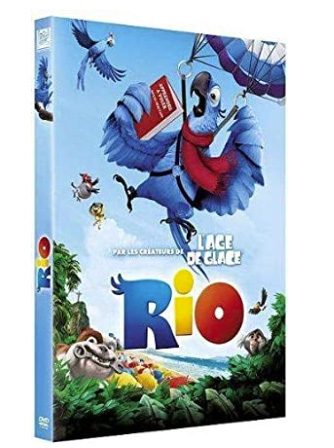
Rio
Synopsis
Blu, a rare blue macaw raised in a cosy home in Minnesota, has never learned to fly. When a scientist reveals that he is the last male of his species, Blu travels to Rio de Janeiro to meet Jewel, the last female. Their plans are shattered when they are kidnapped by smugglers during Carnival. Chained together, the odd couple must escape, learn to trust each other and find their way home.
The Making of the Film
Rio was directed by Carlos Saldanha, a native of Rio de Janeiro who had previously worked on the Ice Age films at Blue Sky Studios. He wanted to make a film that celebrated his hometown, its music, its people and its natural beauty. The idea came from a mix of his love for the city and his interest in the plight of endangered species, such as the Spix's macaw. The screenplay mixes a romantic comedy with an adventure story, focused on two birds who are very different from each other. Saldanha returned to Brazil several times to research local culture, visiting favelas, beaches and the Carnival. The film was made with an international team, but it keeps a strong Brazilian identity. The songs and rhythms were integral to the story from the start. The result is a colourful, high-energy film that feels like a love letter to Rio.
Reviews and reception
Professional critics' summary
Critics gave the film generally positive reviews, praising its vibrant animation, lively music and charming characters. Many enjoyed the film's rhythm and its celebration of Brazilian culture. Some noted that the story follows a fairly conventional formula, but they agreed that it is executed with energy. The villain Nigel, the cockatoo voiced by Jemaine Clement, was singled out as a comic highlight.
Audience reception
The film was a major success, earning almost 485 million dollars worldwide. It was especially popular in Brazil, where audiences were thrilled to see their city on screen. Families loved the colourful visuals and the infectious songs. Its success led to a sequel in 2014.
Awards
The song Real in Rio was nominated for the Academy Award for Best Original Song. The film was also nominated for several Annie Awards and other animation prizes. It earned recognition for its music and its visual style. The film remains one of the best-known productions of Blue Sky Studios.
Filming anecdotes
Director's inspirations
Saldanha was inspired by his childhood in Rio and by the spectacle of Carnival, which he wanted to capture on screen. He also drew on classic buddy comedies, where two opposites are forced to work together. The film's colours were chosen to reflect the vibrancy of Brazil's landscapes. He wanted the audience to feel as though they were dancing through the streets.
Production difficulties
The animation team had to create hundreds of birds, each with its own feathers and movements. The Carnival sequences, with thousands of dancing characters, required complex crowd simulations. The team also spent considerable time capturing Rio's architecture and its famous landmarks. Producing the film took several years of meticulous work.
Anecdote about a particular scene
The hang-glider sequence, in which Blu and Jewel fly over the city, is one of the film's most beautiful moments. The Carnival parade is another highlight, with music and dancing that burst across the screen. A funny scene shows Blu and Jewel trying to move while chained together, a situation that gives rise to much comedy. The final aerial battle shows Blu overcoming his fear of flying.
Originally planned casting
Jesse Eisenberg voiced Blu, bringing a nervous and endearing quality to the character. Anne Hathaway played Jewel, a free-spirited bird who teaches Blu to enjoy life. Jamie Foxx, will.i.am, George Lopez and Tracy Morgan voiced Blu's new friends. Jemaine Clement made the villain Nigel both funny and menacing.
Themes explored
The film is about finding your place in the world and overcoming fear. Blu must learn to fly, which is a symbol of taking risks and trusting oneself. It also explores the idea of love between opposites, as the cautious Blu and the wild Jewel complete each other. Another theme is the importance of protecting endangered species and their habitats. It celebrates Brazilian culture, music and community. Friendship plays a major role, since Blu's new companions help him to find his courage. The film also examines the difference between freedom and security. Ultimately, it suggests that home is wherever you feel loved.
Ending explained
After escaping from the smugglers, Blu and Jewel are chased by Nigel, who captures them again. In the final confrontation, Blu uses his courage and quick thinking to save his friends, and Jewel helps him to take flight. Blu finally learns to fly, and Nigel is defeated when he is caught in an airplane's engine. The birds return to Rio and are reunited with Linda and Tulio, who now run a sanctuary for endangered species. Blu and Jewel start a family, and the story ends with a joyful celebration during Carnival. The ending highlights the idea that love and friendship make anything possible. It leaves the audience with a sense of joy and freedom.
Meaning of the title
The title Rio refers to Rio de Janeiro, the Brazilian city where much of the story takes place. The name also means river in Portuguese, which suggests movement and flow, as in the characters' journey. It identifies the city as the film's heart and soul. In a few letters, it promises sunshine, music and adventure. The simplicity of the name makes it easy to remember in any language. It also underlines the film's role as a tribute to Saldanha's hometown. The title tells the audience exactly where the fun is going to happen.
Original Soundtrack
John Powell composed the score, while Sergio Mendes, Carlinhos Brown and others contributed Brazilian-flavoured songs. The film's music mixes samba, bossa nova and pop, giving it a joyful and danceable energy. The song Real in Rio earned an Oscar nomination. The soundtrack is one of the highlights of the film and a key part of its charm.
News
The film was followed by Rio 2 in 2014. Blue Sky Studios, the animation house that created the series, was closed by Disney in 2021. Rio remains a favourite among fans of animated musicals.
Similar Films
Rio 2 continues the story of Blu and Jewel in the Amazon. Happy Feet and Madagascar are other animated adventures that mix music and humour. Finding Nemo and The Secret Life of Pets also feature loveable animal heroes. Ice Age, from the same studio, shares a similar comic style.