

 Français
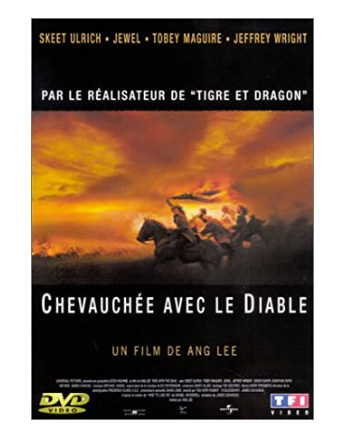
Ride with the Devil
Synopsis
Set during the American Civil War, Ride with the Devil follows Jake Roedel, a young Missouri man whose life is transformed by the violence that erupts between Union supporters and Confederate sympathizers. After his father is murdered, Jake joins a group of pro-Confederate guerrilla fighters known as the Bushwhackers. Alongside his friend Jack Bull Chiles, he experiences the brutal reality of irregular warfare, where loyalty and revenge often become indistinguishable. As the conflict progresses, Jake develops unexpected relationships and begins questioning the beliefs that initially brought him into the struggle. The film explores how war destroys communities and forces individuals to reconsider their identities, loyalties and moral values.
The film's origins
Ride with the Devil is based on the 1987 novel Woe to Live On by American writer Daniel Woodrell. Director Ang Lee and screenwriter James Schamus were attracted to the novel because it presents the American Civil War through the experiences of young guerrilla fighters rather than conventional military leaders. The story takes place in Missouri, a border state where divided loyalties and violent local conflicts created an especially complex wartime environment. Lee was interested in exploring the psychological consequences of war and the ways in which political identities can become entangled with personal relationships. The screenplay retains the novel's central characters and historical setting while adapting its events for a cinematic narrative. Tobey Maguire was selected to portray Jake Roedel, while Skeet Ulrich played his close friend Jack Bull Chiles. The film also offered singer Jewel her feature-film debut. Rather than presenting a conventional celebration of military heroism, Lee wanted to show the uncertainty, cruelty and moral confusion experienced by ordinary people caught in a civil conflict. Its historical setting allowed the director to examine violence, racism and friendship from a perspective rarely explored in mainstream American Westerns.
Reviews and reception
Critical reception:
Ride with the Devil received mixed reviews from professional critics when it was released. Some reviewers praised Ang Lee's restrained direction and his willingness to examine the Civil War from an unconventional perspective. Jeffrey Wright's performance and the film's cinematography were particularly appreciated. Other critics considered its slow pacing and complicated political background difficult for general audiences. The film was also recognized for avoiding a simplistic division between heroic and villainous characters. Over time, its reputation has improved among viewers interested in revisionist Westerns and historical dramas.
Audience reception:
The film attracted a relatively limited theatrical audience and performed poorly at the box office. Its release was initially restricted to a small number of cinemas, limiting its commercial exposure. The complex historical setting and restrained storytelling made it less accessible than more conventional war adventures. However, subsequent home-video releases and critical reassessments helped it find a dedicated audience. The later restoration and presentation of an extended director's cut also renewed interest in the film.
Awards and recognition:
Ride with the Devil did not receive major Academy Award recognition or significant mainstream awards. Its importance has instead been recognized through later critical discussions and specialist cinema presentations. The film was eventually included in The Criterion Collection, which released a restored edition featuring an extended version of the director's cut. This recognition helped introduce the production to a new generation of viewers. Its artistic reputation rests largely on its unconventional treatment of the Civil War and Ang Lee's careful examination of the human consequences of violence.
Behind-the-scenes stories
Director's inspirations:
Ang Lee was particularly interested in the complexity of the American Civil War in border states such as Missouri. He wanted to explore a conflict in which people from the same communities could find themselves fighting on opposing sides. The director was also attracted to the novel's examination of friendship, loyalty and the gradual transformation of young men exposed to violence. Rather than emphasizing famous generals or decisive military victories, Lee concentrated on the daily experiences of guerrilla fighters. This approach allowed him to create a more intimate and psychologically complex historical drama.
Production challenges:
Recreating the American Civil War required extensive historical research into clothing, weapons, transportation and rural communities. The production also involved numerous outdoor locations and physically demanding sequences involving horses and military equipment. Ang Lee wanted the environments to feel authentic rather than overly romanticized. The cinematography emphasized muddy landscapes, forests and modest shelters to convey the harsh reality of guerrilla warfare. Coordinating the cast and large groups of extras during the combat sequences was another important production challenge.
A memorable scene:
The film's portrayal of the Lawrence Massacre is one of its most disturbing sequences. The historical raid on Lawrence, Kansas, in 1863 was carried out by Confederate guerrillas led by William Quantrill. The attack resulted in the deaths of approximately 150 to 200 men and boys and devastated the town. Lee presents the event through the personal experiences of characters who must confront the consequences of the violence surrounding them. The sequence illustrates how political hatred can destroy ordinary lives and transform personal loyalties into moral burdens.
Originally considered casting:
Tobey Maguire was selected for Jake Roedel, while Skeet Ulrich portrayed Jack Bull Chiles. Jewel made her film debut as Sue Lee Shelley, and Jeffrey Wright played Daniel Holt. The production also featured Simon Baker, Jonathan Rhys Meyers and James Caviezel. The ensemble was designed to bring together young performers with contrasting personalities and backgrounds. Reliable production records do not establish a complete list of alternative actors initially considered for the principal characters.
Themes explored
War and moral ambiguity: The film questions the idea that armed conflicts can be understood through simple divisions between good and evil.
Friendship and loyalty: Relationships between the fighters become essential sources of emotional support in an increasingly violent environment.
Racism and identity: Daniel Holt's character introduces questions about race, belonging and the contradictions of fighting for a cause associated with slavery.
Revenge and violence: Personal losses create cycles of retaliation that become increasingly difficult to escape.
Coming of age: Jake's experiences force him to abandon youthful assumptions and confront the consequences of his choices.
Humanity during conflict: Even in the middle of war, compassion and personal relationships remain possible.
The destruction of communities: The film shows how civil conflict can divide families, friendships and entire regions.
Ending explained
The ending of Ride with the Devil is deliberately more reflective than triumphant. Jake has experienced the destruction of the world he once knew and has gradually become aware of the moral complexity of the conflict. His relationships with the other characters have changed his understanding of loyalty and identity. The final events suggest that personal survival and the possibility of a new life can become more important than continuing a struggle whose original meaning has been lost. Jake's future is connected to the people who have shared his suffering rather than to the political causes that initially motivated him. The film does not offer a simple reconciliation between opposing sides, but it suggests that individuals can sometimes escape the destructive patterns created by war. Its conclusion emphasizes the possibility of rebuilding a life after violence, even when the past cannot be erased.
Meaning of the title
The title Ride with the Devil suggests traveling alongside violence, danger and moral corruption. It refers to the characters' decision to join guerrilla fighters whose activities gradually expose them to increasingly brutal situations. The expression also carries a symbolic meaning because the young men are effectively riding alongside forces that threaten to destroy their humanity. Their journey is not simply geographical or military; it is a psychological movement through fear, revenge and moral uncertainty. The title therefore reflects the film's central question about the personal cost of participating in violence.
Original soundtrack
The original score was composed by Mychael Danna, whose music reinforces the film's historical atmosphere and emotional restraint. The soundtrack combines orchestral passages with musical elements inspired by traditional American folk and period music. Its understated approach reflects the film's emphasis on personal experiences rather than spectacular military heroism. The music helps establish a contemplative mood that contrasts with the brutality of the combat sequences. Danna's compositions support the story without overwhelming its naturalistic visual style.
Similar films
The Outlaw Josey Wales (1976): A revisionist Western examining revenge, survival and the consequences of the American Civil War.
Cold Mountain (2003): A historical drama about love, survival and the devastating effects of the Civil War.
The Assassination of Jesse James by the Coward Robert Ford (2007): A contemplative Western exploring violence, loyalty and the construction of historical legends.
The Beguiled (2017): Another Civil War-era drama directed by Sofia Coppola, examining the psychological consequences of conflict.
Glory (1989): A historical war film examining courage, discrimination and the human cost of the American Civil War.