

 Français
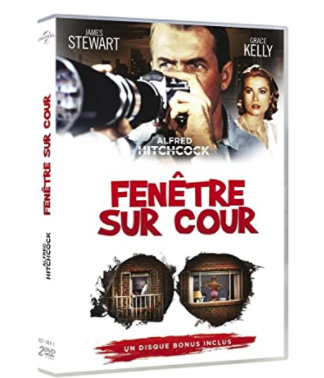
Rear Window
Synopsis
While recovering from a broken leg in his Greenwich Village apartment, professional photojournalist L.B. 'Jeff' Jeffries amuses himself by spying on his diverse neighbors through his rear courtyard window. Over time, his casual voyeurism turns into mounting suspicion when he suspects that a salesman across the courtyard has brutally murdered his bedridden wife. Aided by his glamorous high-society girlfriend Lisa Fremont and his sharp-witted nurse Stella, Jeff investigates the mystery from his wheelchair. As danger closes in, suspense reaches a fever pitch.
The Making of the Film
Director Alfred Hitchcock acquired the film rights to Cornell Woolrich's 1942 short story 'It Had to Be Murder' as a passion project following a string of major successes. He collaborated with master screenwriter John Michael Hayes to flesh out the characters, introducing the sophisticated romance between Jeff and Lisa to elevate the dramatic stakes. Hitchcock engineered the entire production around a massive, meticulously constructed studio set reproducing a New York courtyard, allowing the camera to mimic Jeff's voyeuristic perspective throughout.
Critical Reception and Reviews
Rear Window was a massive commercial hit and received universal critical acclaim upon its release, earning four Academy Award nominations including Best Director and Best Screenplay. Critics lauded its supreme mastery of suspense, innovative visual storytelling, and the electric chemistry between James Stewart and Grace Kelly. Over the decades, it has been analyzed extensively by film scholars as a definitive masterclass in cinematic suspense and a meta-commentary on the nature of moviegoing itself. It frequently tops lists of the greatest thriller films ever made.
Behind the Scenes Anecdotes
Alfred Hitchcock constructed one of the largest indoor sets in Hollywood history for the courtyard, complete with a fully functioning plumbing system and working apartment interiors. James Stewart spent the entire shoot confined to a wheelchair, using subtle facial expressions and eye movements to convey intense suspense without moving his body. Grace Kelly brought genuine high-fashion elegance to the production, wearing stunning custom Edith Head gowns that contrasted sharply with the gritty courtyard setting. During filming, Hitchcock communicated with his actors using hidden microphones to maintain precise control over every performance beat.
Major Themes Explored
The film serves as a brilliant meta-cinematic exploration of the morality of voyeurism, examining the inherent urge of audiences to watch the private lives of others. It investigates the dynamics of romantic commitment, trust, and gender roles through the contrasting lives observed across the courtyard. Additionally, it explores isolation, urban alienation, and the paralyzing vulnerability of physical disability.
Explanation of the Ending
During a tense confrontation, the murderer Lars Thorwald enters Jeff's apartment and tries to push him out of the second-story window, but Jeff fights back using camera flashbulbs to blind him. Police arrive just in time to rescue Jeff, and Thorwald is arrested after confessing to the crime. In the final scene, Jeff is resting comfortably with both legs in casts while a sleeping Lisa drops her high-fashion magazine to read a book on mountaineering, signaling her willingness to embrace his adventurous lifestyle.
Significance of the Title
The title Rear Window refers directly to the physical aperture through which the protagonist observes the surrounding apartment complex, framing the entire narrative around voyeuristic observation. The window acts as a metaphorical movie screen, turning the courtyard neighbors into characters in a drama watched by an immobilized audience. It highlights the central conceit of perspective and vision driving the mystery.
Vertigo, Blow Out, Disturbia, Dial M for Murder