

 Français
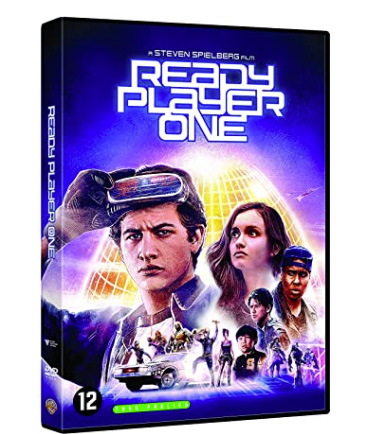
Ready Player One
Synopsis
In 2045, the world is overpopulated and bleak, and most people escape into the OASIS, a gigantic virtual reality universe. When its creator, James Halliday, dies, he leaves behind a final challenge: whoever finds three hidden keys and the Easter egg concealed in his game will inherit his fortune and control of the OASIS. Teenager Wade Watts, who plays under the name Parzival, joins the hunt with his online friends. Standing in their way is the ruthless corporation IOI, ready to do anything to win.
The Making of the Film
The film is adapted from the 2011 novel of the same name by Ernest Cline, a love letter to video games, science fiction and 1980s pop culture. Warner Bros. acquired the film rights before the book was even published, and Cline co-wrote the screenplay with Zak Penn. Steven Spielberg, whose own films shaped the culture the novel celebrates, accepted to direct after some hesitation about referencing his own work. The adaptation had to make major changes, since many of the book's puzzles were based on games and films that were hard to put on screen. The production secured rights to a vast number of characters and brands, a legal feat in itself. The story was reshaped so that the three challenges would be more cinematic, with a race, a descent into a famous film and a final battle. Spielberg wanted to capture the pure fun of adventure while keeping a warning about people losing themselves in virtual worlds. The result is a blockbuster that works as both a nostalgic treasure hunt and a modern fable.
Reviews and reception
Professional critics' summary
Critics were generally positive, praising Spielberg's energy, the dazzling visuals and the sheer inventiveness of the OASIS sequences. Many enjoyed the sequence set inside a famous horror film, seeing it as the high point of the movie. Some reviewers felt that the story relied too heavily on references and that the human characters were thin. Others criticised the film for celebrating nostalgia while only gently questioning it.
Audience reception
Audiences responded warmly, and the film earned more than 580 million dollars worldwide. Fans of pop culture enjoyed spotting the endless cameos and Easter eggs scattered across each frame. The film was particularly popular in China and other international markets. It has since become a favourite for repeat viewings, as there is always something new to notice.
Awards
The film received an Academy Award nomination for Best Visual Effects. It was also nominated for several awards by visual effects and sound guilds. Its technical achievements, especially the seamless blend of live action and animation, were widely recognised. While it did not win the Oscar, the nomination confirmed the quality of its craftsmanship.
Filming anecdotes
Director's inspirations
Spielberg wanted the film to feel like the adventure movies he made in the 1980s, with a young hero, a chase and a sense of wonder. He also drew on the idea of a modern fairy tale, in which a poor boy outsmarts powerful forces. For the virtual world, he took inspiration from video game design and early online communities. He was careful to include his own films only sparingly, so that the movie would not become an exercise in self-promotion.
Production difficulties
The film was made using extensive motion capture, with actors performing in a large studio and the digital OASIS added afterwards. Spielberg directed the film while also finishing The Post, which meant he had to juggle two very different productions. Clearing the rights to so many characters and songs took years of negotiation. The visual effects team had to create hundreds of unique digital environments, each with its own style and rules.
Anecdote about a particular scene
The sequence in which the heroes enter a famous horror film from the late 1970s is a spectacular reconstruction of its iconic locations. The production recreated sets with astonishing accuracy, and even inserted the characters into scenes in a seamless way. The opening race through a digital New York City, with a giant ape and a dinosaur, is another highlight. The final battle brings together hundreds of popular characters in a huge clash.
Originally planned casting
Tye Sheridan was chosen to play Wade after impressing Spielberg in earlier work, and Olivia Cooke was cast as Samantha. Ben Mendelsohn played the villain Sorrento, bringing his usual menace with a touch of comedy. Mark Rylance took on the role of the shy genius James Halliday, giving the film its emotional centre. Simon Pegg, Lena Waithe and T.J. Miller completed the cast.
Themes explored
The film is a celebration of geek culture, but it also questions the escape into virtual worlds. It shows how technology can bring people together, but also isolate them from real life. Another central theme is the battle between creativity and corporate greed, represented by the struggle against IOI. The story reflects on nostalgia, asking whether looking to the past can inspire us or hold us back. Friendship and teamwork are essential, as the heroes can only succeed by trusting each other. The film also touches on the idea of identity, since many characters hide behind avatars. Love and human connection are presented as more valuable than any digital prize. Ultimately, it argues that reality, for all its flaws, is the only place where true happiness can be found.
Ending explained
Wade finds the final challenge by understanding Halliday's deepest regret, which was that he never had the courage to connect with the people he cared about. He realises that the Easter egg is hidden in a game that Halliday himself created and that its key lies in a very simple action. With the help of his friends, he defeats IOI's forces and gains control of the OASIS. Rather than keeping all the power, Wade shares it with his friends and takes a stand against the corporation. He then decides to shut down the OASIS two days a week, so that people spend more time in the real world. He and Samantha begin a romance outside the virtual realm. The film ends with a message that real life is the only thing that is truly real. It leaves a hopeful tone about using technology wisely.
Meaning of the title
Ready Player One refers to the message that appears on screen at the beginning of many classic arcade games to signal that the first player can start. It captures the idea of stepping into a new adventure with a sense of anticipation. In the story, it also describes the moment when the hero decides to take part in a game that will change the world. The title is a nostalgic nod to the golden age of video games, which inspired both the book and the film. It sets the tone for a story built on competition, discovery and play. It also suggests that each viewer is invited to join the adventure. In a few words, it sums up the spirit of fun and challenge that runs through the film.
Original Soundtrack
Alan Silvestri composed the score, bringing the same sense of adventure that he gave to the Back to the Future films. The film also features a lively selection of 1980s hits, including songs by Van Halen, Daryl Hall and John Oates, and the Bee Gees. The mix of orchestral music and pop favourites perfectly supports the film's nostalgic mood.
Similar Films
Tron and Tron: Legacy are classic visions of digital worlds. The Matrix explores a virtual reality with a very different tone. Jumanji: Welcome to the Jungle and Free Guy also blend video games and real life. Wreck-It Ralph and The Lego Movie offer family-friendly adventures full of pop culture references.