

 Français
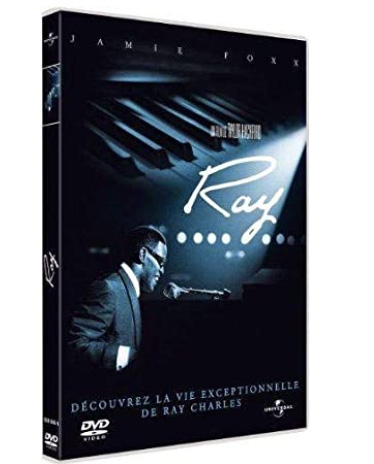
Ray
Synopsis
Ray Charles grows up in poverty in Florida, where he experiences the devastating loss of his younger brother and gradually loses his eyesight. Despite these early hardships, he develops an extraordinary musical talent and learns to navigate the world without sight. His career begins to flourish as he travels across America, blending gospel, blues, jazz, and rhythm and blues into a distinctive musical style. As fame and success transform his life, he also struggles with addiction, romantic complications, and painful memories. His relationship with his wife and his growing responsibilities force him to confront the consequences of his choices. Through music, personal courage, and determination, Ray Charles becomes one of the most influential musicians of the twentieth century.
The Film's Origins
Ray is a biographical film inspired by the life of legendary American musician Ray Charles. Director Taylor Hackford became interested in the project after discovering the extraordinary combination of musical innovation and personal adversity that defined Charles's career. Screenwriter James L. White developed the screenplay with an emphasis on the musician's childhood, artistic development, and struggles with addiction. The project required considerable research and cooperation with people familiar with Charles's life and music. Ray Charles himself was involved in the production and supported the project before his death in 2004. Jamie Foxx was selected to portray the musician because of his acting ability and musical background. The production sought to recreate the sound, appearance, and atmosphere of several important periods in American popular music. The result became one of the most successful musical biographical films of its decade.
Critical Reception
Professional Reviews: Ray received widespread critical acclaim, particularly for Jamie Foxx's extraordinary performance in the leading role. Critics praised his ability to reproduce Ray Charles's mannerisms, voice, physical movements, and musical presence. Taylor Hackford's direction was also appreciated for combining the musician's personal history with his artistic achievements. The film received positive comments for its musical sequences and its exploration of addiction and personal responsibility. Some reviewers considered certain episodes overly conventional for a biographical drama. Nevertheless, its performances and musical authenticity were widely recognized.
Audience Reception: The film became a major commercial success and introduced Ray Charles's life and music to a new generation of viewers. Audiences responded strongly to Jamie Foxx's transformation and the emotional power of the musical performances. The soundtrack also attracted significant interest, helping renew appreciation for the musician's recordings. Viewers particularly appreciated the way the film connected the development of his music with important personal experiences. Its success confirmed the continuing popularity of well-crafted musical biographies.
Awards and Recognition: Ray received six Academy Award nominations and won two major awards. Jamie Foxx won the Oscar for Best Actor, while the film also received recognition for its sound achievements. The production was nominated for Best Picture, Best Director, Best Costume Design, and Best Film Editing. Foxx also won the Golden Globe for Best Actor in a Motion Picture Drama. His performance became one of the most celebrated screen portrayals of a real musician. The film also received recognition from several critics' organizations and music-related institutions.
Behind-the-Scenes Stories
Director's Inspirations: Taylor Hackford wanted to present Ray Charles as a complex human being rather than simply a celebrated musical genius. He was interested in the relationship between the musician's childhood experiences and his later emotional difficulties. The director also wanted to show how Charles transformed different musical traditions into a new and influential sound. His approach combined biographical storytelling with detailed musical reconstruction. The involvement of Ray Charles himself provided an important source of information and authenticity.
Production Challenges: One of the greatest challenges was recreating the appearance and musical atmosphere of several decades. The production required detailed costumes, period locations, and historically appropriate instruments and recording equipment. Jamie Foxx had to master the physical movements and musical performance style associated with Ray Charles. He also wore prosthetic contact lenses that simulated blindness, making certain aspects of filming particularly difficult. The musical sequences required extensive preparation to ensure that they looked and sounded convincing.
Memorable Scene: The musical performances are among the film's most memorable moments, particularly the recreation of Ray Charles's early successes. Jamie Foxx performs with impressive precision, capturing the energy and personality of the musician. The scenes involving the development of What'd I Say illustrate the creative process behind one of Charles's most influential recordings. The film also gives considerable emotional weight to the memories of his childhood and the loss of his brother. These moments help explain the relationship between personal suffering and artistic expression.
Originally Considered Casting: Jamie Foxx was ultimately selected for the leading role after demonstrating an exceptional understanding of Ray Charles's musical personality. His background as a pianist and performer made him particularly suitable for the part. Kerry Washington played Della Bea Robinson, while Regina King appeared as Margie Hendricks. Clifton Powell portrayed Jeff Brown. The production assembled a supporting cast capable of representing the musician's personal and professional environment. Jamie Foxx's casting became one of the project's most important creative decisions.
Themes Explored
Ray explores artistic ambition, perseverance, addiction, family, loss, discrimination, and personal responsibility. Ray Charles's childhood experiences demonstrate how early trauma can influence a person's emotional development. His loss of sight becomes an important part of his identity, but the film emphasizes his determination to develop independence rather than treating blindness as an insurmountable limitation. Music represents both creative freedom and a means of overcoming personal adversity. The film also examines racial discrimination in the American music industry and the struggle for artistic control. Ray's addiction reveals the destructive consequences of unresolved psychological pain. His relationships with family members demonstrate the importance of honesty and accountability. Ultimately, the story presents artistic greatness as something that can coexist with serious personal flaws.
Ending Explained
The ending focuses on Ray Charles's ability to confront the memories and personal difficulties that have shaped his life. After struggling with addiction and the consequences of his behavior, he begins to understand the importance of accepting responsibility. The film connects this personal transformation with his growing artistic recognition. His eventual success does not erase the suffering of his childhood or the mistakes he has made in adulthood. Instead, it demonstrates his capacity to move forward without allowing the past to control every decision. His return to music symbolizes a renewed sense of purpose and self-understanding. The final moments emphasize that his achievements are the result of extraordinary talent combined with perseverance. The story therefore ends not simply with the celebration of a musical legend but with a portrait of a man who continues to struggle and evolve.
Meaning of the Title
The title Ray is a reference to the musician Ray Charles, whose life and career form the subject of the film. Its simplicity reflects the intention to present the man behind the legendary name. Rather than emphasizing a particular album or musical achievement, the title places the individual at the center of the story. It also suggests an intimate portrait of someone whose personal identity is inseparable from his music. The title therefore functions as both a tribute and an invitation to discover the human experiences behind an extraordinary artistic career.
Original Soundtrack
The soundtrack is one of the film's most important elements because it features many of Ray Charles's original recordings. It includes celebrated songs such as What'd I Say, Hit the Road Jack, Georgia on My Mind, and Unchain My Heart. These recordings illustrate the evolution of his musical style and the influence he had on American popular music. The production also features performances by Jamie Foxx, who recreated several musical moments with remarkable accuracy. The music combines gospel, blues, jazz, country, and rhythm and blues, reflecting Charles's ability to cross traditional musical boundaries. The soundtrack became an important commercial success and helped renew interest in his musical legacy.
Similar Movies
Films exploring comparable musical biographies include Walk the Line, which examines the life and personal struggles of Johnny Cash. La Vie en Rose portrays the extraordinary career and difficult personal history of Édith Piaf. Bohemian Rhapsody focuses on the life of Freddie Mercury and the development of Queen. Get on Up tells the story of James Brown and his influence on modern popular music. Elvis explores the relationship between artistic success, personal ambition, and the music industry. These films share Ray's interest in the complex relationship between musical genius and personal life.