

 Français
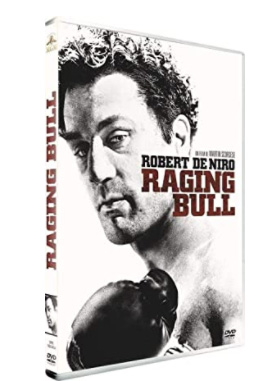
Raging Bull
Synopsis
*Raging Bull* tells the story of Jake LaMotta, a fierce, self-destructive middleweight boxer from the Bronx who rises to become world champion. Outside the ring, his explosive temper and crippling jealousy destroy his marriage and his relationship with his brother and manager, Joey. As his career fades, he spirals into obesity, bitterness and isolation. The film is a brutal, poetic portrait of a man who can only fight, and who ultimately beats himself.
The Making of the Film
The film is based on the memoir Raging Bull: My Story by Jake LaMotta, written with Joseph Carter and Peter Savage. Robert De Niro discovered the book and became obsessed with turning it into a film, repeatedly pushing Martin Scorsese to direct it. Scorsese was initially reluctant, since he did not particularly care for boxing, but a near-fatal health crisis in 1978 made him see the story as a deeply personal one. Mardik Martin wrote an early script, which Paul Schrader then reshaped, and Scorsese and De Niro refined it further. The result transformed a boxer's biography into a study of rage, guilt and masculinity.
Reviews and Reception
Summary of Professional Reviews
Reviews on release were strong, though not universally so, and some critics found the film harsh and difficult. Over time, its reputation soared, and it is now frequently listed among the greatest American films ever made. Critics routinely praise De Niro's transformative performance, Michael Chapman's stark black-and-white photography and Thelma Schoonmaker's masterful editing.
Audience Reception
The film was not a huge commercial hit at first, and many viewers found its protagonist deeply unlikable. Yet it grew in stature with time and became a touchstone for film lovers. Its fight scenes are still studied by directors and film students around the world.
Awards Won
The film earned eight Academy Award nominations, including Best Picture and Best Director. Robert De Niro won the Oscar for Best Actor, and Thelma Schoonmaker won for Best Film Editing. Joe Pesci and Cathy Moriarty were also nominated for their supporting performances.
Filming Anecdotes
Director's Inspirations
Scorsese wanted to portray boxing from inside the fighter's head rather than as a sports spectacle. He used slow motion, distorted sound and subjective camera work to make each fight feel like a nightmare.
Production Difficulties
For the later scenes, Robert De Niro famously gained about sixty pounds to portray LaMotta's decline, a dramatic physical transformation that became legendary. Before that, he trained intensively with the real LaMotta and reached a fighting shape good enough to step into the ring. The production was exhausting, but it gave the film a rare physical authenticity.
Anecdote About a Particular Scene
The black-and-white photography was a deliberate artistic decision, and Scorsese added a brief color home-movie sequence to contrast the past. The choice gives the film its austere, timeless look and distinguishes it from other boxing dramas.
Originally Planned Casting
Robert De Niro suggested Joe Pesci for the role of Joey after seeing him in a low-budget film, and Cathy Moriarty, then a young unknown, was cast as Vickie. Both gave remarkable performances and received Oscar nominations.
Themes Explored
Raging Bull is a study of self-destruction, in which a man's greatest strength becomes his greatest weakness. It explores jealousy, paranoia and the toxic masculinity that makes LaMotta incapable of expressing love. The film also deals with guilt and the desire for redemption, as the boxer tries to come to terms with the damage he has caused. Brotherhood is another key theme, as the relationship between Jake and Joey collapses under the weight of his rage. Violence in the ring is mirrored by emotional violence at home, suggesting that the two cannot be separated.
Ending Explained
In the closing scenes, a washed-up LaMotta is performing as a nightclub entertainer and rehearsing a speech in his dressing room. He recites a famous speech from On the Waterfront, in which a former boxer laments the chance he never had. The scene suggests a man looking back with regret at the life he wasted, and it is followed by a biblical quotation about moving from blindness to sight. The film ends on a quiet note of self-reflection, implying that LaMotta has finally begun to see himself clearly.
Meaning of the Title
The title comes from one of LaMotta's nicknames, the "Raging Bull", which captured both his relentless style in the ring and his violent temperament. It sums up the film's central idea: a man whose fury drives him to greatness and to ruin. The image of the bull also suggests an animal that cannot be tamed, no matter how many blows it takes.
Original Soundtrack
The film uses classical music, most notably the intermezzo from Pietro Mascagni's opera Cavalleria Rusticana, as the emotional heart of its opening and closing. Paired with the brutal imagery of the ring, the lyrical music creates a haunting contrast that has become one of cinema's most famous choices.
Similar Films
- Rocky: a more hopeful boxing drama.
- Taxi Driver: another De Niro and Scorsese study of a troubled man.
- The Fighter: a family drama set in the boxing world.
- Million Dollar Baby: a tragic, intimate story of a boxer.