

 Français
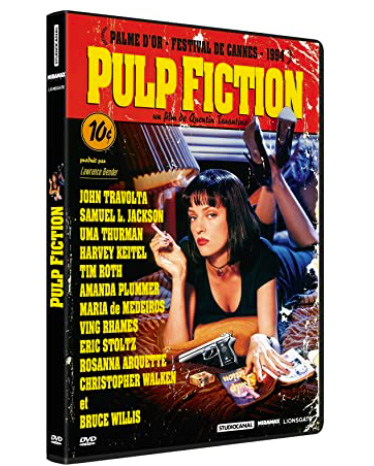
Pulp Fiction
Synopsis
Pulp Fiction follows several interconnected characters moving through the criminal underworld of Los Angeles. Hitmen Vincent Vega and Jules Winnfield work for gangster Marsellus Wallace and become involved in a series of increasingly strange situations. Their assignments include retrieving a mysterious briefcase and taking care of Marsellus' wife, Mia. Meanwhile, boxer Butch Coolidge attempts to escape the consequences of betraying the gangster who paid him to lose a fight. Their stories intersect through violence, unexpected encounters, and moments of dark humor. Told through a deliberately fragmented narrative, the film transforms ordinary criminal situations into an unpredictable exploration of fate, morality, and human behavior.
The Film's Origins
Quentin Tarantino developed Pulp Fiction with Roger Avary, building on ideas and narrative fragments that had emerged during their earlier creative collaboration. The screenplay was designed as a series of interconnected stories inspired by crime magazines, pulp literature, and classic American genre films. Tarantino wanted to create a crime movie that combined familiar conventions with unusual dialogue and unexpected structural choices. The characters were deliberately written to spend considerable time discussing ordinary subjects, even in situations involving extreme violence. The project attracted attention because of its unconventional screenplay and the director's distinctive cinematic voice. Miramax became involved in financing and distributing the production. The cast combined established actors with performers whose careers would be transformed by the film. Its selection for the 1994 Cannes Film Festival ultimately helped establish it as a major international cinematic event.
Critical Reception
Professional Reviews: Pulp Fiction received extraordinary critical acclaim for its screenplay, direction, performances, and unconventional structure. Critics praised Tarantino's ability to combine crime, comedy, violence, and philosophical conversation. Samuel L. Jackson and John Travolta received particular recognition for their performances as Jules and Vincent. Uma Thurman also became closely associated with the film through her portrayal of Mia Wallace. Some reviewers questioned its graphic violence and its playful treatment of criminal behavior. Nevertheless, the film was widely regarded as one of the most influential American productions of the decade.
Audience Reception: The film became a major international box-office success and attracted audiences with its distinctive dialogue and memorable characters. Its nonlinear storytelling encouraged viewers to discuss the relationship between the different episodes. The production also became a cultural phenomenon, influencing fashion, music, advertising, and subsequent crime films. Numerous scenes and lines of dialogue entered popular culture. Its reputation has remained exceptionally strong among movie fans and critics.
Awards and Recognition: Pulp Fiction won the Palme d'Or at the 1994 Cannes Film Festival, establishing its international reputation. It subsequently received seven Academy Award nominations, including Best Picture, Best Director, and Best Original Screenplay. Tarantino and Roger Avary won the Oscar for Best Original Screenplay. The film also received recognition from the Golden Globes and numerous critics' organizations. Its artistic and cultural influence has been recognized through countless retrospective screenings and historical rankings. It is widely regarded as one of the defining films of 1990s American cinema.
Behind-the-Scenes Stories
Director's Inspirations: Quentin Tarantino drew inspiration from pulp crime fiction, classic Hollywood crime movies, French New Wave cinema, and Asian action films. He wanted to create a story in which characters could discuss ordinary subjects while participating in extraordinary events. The fragmented narrative was influenced by his desire to challenge conventional storytelling structures. Tarantino also wanted to give secondary characters and apparently insignificant conversations an important place in the film. The result is a crime story that constantly shifts between comedy, suspense, and violence.
Production Challenges: The production required careful coordination of several interconnected storylines and a large ensemble cast. The fragmented narrative also made editing particularly important because the scenes needed to appear in an order different from their chronological sequence. The filmmakers had to balance the film's graphic violence with its frequent comic passages. Several locations were transformed into distinctive environments reflecting the atmosphere of Los Angeles. Maintaining consistency across the different episodes was essential to the final structure.
Memorable Scene: The dance sequence featuring Vincent Vega and Mia Wallace at Jack Rabbit Slim's became one of the film's most iconic moments. John Travolta and Uma Thurman perform a deliberately relaxed dance that contrasts with the criminal tension surrounding their evening together. The sequence references earlier dance and popular-culture imagery while creating a distinctive identity of its own. Another unforgettable scene is Jules Winnfield's final conversation in the restaurant, where he reflects on the possibility of changing his life. Both moments demonstrate how Tarantino uses ordinary interactions to explore deeper themes.
Originally Considered Casting: Quentin Tarantino originally wrote Vincent Vega with John Travolta in mind, although the actor's casting was not immediately guaranteed. Harvey Keitel became involved as Winston Wolf, while Samuel L. Jackson secured the role of Jules Winnfield. Uma Thurman was cast as Mia Wallace and became one of the film's defining performers. Bruce Willis played Butch Coolidge, while Tim Roth and Amanda Plummer appeared as the criminal couple Pumpkin and Honey Bunny. Other performers discussed during casting included actors associated with earlier versions of the screenplay. The final ensemble became one of the film's most recognizable achievements.
Themes Explored
Pulp Fiction explores morality, violence, chance, redemption, loyalty, identity, and the absurdity of everyday life. Its characters frequently encounter situations in which ordinary decisions produce extraordinary consequences. Jules Winnfield's spiritual reflection introduces the possibility of personal transformation within a world dominated by crime. Vincent Vega represents a more indifferent attitude toward violence and morality, often treating dangerous situations as routine experiences. Butch's storyline examines personal honor and the consequences of refusing to obey criminal authority. The film also questions the distinction between fate and coincidence through its interconnected episodes. Its humor exposes the contradictions of people who attempt to justify immoral behavior. The fragmented narrative reinforces the idea that individual experiences can be understood differently depending on perspective. Ultimately, the film presents morality as a personal choice rather than an automatic consequence of social circumstances.
Ending Explained
The final restaurant sequence takes place earlier in the chronological timeline than several events shown previously. Jules and Vincent are having breakfast when they encounter Pumpkin and Honey Bunny, two armed robbers attempting to hold up the restaurant. Jules decides not to respond with his usual violence and instead chooses to let the couple leave with their lives. This decision represents a turning point in his personal development. He interprets the extraordinary events surrounding the briefcase as a possible sign that he should change his behavior. Vincent, however, remains largely unconvinced and continues to approach life as he always has. The film's ending therefore contrasts two different responses to the same criminal environment. Jules chooses reflection and the possibility of redemption, while Vincent remains trapped in his established habits. Their contrasting decisions give the fragmented narrative an important moral conclusion.
Meaning of the Title
The title Pulp Fiction refers to inexpensive popular magazines and crime stories traditionally printed on low-quality paper. These publications often featured exaggerated characters, sensational crimes, violence, and unusual adventures. Tarantino deliberately draws on this tradition while transforming its familiar conventions into a sophisticated cinematic structure. The title also suggests that the film is constructed from several apparently separate stories, much like episodes in a collection of pulp narratives. Its simplicity reflects the film's playful relationship with popular entertainment and genre conventions.
Original Soundtrack
Pulp Fiction is particularly famous for its eclectic soundtrack, which combines surf rock, soul, rockabilly, and other popular musical styles. Rather than relying on a conventional original orchestral score, Quentin Tarantino selected existing recordings to establish the film's distinctive atmosphere. Dick Dale's Misirlou became strongly associated with the opening credits and the film itself. Other memorable selections include music by Chuck Berry, Kool and the Gang, Al Green, and Dusty Springfield. The soundtrack played an important role in the film's cultural impact and became a commercial success in its own right. Its musical identity helped revive interest in several older recordings.
Similar Movies
Films with comparable storytelling styles include Reservoir Dogs, Quentin Tarantino's earlier crime drama featuring fragmented storytelling and intense dialogue. Snatch explores interconnected criminal stories through energetic editing and dark humor. True Romance combines crime, romance, and unusual characters in a screenplay written by Tarantino. Boogie Nights also uses an ensemble structure to portray several interconnected lives in Los Angeles. The Usual Suspects employs a fragmented narrative and an unexpected final revelation. These films share Pulp Fiction's interest in unconventional storytelling and morally ambiguous characters.