

 Français
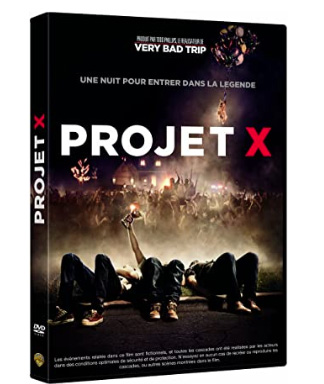
Project X
Synopsis
Three high school seniors seeking to finally shed their social invisibility and achieve legendary popularity throw an unassuming birthday house party while the parents are away for the weekend. Posting the invitation online, they are utterly overwhelmed when thousands of wild partygoers flood the suburban neighborhood, turning the modest gathering into an out-of-control, chaotic epic rager involving property destruction, fire-breathing pyrotechnics, and a flamethrower. As police helicopters circle overhead and the entire neighborhood erupts into flaming chaos, the teenagers capture every wild moment on handheld cameras. Their historic night makes them school legends at a staggering cost.
The Making of the Film
Director Nima Nourizadeh made his feature directorial debut with the found-footage comedy, working from a screenplay written by Matt Drake and Michael Bacall based loosely on a real-life Australian house party incident. The inspiration stemmed from wanting to capture the ultimate teenage fantasy of throwing an uninhibited, legendary party filmed entirely through first-person digital perspectives. The production team aimed to construct a chaotic, high-energy spectacle utilizing hidden cameras and documentary-style framing. The script focused heavily on adolescent rebellion and party culture.
Critical and Reception
Professional critics gave mixed-to-negative reviews, criticizing the nihilistic tone, paper-thin characters, and glorification of reckless suburban destruction, despite praising its relentless party energy. Audiences rushed to theaters worldwide, turning the low-budget comedy into a massive global box-office blockbuster and a cultural touchstone for internet youth culture. Reviewers noted that the film delivered pure, unadulterated teen wish-fulfillment. The movie secured a lasting reputation as a cult classic party film.
Filming Anecdotes
Director Nima Nourizadeh drew inspiration from viral internet party videos, classic teen comedies like 'Superbad', and found-footage cinema traditions. Production faced massive logistical and neighborhood complaints while shooting on location in Los Angeles using custom-built suburban house soundstages. During the destructive pool and fire sequences, stunt coordinators executed massive practical pyrotechnics. The studio fully supported the film's wild, uninhibited R-rated comedic tone.
Themes Explored
The film explores adolescent rebellion, social status, peer pressure, suburban hedonism, and viral fame. It examines how ordinary teenagers go to extreme lengths to escape social invisibility. Party culture serves as the central engine of the narrative. Additionally, found-footage perspective provides immersive realism.
Explanation of the Ending
The narrative concludes with the suburban neighborhood completely incinerated and in ruins, the house gutted by fire, yet the three teenage boys standing proudly before news crews and cheering schoolmates as absolute legends who achieved internet immortality. Arrested and facing massive legal fallout, they smile knowing they made history. The final shots capture the smoking neighborhood from a police helicopter view. The resolution provides an outrageous, triumphant closure to the party comedy.
Meaning of the Title
The working title and final name 'Project X' refers directly to the top-secret, classified codename given by the teenagers to their escalating party plans, adding an air of experimental danger. It signifies mystery, wild ambition, and youth rebellion. The name creates a catchy, intriguing hook for a teen comedy. It captures the escalating madness of the narrative.
Original Soundtrack
The film features an explosive and energetic electronic dance music soundtrack curated by music supervisors, featuring massive club hits from artists like Kid Cudi, Steve Aoki, and DVBBS that perfectly fueled the relentless party atmosphere. The soundtrack became a commercial success, capturing the peak era of 2010s EDM culture. Critics and fans universally revere the musical design for its high-octane energy.
There are no recent major developments or active news items regarding this film.