

 Français
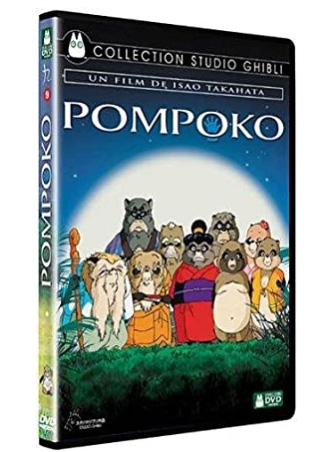
Pom Poko
Synopsis
Set in the late 1960s in the sprawling Tama hills outside Tokyo, a clever, mischievous community of Japanese tanuki—shape-shifting raccoon dogs—live a peaceful forest life playing tricks on one another and foraging for food. Their idyllic woodland existence is suddenly threatened when greedy human real estate developers launch a massive suburban housing project called New Tama, bulldozing their forests, dynamiting hills, and destroying their natural habitat. Refusing to surrender their ancestral home without a fight, the tanuki organize a radical resistance campaign using their ancient legendary magical shape-shifting powers to scare away construction workers, stage supernatural ghost parades, and protest against human environmental destruction.
Genesis de la film
Director Isao Takahata wrote and directed the animated ecological masterpiece for Studio Ghibli, drawing inspiration from traditional Japanese folklore regarding bake-danuki (magical raccoon dogs). Takahata wanted to combine whimsical Japanese mythology with urgent contemporary commentary on urban sprawl and environmental destruction in post-war Japan.
Critical Reception
Professional critics universally acclaimed the film as an animated masterpiece, praising its brilliant ecological satire, rich folklore integration, visual inventiveness, and Takahata's complex thematic depth.
The general public made it the highest-grossing Japanese domestic film at the box office in 1994, resonating deeply with family audiences.
The film received numerous prestigious Japanese film awards and global animation acclaim.
Behind-the-Scenes Stories
Director Isao Takahata drew inspiration from traditional Japanese folktales, urban development records, and Shinto environmental philosophies. Production required traditional hand-drawn cel animation production methods supervised by Studio Ghibli artists, depicting tanuki in three distinct behavioral forms—realistic animals, bipedal cartoon creatures, and traditional folklore shapes.
During the recording sessions, voice actors delivered high-energy performances to capture the chaotic council meetings of the raccoon dogs.
Initially, Hayao Miyazaki suggested the tanuki concept before Takahata took full creative control of the environmental narrative.
Themes Explored
The film explores environmental conservation, urban sprawl, traditional Japanese folklore, shape-shifting magical arts, and human-nature coexistence.
Ending Explained
The ending shows the tanuki losing their final struggle to halt the housing development, but using their shape-shifting powers to integrate into human society as disguised office workers or returning safely to the few remaining patches of urban green space.
Meaning of the Title
Original Soundtrack
The original motion picture soundtrack features whimsical traditional Japanese folk melodies and playful orchestral arrangements that capture the mischievous spirit of the tanuki.
Similar Films
My Neighbor Totoro, Princess Mononoke, Spirited Away, The Secret World of Arrietty