

 Français
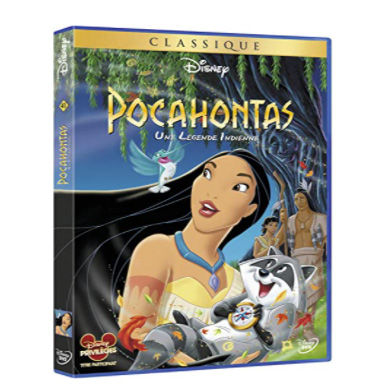
Pocahontas
Synopsis
Set against the lush Virginia wilderness in the early 17th century, a spirited Native American princess named Pocahontas encounters a handsome English settler named John Smith who arrives with greedy colonists searching for gold. Despite cultural barriers, language differences, and escalating tensions between their respective peoples, the two form a deep, life-altering bond of mutual respect and love. When violence erupts and threatens to trigger a devastating war between the Powhatan tribe and the English settlers, Pocahontas risks everything to save Smith and bridge the two worlds. This sweeping animated musical masterwork celebrates nature, tolerance, and peace.
The Making of the Film
The concept for Pocahontas was born from Walt Disney Animation Studios' desire to adapt a historical American legend into a grand animated feature following the massive success of the Disney Renaissance era. Directors Mike Gabriel and Eric Goldberg wanted to craft a romantic historical epic inspired by the real-life 17th-century encounters between English colonists and the Powhatan people of Virginia. The production team spent months researching indigenous culture, folklore, and historical accounts to capture the majestic natural beauty of the colonial landscape. The filmmakers sought to infuse the historical narrative with environmental themes, spiritual mythology, and Broadway-style musical grandeur. The project was designed as Disney's first animated feature based on a real historical figure.
Critical Reception
Professional critics gave mixed reviews to Pocahontas, praising its breathtaking hand-drawn animation, vibrant color palette, and Alan Menken's gorgeous musical score while noting historical inaccuracies in its storytelling. Reviewers commended the film for its bold environmental messaging and striking visual artistry even if some felt the plot simplified complex historical tragedies. The public response was an enormous box office success worldwide, capturing the hearts of millions of families and becoming a cultural touchstone of the 1990s. Audiences fell deeply in love with the majestic songs and the lovable animal sidekicks. The film won two Academy Awards, including Best Original Score and Best Original Song for "Colors of the Wind."
Filming Anecdotes
Directors Mike Gabriel and Eric Goldberg drew heavy inspiration from classic historical paintings, majestic national park landscapes, and traditional indigenous art to construct the film's visual style. Production required millions of hand-drawn cels and pioneering digital color blending to achieve the swirling, wind-swept magical effects seen throughout nature sequences. During the recording sessions, voice actress Irene Bedard provided both the speaking voice and physical live-action reference modeling for Pocahontas, deeply influencing her expressive animation. Before the final script was locked in, early story versions included a comedic talking turkey sidekick named Redcoat who was eventually replaced by more grounded animal companions.
Main Themes
The film explores profound themes of environmental conservation, cultural tolerance, peace over war, listening to nature, and questioning prejudice against unfamiliar people. It highlights how fear and greed can blind communities to the beauty and wisdom of different cultures. Additionally, it celebrates personal independence and spiritual alignment.
Ending Explanation
The climax resolves the impending colonial war when Pocahontas bravely throws herself over a captured John Smith just as Governor Ratcliffe attempts to shoot him, successfully shaming both sides into lowering their weapons and choosing peace. Although Smith is gravely wounded and must return to England for medical care, he and Pocahontas share a heartfelt farewell, pledging their eternal love across the ocean. Pocahontas remains with her tribe as a proud leader and peacemaker, having successfully bridged two conflicting worlds. The film ends on a soaring, hopeful note of harmony and natural balance.
Title Significance
The title directly honors the historical Native American heroine whose courage, wisdom, and compassion drive the entire narrative of peace and cultural understanding.
The film features a magnificent, Oscar-winning musical score and soundtrack composed by Alan Menken with lyrics by Stephen Schwartz, highlighted by timeless masterpieces like "Colors of the Wind" and "Just Around the Riverbend."
NULL
The Lion King, Mulan, Tarzan, Brother Bear