

 Français
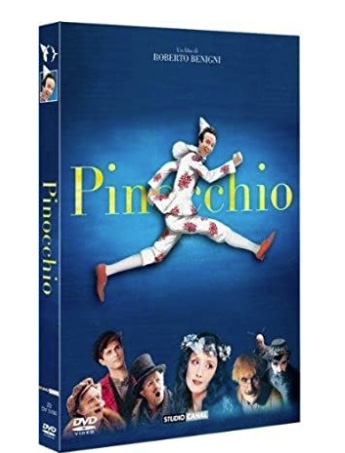
Pinocchio
Synopsis
Geppetto, a poor old carpenter, carves a puppet from a piece of wood and it comes to life as a mischievous boy named Pinocchio. Instead of going to school, Pinocchio runs off to follow his whims and gets into trouble with a series of bad influences. Along the way he meets the Blue Fairy, a talking cricket and a cunning fox and cat. He must learn to be honest and kind if he wants to become a real boy.
The Making of the Film
The film is based on Carlo Collodi's 1883 novel The Adventures of Pinocchio, a classic of Italian literature. Roberto Benigni directed, co-wrote with Vincenzo Cerami and played the title role himself, despite being in his fifties. The film was an expensive production by Italian standards. Nicoletta Braschi played the Blue Fairy.
Reviews and reception
Summary of professional reviews: Critics were divided in Italy, praising the production design and its faithfulness to the original, but many found Benigni too old for the title role. In the United States, the dubbed release was received poorly.
Audience reception: The film was a hit in Italy but did very poorly in the United States, where its dubbed version found few viewers.
Awards won: Roberto Benigni won the Razzie Award for Worst Actor for his performance after the film's American release.
Themes explored
The film explores honesty, obedience and growing up. It also reflects on the difficulties of childhood and parental love, and the temptations that lead a child astray.
Meaning of the title
The title is the name of the puppet, Pinocchio, whose nose grows when he lies. The name comes from Collodi's novel.
Soundtrack
Nicola Piovani, who won an Oscar for Life Is Beautiful, composed the score.
Similar films
Fans of this film might enjoy Pinocchio (1940), Life Is Beautiful, A.I. Artificial Intelligence, Pinocchio (2022) or Matteo Garrone's Pinocchio.