

 Français
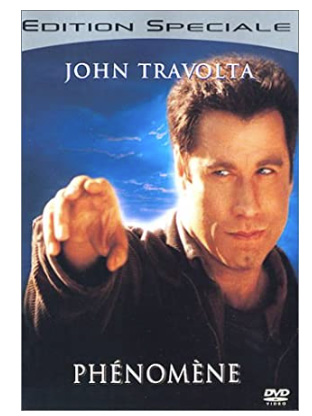
Phenomenon
Synopsis
George Malley is an ordinary mechanic living a quiet life in a small California town. On his birthday, he witnesses a mysterious flash of light in the sky and experiences an extraordinary transformation that dramatically increases his intellectual abilities. He suddenly develops an astonishing capacity to learn languages, understand scientific concepts and perceive connections that previously escaped him. As his unusual talents attract attention, George discovers that becoming extraordinary may also mean losing the simple relationships and peaceful existence he has always cherished.
The film's origins
Screenwriter Gerald Di Pego developed the original story around the idea of an ordinary man suddenly acquiring extraordinary intellectual abilities. Rather than creating a conventional superhero adventure, he wanted to explore how such a transformation would affect an individual's relationships and place within a familiar community. The screenplay combines elements of romantic drama, science fiction and humanistic storytelling. Its central character was deliberately conceived as an approachable and generous person whose greatest qualities existed before his mysterious transformation. Jon Turteltaub was attracted to the project because it offered an opportunity to make an emotionally engaging film about intelligence, kindness and human connection. The filmmakers chose a small Californian community as the setting to emphasize the contrast between George's extraordinary experiences and the everyday concerns of ordinary people. The story is fictional and is not based on a specific documented event. Its premise nevertheless draws upon enduring philosophical questions about the limits of human knowledge and the nature of unexplained phenomena.
Critical reception and audience response
Professional reviews: Critics generally appreciated John Travolta's warm and sincere performance as George Malley. Many reviewers praised the film's emotional accessibility and its ability to combine a science-fiction premise with a gentle romantic story. Kyra Sedgwick's performance also received favorable attention, particularly for the natural chemistry she established with Travolta. Some critics, however, felt that the screenplay relied too heavily on sentimental situations and avoided exploring its scientific premise in greater depth. Overall, the film was regarded as an appealing and accessible drama rather than a particularly challenging work of science fiction.
Audience reception: The film found a receptive audience thanks to its uplifting message and approachable characters. Its combination of romance, mystery and emotional drama appealed to viewers looking for a thoughtful alternative to action-oriented science-fiction productions. John Travolta's performance helped the film develop a lasting following among audiences who appreciated its optimistic tone. The story continues to be remembered for its touching portrayal of an ordinary man whose extraordinary abilities do not diminish his humanity.
Awards: The production did not become a major awards-season contender, although its cast and musical contributions attracted attention from audiences and reviewers. John Travolta received particular praise for bringing warmth and vulnerability to the central character. The film's lasting recognition has come primarily from its popularity and its place among the memorable humanistic dramas of the 1990s.
Behind-the-scenes stories
Director's inspirations: Jon Turteltaub wanted the film to remain grounded in recognizable human emotions despite its extraordinary premise. He focused on the way a sudden transformation could alter friendships, romantic relationships and the perception of an individual within a small community. The director also sought to preserve a balance between mystery and sentiment, allowing viewers to experience George's transformation without requiring a definitive scientific explanation.
Production challenges: One of the main challenges was portraying George's rapidly developing intelligence without making the character seem arrogant or emotionally distant. The filmmakers needed to communicate complex intellectual abilities through accessible dialogue and believable interactions. The production also had to balance the romantic elements with the more mysterious aspects of the story. The visual presentation deliberately remained restrained so that the characters and their relationships could remain at the center of the film.
Memorable scene: George's extraordinary ability to learn languages becomes particularly important when he surprises people around him with knowledge that would normally require years of study. These moments demonstrate the scale of his transformation while preserving the character's natural modesty. His conversations with Lace gradually reveal that his intelligence has not destroyed his capacity for affection and tenderness.
Original casting: John Travolta was selected to play George Malley, bringing a combination of charm, humor and emotional vulnerability to the role. Kyra Sedgwick was cast as Lace Pennamin, the woman who gradually develops a romantic relationship with him. Forest Whitaker plays Nate Pope, George's loyal friend, while Robert Duvall portrays Doc Brunder, the local doctor who becomes involved in the mystery. The supporting cast helps establish the warmth and familiarity of the small-town community.
Themes explored
The film explores the difference between intelligence and wisdom, suggesting that extraordinary knowledge does not automatically make someone a better human being. George's transformation raises questions about the limits of scientific understanding and the possibility of phenomena that cannot be easily explained. Friendship is another central theme, particularly through the loyalty of people who knew George before his sudden change. The romantic relationship between George and Lace emphasizes the importance of accepting another person without being intimidated by their differences. The story also examines fear of the unknown and the tendency of communities to distrust individuals who no longer conform to familiar expectations. Compassion and humility remain essential qualities despite the protagonist's extraordinary abilities. Ultimately, the film suggests that human value cannot be measured through intelligence alone.
Ending explained
George eventually learns that his extraordinary intellectual abilities are connected to a serious medical condition. The realization changes the meaning of his transformation and forces him to confront the possibility that his time is limited. Rather than allowing the discovery to define the rest of his life, he chooses to spend his remaining time with the people he loves. His relationship with Lace becomes especially meaningful because she accepts him without reducing him to his unusual abilities. The community gradually understands that George's transformation has not made him a fundamentally different person. His final moments emphasize the importance of the connections he has created rather than the knowledge he has acquired. The conclusion is deliberately bittersweet, combining the sadness of loss with gratitude for the time shared. George's legacy survives through the affection and inspiration he leaves behind.
Meaning of the title
The title Phenomenon refers to the extraordinary event that transforms George Malley's life. It describes the mysterious flash of light as well as the remarkable intellectual abilities that follow. The word also suggests something that exceeds ordinary experience and challenges conventional explanations. However, the title has a deeper human meaning because George himself becomes a phenomenon in the eyes of his community. People are fascinated, frightened and sometimes suspicious of the changes they witness. The title therefore captures both the scientific mystery and the social consequences of becoming different. It also invites viewers to consider whether the truly remarkable phenomenon is George's intelligence or his enduring kindness.
Thomas Newman composed the original score, creating a delicate and emotionally expressive musical atmosphere. His characteristic use of piano, strings and subtle orchestral textures supports the film's mixture of romance, mystery and melancholy. Rather than relying on spectacular science-fiction effects, the music emphasizes George's emotional journey and his relationships with the people around him. The soundtrack reinforces the contrast between the wonder of his transformation and the sadness of its consequences. Newman's restrained approach gives the film much of its intimate and reflective character.
Similar films
The Green Mile shares the film's interest in extraordinary abilities, compassion and the emotional consequences of being different. Awakenings explores the transformation of ordinary lives through remarkable medical developments and human relationships. The Man Who Knew Too Much offers a different approach to the relationship between knowledge and danger. Limitless examines the consequences of suddenly acquiring extraordinary intellectual abilities, although through a much darker thriller narrative. Powder similarly follows an unusual individual whose exceptional qualities challenge the understanding of those around him. Big Fish combines extraordinary experiences with an emotional reflection on family and the meaning of life. The Curious Case of Benjamin Button also explores how an unusual condition can transform relationships and the experience of time. These films share an interest in extraordinary lives and the humanity that remains beneath unusual circumstances.