

 Français
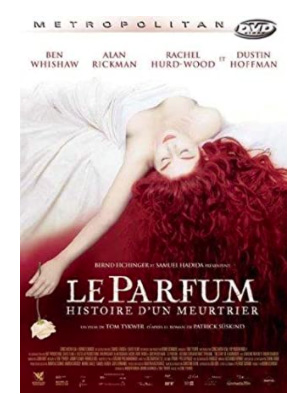
Perfume: The Story of a Murderer
Synopsis
Set in 18th-century France, Jean-Baptiste Grenouille is born with an extraordinary sense of smell and a genius for creating aromas. Abandoned at birth and possessing no personal scent of his own, he grows up into a reclusive man obsessed with capturing the ultimate essence of beauty. When he discovers the sublime scent of a young woman, he embarks on a chilling series of murders to preserve the aromas of young virgins. His relentless quest leads to a bizarre and transcendent climax that tests the boundaries of human desire and perception.
The Making of the Film
Director Tom Tykwer adapted the film from Patrick Süskind's bestselling 1985 novel, which was long considered an unfilmable masterpiece due to its central focus on the invisible sense of smell. Producers and directors, including Stanley Kubrick, had previously attempted to bring the novel to the screen without success. Tykwer became obsessed with translating the olfactory experiences of the book into a cinematic language using immersive visual framing, deliberate pacing, and haunting narration.
Critical Reception
Professional critics offered mixed to positive reviews, praising the film's striking visual ambition, atmospheric period detail, and Ben Whishaw's mesmerizing lead performance as the silent, obsessive protagonist. Reviewers highlighted how effectively the film conveyed a world driven purely by scent through brilliant cinematography and production design, though some found the macabre subject matter unsettling.
The general public responded well to its dark gothic aesthetic and psychological depth, making it a solid international box office success, particularly across Europe. Audiences were captivated by the lavish costume design and the shocking yet mesmerizing scale of the narrative.
The film won numerous awards at European ceremonies, particularly for its outstanding technical achievements, including cinematography, costume design, and production design, as well as recognizing Ben Whishaw's breakout acting talent.
Filming Anecdotes
Director Tom Tykwer drew inspiration from classical paintings, historical accounts of 18th-century Parisian squalor, and the sensory descriptions within Patrick Süskind's original novel. He wanted the audience to feel as though they were experiencing the smells and textures of the era firsthand.
Production faced massive logistical hurdles, especially during the chaotic crowd sequences in Paris and the massive square gathering for the final execution scene, which required hundreds of costumed extras and meticulous choreography.
During the filming of the famous execution square finale, over seven hundred extras had to be coordinated to strip away their clothes in unison under complex psychological instructions from the director to simulate a mass fragrance-induced trance.
Initially, various actors and directors were tied to the long-gestating project over two decades before Tom Tykwer secured the rights and cast relative newcomer Ben Whishaw in the iconic lead role.
Themes Explored
The film explores the dangerous obsession with perfection, the isolation of genius, the corrupting nature of beauty, and the powerful psychological impact of sensory memory.
Ending Explanation
The ending reveals that Grenouille pours his master perfume over himself in front of the execution crowd, instantly turning his impending execution into a massive, hedonistic gathering of love and adoration where all judgment is suspended. Satisfied that he has finally made the world love him through scent, he returns to Paris where he was born and pours the remaining vial over himself, causing a crowd of vagrants to consume him entirely out of overwhelming adoration.
Title Significance
The title 'Perfume: The Story of a Murderer' directly reflects the central duality of the narrative, contrasting the artistic creation of exquisite fragrances with the horrific crimes committed to achieve them.
Original Soundtrack
The original motion picture soundtrack, composed by Tom Tykwer, Reinhold Heil, and Johnny Klimek, received special acclaim for its soaring orchestral themes performed by the Berlin Philharmonic, perfectly capturing the dark, transcendent beauty of the film.
Similar Films
Sweeney Todd: The Demon Barber of Fleet Street, The Illusionist, Sleepy Hollow, Interview with the Vampire