

 Français
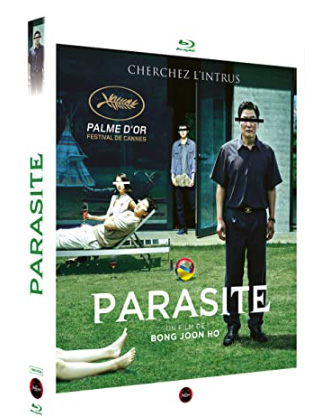
Parasite
Synopsis
The impoverished Kim family lives in a cramped basement apartment and struggles to make ends meet. When their son Ki-woo obtains a tutoring job with the wealthy Park family, he sees an opportunity to improve their circumstances. One by one, the Kims find ways to enter the household by concealing their family relationships and replacing the existing staff. Their carefully constructed plan begins to unravel when a hidden secret in the house exposes the darker realities beneath the apparent luxury.
The Making of the Film
Parasite was developed by Bong Joon-ho as a contemporary social thriller exploring the relationship between wealthy and poor families in South Korea. The director had previously examined class inequality in films such as The Host and Snowpiercer, but wanted to create a story set within a more recognisable domestic environment. The initial idea was influenced by Bong's own experience as a private tutor for a wealthy family when he was younger. That experience gave him a perspective on the physical and social distance separating different economic classes. The screenplay was developed with Han Jin-won, combining elements of comedy, suspense, family drama and social satire. The architecture of the two family homes became an essential part of the story, reflecting their contrasting economic positions. Song Kang-ho was cast as the father of the Kim family, continuing his creative collaboration with Bong Joon-ho. The production deliberately avoided presenting the conflict as a simple struggle between good and evil. Instead, it explores how economic structures encourage competition and desperation among people living in very different circumstances. The film became an international phenomenon and a landmark in South Korean cinema.
Critical Reception
Professional Reviews: Parasite received exceptional critical acclaim for its screenplay, direction, performances and carefully constructed visual storytelling. Critics particularly praised the way Bong Joon-ho combines comedy, suspense and social commentary without losing narrative coherence. The film's use of architecture, spatial relationships and recurring visual details attracted extensive analysis. Its unexpected tonal shifts were widely considered one of its greatest strengths.
Audience Reception: The film achieved remarkable international success, attracting audiences far beyond the usual market for South Korean cinema. Viewers responded to its suspenseful plot, dark humour and criticism of economic inequality. Its major awards victories helped generate further interest and encouraged many people to discover Korean films. The story's combination of entertainment and social observation made it a subject of widespread discussion.
Awards: Parasite won the Palme d'Or at the 2019 Cannes Film Festival. At the Academy Awards, it made history by winning Best Picture, Best Director, Best Original Screenplay and Best International Feature Film. It became the first non-English-language film to win the Oscar for Best Picture. The film also received major recognition at the Golden Globes, BAFTA Awards and numerous critics' associations. Its international awards success marked a historic moment for South Korean cinema.
Behind-the-Scenes Facts
Director's Inspirations: Bong Joon-ho drew partly on his experience as a tutor in a wealthy household, which gave him an understanding of the subtle social boundaries between different classes. He wanted to explore inequality through the everyday interactions of two families rather than through a conventional political drama. The director also used architectural space as a narrative device, making the layout of the houses reflect the characters' social positions. His approach combines precise visual planning with unexpected changes in genre and tone.
Production Challenges: The two main houses were constructed with considerable attention to architectural detail because they are central to the film's visual language. The production team needed to create spaces that could support complex camera movements and carefully choreographed blocking. The basement apartment and the wealthy family's modern home had to feel like parts of the same city while expressing radically different living conditions. The rain and flooding sequences also required extensive technical coordination.
A Particular Scene: The flood sequence is one of the film's most important visual and emotional turning points. Water enters the Kim family's neighbourhood and destroys their modest apartment, while the wealthy Park family experiences the same rainfall as a pleasant inconvenience. The contrast demonstrates how the same event can have radically different consequences depending on economic circumstances. The sequence combines practical effects, set design and carefully controlled water work.
Casting Initially Considered: Song Kang-ho was a key creative collaborator of Bong Joon-ho and was selected to play Kim Ki-taek. The director assembled a cast of experienced South Korean performers, including Lee Sun-kyun, Cho Yeo-jeong, Choi Woo-shik and Park So-dam. The ensemble was chosen to create believable family relationships and distinct social personalities. The casting helped the film maintain a naturalistic atmosphere despite its increasingly extreme narrative developments.
Themes Explored
Class inequality is the central theme of Parasite, expressed through the physical and psychological distance between the Kim and Park families. The film examines how wealth shapes access to space, comfort, security and opportunity. Social mobility appears possible at first, but the characters gradually discover the limits imposed by their economic circumstances. The contrast between the basement apartment and the luxurious house becomes a powerful metaphor for social hierarchy. Smell is used as a recurring marker of class, revealing prejudices that cannot easily be concealed through clothing or behaviour. The story also explores deception, showing how people manipulate appearances when they feel excluded from opportunity. Family loyalty is important, but it can become destructive when survival is treated as a competition. The film questions the idea that hard work alone guarantees social advancement. Ultimately, Parasite presents inequality as a system that affects relationships, dignity and the possibility of living together.
Ending Explained
The ending reveals the tragic consequences of the growing tension between the two families. During the garden party, the hidden conflicts erupt into violence after the smell associated with the poor becomes a humiliating reminder of social prejudice. Kim Ki-taek kills Mr Park and disappears, leaving his family devastated and the household transformed. Ki-woo later discovers that his father is hiding in the secret bunker beneath the house. He imagines earning enough money to purchase the property and free his father. The final images, however, return him to the basement apartment, suggesting that this plan is more fantasy than realistic possibility. The ending deliberately refuses an easy solution to the problem of class inequality. Ki-woo's dream represents hope, but the film suggests that social mobility remains extremely difficult within the existing economic system. The contrast between his imagined future and his actual living conditions gives the conclusion its emotional force. The story ends by asking whether individual ambition can overcome structural inequality.
Meaning of the Title
The title Parasite refers to the idea of one organism living at the expense of another, but the film deliberately leaves the meaning open to interpretation. At first, the wealthy Park family may appear to be the host while the poorer Kim family benefits from its resources. However, the Park family also depends on the labour of people whose lives and needs remain largely invisible. The title therefore raises questions about who is exploiting whom. It can describe the Kims' deceptive entry into the household, but it also points toward the economic structures that allow wealth to depend on poorly paid labour. The word has a deliberately uncomfortable quality because it suggests dependency and exploitation rather than simple social difference. The film uses this ambiguity to prevent viewers from assigning all responsibility to one family. The title also reflects the way social prejudice reduces individuals to labels. Ultimately, Parasite is a metaphor for an unequal society in which different groups are connected through relationships of mutual dependence and exploitation.
Original Soundtrack
The original score was composed by Jung Jae-il and is an important part of the film's atmosphere. Its restrained piano passages and carefully controlled orchestral textures create a sense of unease beneath the apparently ordinary domestic scenes. The music often becomes more intense as the social tensions between the families grow. The score supports the film's unusual mixture of comedy, suspense and tragedy. Jung Jae-il's work received international attention alongside the film's major awards success.
Similar Films
- Snowpiercer (2013), another Bong Joon-ho film exploring class divisions and social hierarchy.
- The Host (2006), a genre-blending South Korean film directed by Bong Joon-ho.
- Burning (2018), a South Korean psychological drama exploring class and alienation.
- Shoplifters (2018), a Japanese drama examining poverty, family and social exclusion.