

 Français
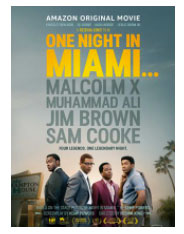
One Night in Miami
Synopsis
On the night of February 25, 1964, newly crowned heavyweight boxing champion Cassius Clay celebrates his historic victory in a modest Miami hotel room. Joined by his three closest friends—activist Malcolm X, singer Sam Cooke, and football star Jim Brown—the gathering transforms into a heated, profound philosophical debate. Behind closed doors, these four iconic Black cultural figures grapple with the heavy burdens of fame, racism, and civil rights responsibility in America. As the night unfolds, their fierce brotherhood is tested by differing visions of how to achieve true liberation. Ultimately, their honest dialogue inspires a powerful turning point in their respective lives and history.
The Making of the Film
Director Regina King made her feature film directorial debut by adapting Kemp Powers' acclaimed stage play of the same name. The project was conceived as an intense, dialogue-driven chamber drama exploring the private lives and ideological clashes of four legendary Black American icons. King drew inspiration from historical accounts, archival interviews, and Powers' meticulous theatrical research. The production prioritized intimate hotel room staging, period-accurate 1960s costumes, and powerhouse ensemble acting to keep the dramatic tension palpable.
Critical Reception
Critics offered overwhelming critical acclaim upon release, praising its brilliant screenplay, masterful direction, and stellar ensemble cast performances. Reviewers lauded Regina King for seamlessly translating a theatrical stage play into a cinematic masterpiece with propulsive energy and emotional weight. The performances of Kingsley Ben-Adir, Eli Goree, Aldis Hodge, and Leslie Odom Jr. received universal acclaim for embodying their historical counterparts with breathtaking authenticity. It established itself instantly as a towering triumph of modern biographical drama.
Audiences were deeply enthralled by the intellectual sparring, powerful musical numbers, and the intimate peek into the private brotherhood of civil rights legends. Viewers on streaming platforms commended the razor-sharp dialogue and the timely exploration of systemic racism and artistic responsibility. It became a critical darling worldwide, resonating strongly with history enthusiasts and social justice advocates alike. Many praised its ability to make historical icons feel profoundly human, flawed, and relatable.
One Night in Miami earned multiple Academy Award nominations, including Best Supporting Actor for Leslie Odom Jr., Best Adapted Screenplay, and Best Original Song. It also triumphed at various international film festivals and critic association ceremonies. Regina King made history with widespread acclaim for her visionary feature directorial debut. These prestigious accolades cemented its legacy as a landmark achievement in biographical drama and Black cinema.
Behind-the-Scenes Stories
Regina King was deeply inspired by the opportunity to explore the private vulnerabilities and intellectual debates of historical figures who are often reduced to two-dimensional statues. She wanted to capture the urgent, pressurized atmosphere of America in 1964 on the brink of radical social change. The visual style utilized warm 1960s hotel interior lighting, rich earth-tone period costumes, and tight cinematic framing to maintain theatrical intimacy. The director also worked closely with playwright Kemp Powers to preserve the rhythmic cadence of the stage dialogue.
Adapting a single-room stage play into a cinematic feature required immense precision from the camera operators and lighting crew to prevent the space from feeling static. Shooting took place across soundstages in New Orleans under tightly managed production schedules. The four lead actors spent weeks rehearsing together before filming to build the authentic, lived-in camaraderie of lifelong friends. Despite the intense intellectual demands of the script, the cast maintained a joyful and deeply respectful working atmosphere.
During the filming of the heated philosophical debate scenes, Kingsley Ben-Adir and Eli Goree brought electric verbal intensity to their portrayals of Malcolm X and Cassius Clay. Leslie Odom Jr. performed his stunning vocal renditions of Sam Cooke's music live on set, stunning the crew with his talent. Crew members reported holding their breath during the most emotionally charged confrontations between the characters. The profound respect among the ensemble cast gave the production an undeniable aura of authenticity.
Casting directors conducted an exhaustive search to find actors who could capture the distinct physical mannerisms and towering intellects of four legendary figures. Kingsley Ben-Adir was secured for the role of Malcolm X, bringing quiet intensity and moral gravity. Eli Goree was cast as Cassius Clay, capturing his youthful bravado and physical agility. Aldis Hodge and Leslie Odom Jr. rounded out the ensemble as Jim Brown and Sam Cooke, delivering career-best performances.
Themes Explored
The film heavily explores the heavy price of fame, the responsibilities of Black cultural icons during the civil rights movement, and the ethics of political activism. It examines the ideological clashes between radical political revolution and economic capitalism. Another core motif is the power of brotherhood, vulnerability, and mutual accountability among Black men. It also touches upon systemic racism, artistic integrity, and self-determination.
Ending Explained
The film concludes with the morning sun rising over Miami after a sleepless night of intense debate, transformation, and emotional reckoning. Each of the four men leaves the hotel room with a renewed, clarified sense of purpose regarding their life's work. Cassius Clay publicly announces his conversion to Islam and officially changes his name to Muhammad Ali, stepping into his destiny. The final poignant shots show the iconic figures stepping out into the world ready to face the turbulent civil rights era.
Meaning of the Title
The title refers literally and metaphorically to the single historic evening spent by four cultural icons locked inside a modest Miami hotel room following a boxing match. It evokes the compressed, high-stakes nature of a private summit that changed the course of history. The geographic and temporal phrasing sets an immediate narrative boundary for the chamber drama. It encapsulates the intimate crucible where legends debated the future of America.
Similar films include Ma Rainey's Black Bottom, Judas and the Black Messiah, The Trial of the Chicago 7, and Malcolm X, which feature historical civil rights figures, political debates, and powerful ensemble acting.