

 Français
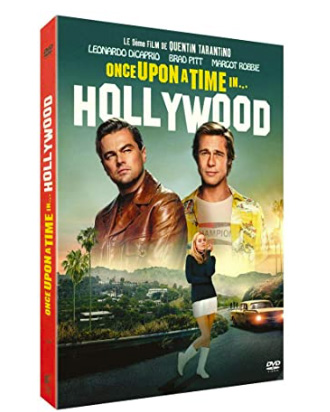
Once Upon a Time... in Hollywood
Synopsis
In Los Angeles in 1969, television actor Rick Dalton struggles to maintain his career as Hollywood changes around him. His loyal stunt double and friend, Cliff Booth, accompanies him through a series of professional and personal encounters. As the two men navigate the film industry, they cross paths with rising actress Sharon Tate and the members of Charles Manson's circle. Their stories gradually converge during a period marked by cultural change and the end of an era in American cinema.
The Making of the Film
Once Upon a Time... in Hollywood grew out of Quentin Tarantino's long-standing fascination with the film and television industry of the late 1960s. The director spent several years developing the characters of Rick Dalton and Cliff Booth before shaping them into a feature-film narrative. Their relationship was partly inspired by the close professional partnerships that existed between actors and stunt performers in classic Hollywood. Tarantino also wanted to recreate the atmosphere of Los Angeles in 1969, a period when the traditional studio system was changing rapidly. The story incorporates real historical figures, including Sharon Tate, Roman Polanski and members of the Manson family, alongside fictional characters. Leonardo DiCaprio and Brad Pitt were cast as Rick and Cliff, while Margot Robbie portrayed Sharon Tate. The screenplay combines fictional episodes with historical events and deliberately departs from the documented outcome of the Manson murders. Tarantino used the project to pay tribute to the films, television programmes, music and popular culture of his childhood. The result is both a nostalgic portrait of Hollywood and an alternative-history drama about the end of an era.
Critical Reception
Professional Reviews: Critics widely praised the performances of Leonardo DiCaprio and Brad Pitt, as well as Tarantino's detailed recreation of late-1960s Los Angeles. The film's cinematography, production design, soundtrack and period atmosphere received considerable acclaim. Some reviewers found its slow pacing and episodic structure unusual, particularly during the extended middle sections. The controversial rewriting of historical events also generated debate, although many critics considered it an effective expression of the director's alternative-history approach.
Audience Reception: The film attracted strong interest from audiences familiar with Tarantino's work and from viewers interested in Hollywood history. Many appreciated its nostalgic atmosphere, memorable dialogue and performances. Others found its lengthy runtime and unconventional narrative less accessible. Its commercial success demonstrated the continued appeal of original adult-oriented cinema from a major director.
Awards: Once Upon a Time... in Hollywood received ten Academy Award nominations and won two: Best Supporting Actor for Brad Pitt and Best Production Design. It also received major recognition at the Golden Globes, where it won Best Motion Picture Musical or Comedy, Best Supporting Actor and Best Screenplay. Brad Pitt also received a BAFTA Award for his supporting performance. The film became one of the most celebrated productions of the 2019 awards season.
Behind-the-Scenes Facts
Director's Inspirations: Quentin Tarantino drew on his childhood memories of Los Angeles and the television programmes, films and advertising that shaped the city during the late 1960s. He wanted to reconstruct a Hollywood that was disappearing as the studio system and traditional television culture changed. The relationship between Rick and Cliff reflects the professional partnerships that often existed between actors and stunt performers. Tarantino also used the story to explore the difference between Hollywood mythology and historical reality.
Production Challenges: Recreating Los Angeles in 1969 required extensive work on locations, vehicles, signs, cinemas and period costumes. Several modern streets and buildings had to be transformed to resemble their historical appearance. The production also needed to integrate real public figures with fictional characters without making the narrative feel like a conventional biographical film. The final scenes required careful coordination between stunt performers, special effects and the ensemble cast.
A Particular Scene: The sequence in which Sharon Tate visits a cinema to watch herself on screen is one of the film's most personal moments. It allows the audience to see the character experiencing the pleasure of being recognised as an actress. The scene also serves as a tribute to Sharon Tate's real film career rather than focusing exclusively on her tragic death. Margot Robbie's performance uses small gestures and expressions to communicate the character's excitement.
Casting Initially Considered: Several actors were discussed during the long development of the project, and the characters evolved as Tarantino refined the screenplay. Leonardo DiCaprio and Brad Pitt eventually became the central choices for Rick Dalton and Cliff Booth. Tom Cruise was also publicly linked to the project during its development, although he did not join the final cast. Margot Robbie was selected for Sharon Tate after discussions about the role and the film's approach to the historical figure.
Themes Explored
Nostalgia is one of the film's central themes, expressed through its detailed recreation of Hollywood in 1969. The story examines the decline of an old entertainment industry and the uncertainty experienced by people whose careers depend on changing tastes. Friendship is explored through the relationship between Rick Dalton and Cliff Booth, whose loyalty remains strong despite differences in status and personality. The film also considers the relationship between fiction and reality, particularly through its use of historical figures and an alternative ending. Fame and professional insecurity shape Rick's behaviour as he struggles to remain relevant. The changing cultural landscape reflects wider transformations in American society during the late 1960s. Violence is presented as part of both Hollywood entertainment and the darker realities surrounding the Manson family. The story also celebrates the work of stunt performers and other professionals whose contributions are often overlooked. Ultimately, the film is a reflection on memory, friendship and the power of cinema to rewrite the past.
Ending Explained
The final sequence departs dramatically from the historical events associated with the Manson family murders. Instead of carrying out the attack on Sharon Tate's home, the intruders encounter Rick Dalton and Cliff Booth. Their attempt to enter the property leads to a violent confrontation in which the two friends defend themselves. The fictional outcome prevents the historical tragedy from taking place and creates an alternative version of Hollywood history. Sharon Tate survives in this imagined timeline, while Rick is invited into her social circle. The ending therefore transforms a story about the end of an era into a fantasy of rescue and redemption. Rick's professional fortunes also appear to improve as he gains access to new opportunities. The film does not claim to rewrite history but uses cinema as a space in which painful events can be reimagined. Its final moments celebrate friendship and the emotional power of storytelling. The conclusion is both a tribute to Sharon Tate and a nostalgic farewell to the Hollywood of Tarantino's imagination.
Meaning of the Title
The title Once Upon a Time... in Hollywood deliberately echoes the opening formula of a fairy tale. The phrase Once Upon a Time suggests that the story belongs to a mythical or remembered past rather than a strictly realistic historical account. Hollywood identifies the world in which the characters live and the film industry that shapes their identities. The title therefore presents the movie as a fairy tale set within the real history of American cinema. The ellipsis creates a pause that invites viewers into a story whose events may not follow historical reality. It also connects the film with Tarantino's interest in alternative history and cinematic mythology. The title reflects the nostalgic atmosphere of the late 1960s and the director's affection for the entertainment culture of that period. It signals that the film is both a love letter to Hollywood and a fictional reimagining of its past. The wording ultimately suggests that cinema can preserve, transform and reinvent collective memory.
Original Soundtrack
The soundtrack is a major part of the film's recreation of late-1960s Los Angeles. Quentin Tarantino selected a wide range of contemporary songs and radio recordings to evoke the music heard on local stations during the period. The soundtrack includes rock, pop and folk tracks associated with the cultural atmosphere of the era. Rather than relying primarily on a conventional original score, the film uses existing recordings to make its world feel historically specific. Radio advertisements and station announcements also contribute to the sense of authenticity. The music helps establish the rhythm of the narrative and connects the characters with the wider popular culture of 1969.
Similar Films
- Pulp Fiction (1994), another Quentin Tarantino film built around an unconventional narrative.
- Inglourious Basterds (2009), an alternative-history film that rewrites major historical events.
- Boogie Nights (1997), a nostalgic portrait of an American entertainment industry in transition.
- The Nice Guys (2016), a crime comedy set in 1970s Los Angeles.