

 Français
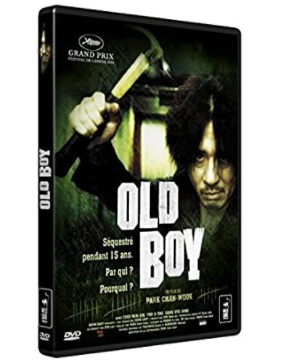
Oldboy
Synopsis
Oh Dae-su, an ordinary businessman, is abducted one night and locked in a hotel-like cell without explanation. After fifteen years of isolation, he is suddenly released and given five days to find out who imprisoned him and why. Armed with a hammer and a rage he has nurtured for a decade and a half, he meets Mi-do, a young chef who helps him on his quest. The truth he uncovers is far more terrible than anything he could have imagined.
The Making of the Film
Oldboy is based on a Japanese manga written by Garon Tsuchiya and illustrated by Nobuaki Minegishi. Director Park Chan-wook discovered the manga and was gripped by its central idea: a man imprisoned for years with no idea why. He reworked the story heavily, shifting the emphasis toward tragedy and giving the villain a far more personal motive. The film became the second part of his informal Vengeance Trilogy, which began with Sympathy for Mr. Vengeance and ended with Lady Vengeance. Park saw it as a Greek tragedy in modern dress, where revenge leads only to ruin.
Reviews and Reception
Summary of Professional Reviews
Critics around the world hailed the film as a bold, operatic thriller with astonishing visual style. Park Chan-wook's direction, Choi Min-sik's ferocious performance and the film's shocking twist were singled out again and again. A few reviewers found the violence hard to stomach, but even they usually admitted the craftsmanship was remarkable.
Audience Reception
The film steadily grew into a cult favorite and is now widely considered a landmark of modern Korean cinema. Fans love dissecting its twists, its unforgettable hallway fight and its bleak emotional punch. It remains a go-to recommendation for people discovering Asian cinema.
Awards Won
Oldboy won the Grand Prix at the 2004 Cannes Film Festival, with a jury presided over by Quentin Tarantino, who was a vocal admirer. It also collected numerous prizes in South Korea and at international festivals. The Cannes win helped bring Korean cinema to a much wider global audience.
Filming Anecdotes
Director's Inspirations
Park Chan-wook has said he approached the story like a classical tragedy, drawing on literature and painting as much as on other films. He wanted every image to be striking and deliberate, which explains the film's carefully composed, almost theatrical look.
Production Difficulties
The famous hallway fight, filmed as one continuous take, was physically grueling and demanded precise choreography. It reportedly took several days and many attempts to get it right. Choi Min-sik trained intensively for the role and endured demanding stunts.
Anecdote About a Particular Scene
In the scene where Dae-su devours a live octopus, Choi Min-sik actually ate real, living octopuses on camera. Because he is a Buddhist, he reportedly said a prayer before each take as a gesture of apology. The scene is now one of the most talked-about moments in modern cinema.
Themes Explored
Oldboy is first and foremost a meditation on revenge and the way it consumes both the avenger and the target. It explores memory, guilt and the idea that small, careless acts can have devastating consequences years later. The film also examines identity, as a man who spends fifteen years in isolation is no longer sure who he is. Taboo and fate lurk at the heart of the story, making it feel like a Greek tragedy. Underneath the violence is a deeply human question: what remains of a person once everything has been taken from them?
Ending Explained
The final revelation is that Woo-jin's elaborate revenge was designed to make Dae-su fall in love with his own daughter, Mi-do, as payback for a rumor Dae-su spread in their school days that ruined Woo-jin's life. Once Dae-su learns the truth, he begs Woo-jin to keep it secret from Mi-do, even mutilating himself in remorse. In the closing scene, a hypnotist seems to erase his memory of the truth, and Dae-su smiles in the snow as Mi-do embraces him. Whether the hypnosis worked, or whether he is only pretending to be happy, is intentionally left ambiguous.
Meaning of the Title
The Korean title is a phonetic rendering of the English words "Old Boy", a phrase used for a former pupil or alumnus of a school. That detail matters because the root of the plot lies in a school-days secret between Dae-su and Woo-jin. The phrase also has an ironic edge, since Dae-su is an "old boy" in every sense, aged and worn down by fifteen years of captivity. The title hints, from the very start, that the past is where the answers lie.
Original Soundtrack
Jo Yeong-wook's score, with its sweeping strings and melancholy waltz, gives the film a tragic elegance. The main theme in particular has become iconic among film-music fans. It beautifully contrasts the brutality on screen with a sense of heartbreak.
Similar Films
- Sympathy for Mr. Vengeance and Lady Vengeance: the other two parts of the trilogy.
- I Saw the Devil: a relentless Korean revenge thriller.
- Memories of Murder: a gripping mystery from Bong Joon-ho.
- The Handmaiden: Park Chan-wook's twisty, sensual later work.